Cauliflower
Transform Your Garden into a Personal Paradise!
How to Plant Cauliflower: Biology, Timing & Step-by-Step Guide
Cauliflower (Brassica oleracea var. botrytis) is a cool-season vegetable grown for its edible, undeveloped flower head—called a curd. It belongs to the Brassicaceae family, alongside cabbage, broccoli, kale, and Brussels sprouts. Unlike these relatives, cauliflower requires precise care and nutrient timing to form a tight, compact curd that’s harvest-ready.
Cauliflower Structure & Growth Habit
- Leaves: Large, upright leaves form a protective canopy over the curd as the plant matures
- Stem: A single main stem grows vertically, forming the foundation for the curd at the top
- Curd: The white (or coloured) edible part of the plant, made up of tightly clustered undeveloped flower buds
- Root system: Fibrous and shallow, making even moisture and strong early growth critical
Cauliflower is an annual crop, completing its entire lifecycle—from seed to harvest—in about 10–14 weeks depending on the variety and growing conditions. Most curds are ready to cut within 75–95 days of planting.
Common Cauliflower Varieties Grown in Australia
- White Cloud: Popular home garden variety, mid-season, smooth white curds
- Snowball Improved: Fast maturing, compact, suited to temperate zones
- Mini Cauli: Smaller heads suited to containers or tighter spaces
- Purple Sicily / Graffiti: Visually striking, high in anthocyanins, performs well in cooler regions
Most Australian gardeners grow cauliflower in late summer or early autumn, avoiding heat stress and supporting firm curd formation during the cooler months. Spring planting is possible in cooler climates like Tasmania and Victoria.
Best Time to Plant Cauliflower in Australia
Cauliflower is highly sensitive to day length and temperature. Planting at the wrong time can result in early flowering (bolting), delayed curd development, or complete crop failure.
- Cool Climates: Late spring to mid-summer (Nov–Jan) for harvest in autumn
- Temperate Climates: Late summer to early autumn (Feb–April)
- Warm Climates: Autumn to winter (April–June) for a winter-spring crop
Ideal temperature for curd formation: 15–20°C. Avoid planting during extreme summer heat or winter frost periods unless using shade or tunnel protection.
Site & Soil Preparation
- Choose a sunny spot with at least 6 hours of full sun daily
- Soil should be deep, loose, and rich in organic matter with excellent drainage
- Target pH: 6.0–7.0 (slightly acidic to neutral)
- Add aged compost, blood and bone, or worm castings 2 weeks before planting
Tip: Avoid planting cauliflower where other brassicas have grown in the last 12 months to reduce disease risk.
Planting Cauliflower from Seed or Seedling
Option 1: From Seed
- Sow indoors in trays or small pots, 0.5–1 cm deep
- Germination occurs in 5–10 days at 18–22°C
- Transplant after 3–4 weeks when seedlings have 4–6 true leaves
- Spacing: 40–50 cm apart in rows spaced 50–60 cm
Option 2: From Nursery Seedlings
- Select sturdy seedlings with no yellowing or signs of stress
- Water thoroughly before planting
- Transplant in the late afternoon to minimise heat shock
Initial Feeding Strategy (Weeks 1–6)
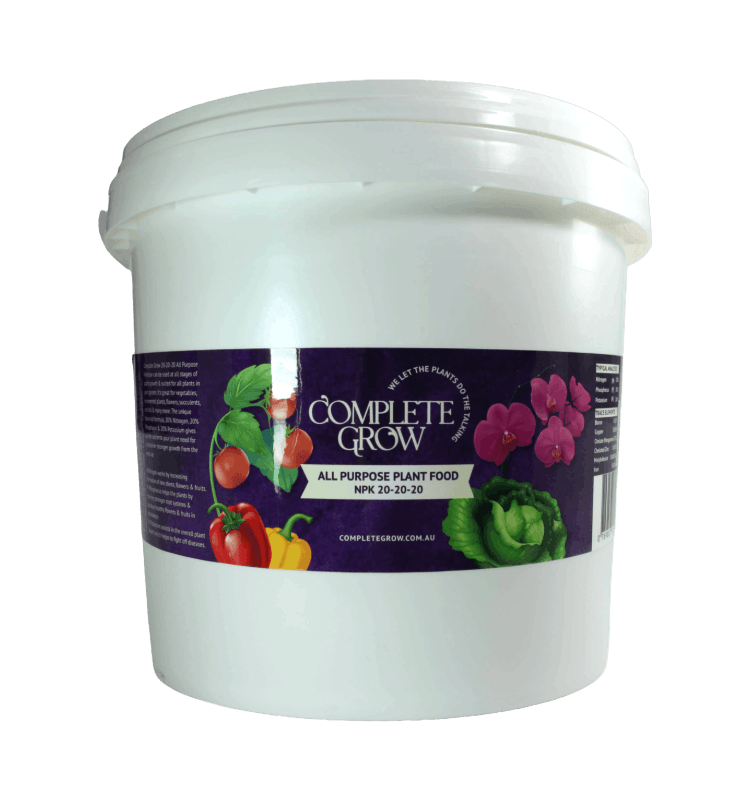
- Feed weekly with CompleteGrow NPK 20-20-20 to support early vegetative growth
- Apply 5 mL per litre and water directly into the root zone
Transition to Curd Development (Week 6+)
- Switch to NPK 4-18-38 + CaMg once the central crown begins forming
- This stage requires high potassium and calcium to prevent curd breakdown and discolouration
Maintain even soil moisture and mulch the base of the plants to protect against temperature swings and weed competition. Avoid disturbing the root zone once curds begin to form, and never allow the soil to dry out for more than 24 hours.
Recommended Products
- Quick View
- Select options This product has multiple variants. The options may be chosen on the product page
NPK 20-20-20 Powder Soluble Nutrient Plant Fertilizer & Micro Nutrients
- Quick View
- Select options This product has multiple variants. The options may be chosen on the product page
Advanced Formula – Boost Flowering & Fruiting – NPK 4-18-38 + Calcium & Magnesium
- Quick View
- Select options This product has multiple variants. The options may be chosen on the product page