Free shipping over $0
Free Shipping Limited Time
NPK 14-3-11 + 8-18-24 Urea-free All orchid types NEW

Orchid Grow & Bloom DuoLiquid orchid fertiliser for leaves, roots and flowers2 × 500 mL concentrates · Makes 1,000 L

Two specialised formulas for every stage: Grow for healthy leaves and roots; Bloom for strong spikes, more buds and longer-lasting flowers.

Highly concentrated: just 1 mL per litre makes up to 1,000 L of feed.

  • More blooms Phosphorus and potassium support strong spikes and more buds
  • Stronger plants Nitrogen-rich Grow promotes healthy new leaves and roots
  • Longer-lasting flowers Use Bloom from the first spike through to the final flower
  • Makes 1,000 L Just 1 mL per litre at every watering
  • Complete orchid fertiliser NPK plus calcium, magnesium and chelated trace elements
$44.80 $49.80 Save 10% 4.5¢ per litre
In every kit
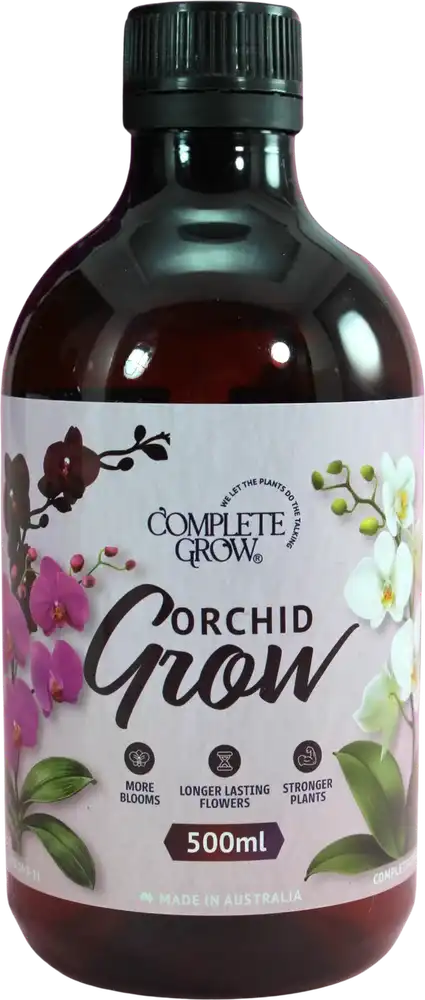
Orchid Grow 500 mL NPK 14-3-11 · leaves and roots
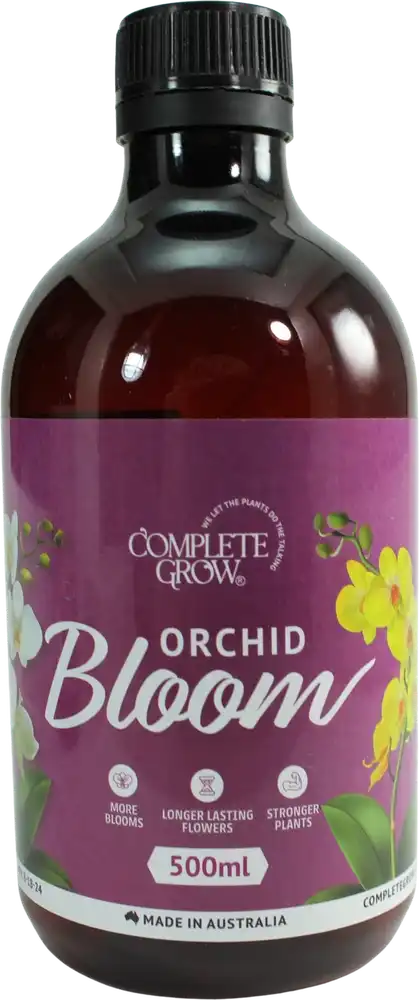
Orchid Bloom 500 mL NPK 8-18-24 · spikes and flowers
In stock Ships next business day
Australian owned & manufactured
Free shipping Limited time
Secure checkout PayPal, card, wallets
Description

A two-step liquid orchid fertiliser that gives your orchid the right balance at every stage. Orchid Grow (NPK 14‑3‑11) builds leaves and roots between flowerings, and Orchid Bloom (NPK 8‑18‑24) supports spikes and flowers. Urea-free, with calcium, magnesium and chelated trace elements. Made in Australia.

Great for

Moth orchids
Cymbidiums
Dendrobiums
Oncidiums
Cattleyas
Vandas
Indoor orchids
Greenhouse orchids

Why growers choose it

Two formulas, one cycle: Orchid Grow between flowerings, Orchid Bloom from the first spike to the final flower.

Orchid Grow – NPK 14-3-11: nitrogen-rich for healthy roots, firm leaves and new pseudobulbs.

Orchid Bloom – NPK 8-18-24: extra phosphorus and potassium for spikes, buds and longer-lasting flowers.

Urea-free: nitrogen in a form orchid roots can use straight away in bark or moss.

Chelated trace elements: iron, manganese and zinc stay available, plus calcium, magnesium, boron, copper and molybdenum.

A little goes a long way: just 1 mL per litre, so each 500 mL bottle makes up to 500 litres of feed.

i

Feed little and often. Use at every watering, switch bottles when the first spike appears, and flush monthly with plain water to prevent salt build-up.

Guaranteed Analysis

Typical analysis · % w/v

Nutrient Orchid Grow Orchid Bloom
Nitrogen (N) 14% 8%
Phosphorus (P) 3% 18%
Potassium (K) 11% 24%
Calcium (Ca) 1.2% 1.2%
Magnesium (Mg) 0.5% 0.5%
Iron (Fe)* 0.12% 0.10%
Manganese (Mn)* 0.01% 0.01%
Zinc (Zn)* 0.01% 0.01%
Boron (B) 0.052% 0.052%
Copper (Cu) 0.002% 0.002%
Molybdenum (Mo) 0.001% 0.001%

* Chelated with EDTA. Both formulas are urea-free. % w/v means grams per 100 mL of concentrate.

What the NPK means: Orchid Grow (NPK 14-3-11) is nitrogen-rich for new leaves, roots and pseudobulbs between flowerings. Orchid Bloom (NPK 8-18-24) is higher in phosphorus and potassium to support flower spikes, buds and longer-lasting flowers.

How to mix & feed

How to mix

  1. Shake the bottle before each use.
  2. Add 1 mL per litre of water. One 5 mL cap makes 5 litres.
  3. Use at every watering for best results.
  4. Flush monthly with plain water to prevent salt build-up.

Which bottle to use

  • Orchid Grow: after flowering, while there’s no spike, buds or flowers.
  • Orchid Bloom: from the first flower spike until the last flower drops. Then go back to Grow.

Quick mixing guide

Water Add
1 L jug 1 mL
2 L small watering can 2 mL
5 L watering can 5 mL (1 cap)
9 L large watering can 9 mL
FAQ
What’s the difference between Orchid Grow and Orchid Bloom?

Orchid Grow (NPK 14-3-11) is nitrogen-rich to support healthy leaves, roots and pseudobulbs between flowering cycles. Orchid Bloom (NPK 8-18-24) provides more phosphorus and potassium to encourage strong flower spikes, plentiful buds and longer-lasting flowers.

When should I switch to Orchid Bloom?

Switch from Grow to Bloom as soon as you see the first flower spike. Continue using Bloom while the spike develops and throughout flowering. Once the final flower drops, switch back to Grow.

Do I use both formulas together?

No. Use one formula at a time—Grow between flowering cycles and Bloom from the first flower spike until the final flower drops. Do not mix the two concentrates together.

How much should I use?

Mix 1 mL of concentrate with 1 litre of water. One full 5 mL cap makes 5 litres of ready-to-use orchid feed.

How often should I feed my orchid?

Feed with every watering using the formula for your orchid’s current growth stage. Once a month, use plain water to flush accumulated fertiliser salts from the potting mix.

Which orchids can I use the Duo on?

The Duo is suitable for all orchid types, including moth orchids (Phalaenopsis), cymbidiums, dendrobiums, oncidiums, cattleyas and vandas.

Are the formulas urea-free?

Yes. Both Grow and Bloom are completely urea-free and provide nitrogen in forms readily available to orchids growing in bark or moss.

How long will the Orchid Duo last?

Each 500 mL bottle makes up to 500 litres of ready-to-use feed. Together, the Duo makes up to 1,000 litres—enough for years of regular feeding for most home orchid collections.

Can I purchase Grow or Bloom separately?

Grow and Bloom are sold together as a complete two-stage feeding system. Use Grow to support healthy vegetative growth, then switch to Bloom during spike development and flowering.

Where is the Orchid Duo made?

Both formulas are proudly made in Australia.

Reviews

Be the first to review this product

Tried it in your garden? Tell other gardeners how it went — and share a photo of what you’re growing.

Best For These Plants​

How it Works

Feed Your Plants
Watch Them Thrive

New · Two-step orchid nutrition

Grow the Leaves. Then the Blooms.

Two bottles in one pack: Orchid Grow between flowerings, Orchid Bloom from the first spike to the last flower.

In the pack

Bottle 1 · Leaves & roots

Orchid Grow

For strong leaves, healthy roots and recovery after flowering.

  • Strong new leavesSupports healthy new leaf growth
  • Fresh, healthy rootsHelps new root tips develop
  • Recovery after floweringRebuilds energy for the next spike
500 mL NPK 14-3-11

Use · last flower drops → new spike

Orchid Grow 500 mL bottle
Orchid Bloom 500 mL bottle
In the pack

Bottle 2 · Spike to flower

Orchid Bloom

For flower spikes, more buds and longer-lasting flowers.

  • More bloomsHigher phosphorus & potassium for flowering
  • Longer-lasting flowersKeep feeding right through flowering
  • Stronger flower spikesSupports the spike and its buds
500 mL NPK 8-18-24

Use · new spike → last flower drops

Supports the full orchid cycle

Two Bottles. One Full Cycle.

Feed your orchid through every stage: Orchid Grow between flowerings, then Orchid Bloom from the first spike to the last flower.

  1. Feed Orchid GrowStages 1–2 · Between flowerings
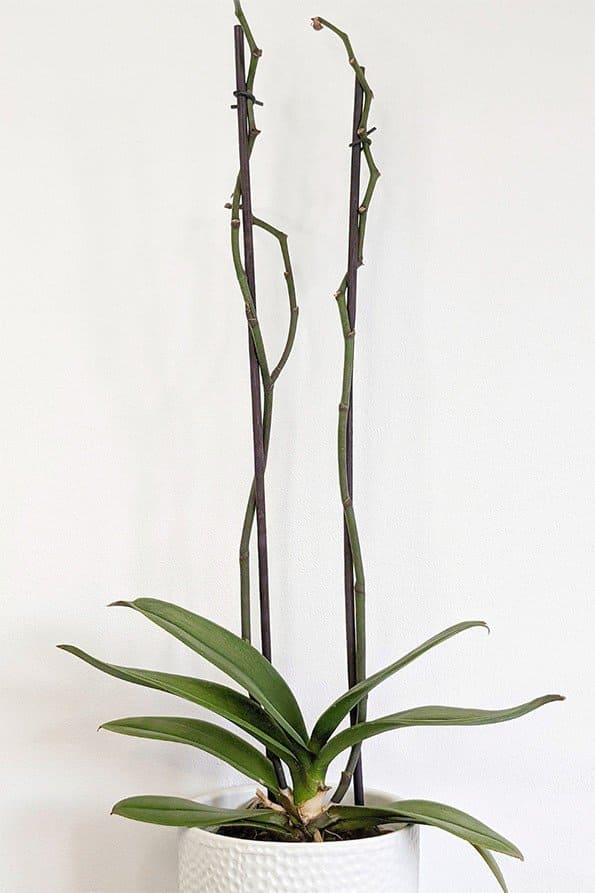
  2. Orchid after flowering, with bare spikes above healthy leaves
    1

    After Flowering

    Helps your orchid recover and rebuild its energy once the last flower drops.

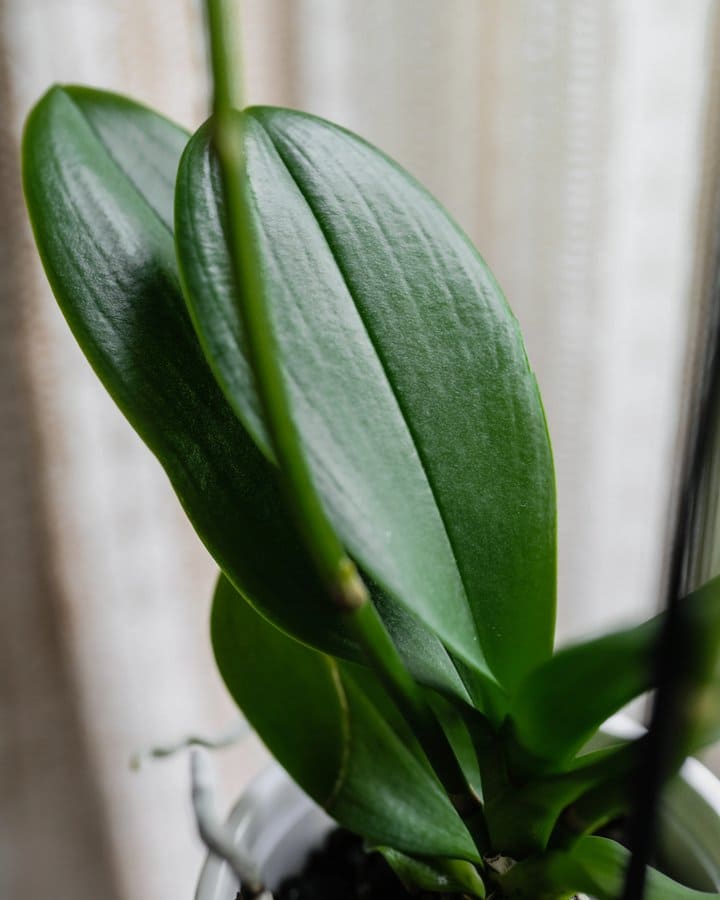
  3. Close-up of glossy new orchid leaves
    2

    New Leaves & Roots

    Supports strong new leaves and fresh, healthy root tips.

  4. Feed Orchid BloomStages 3–4 · Spike to last flower
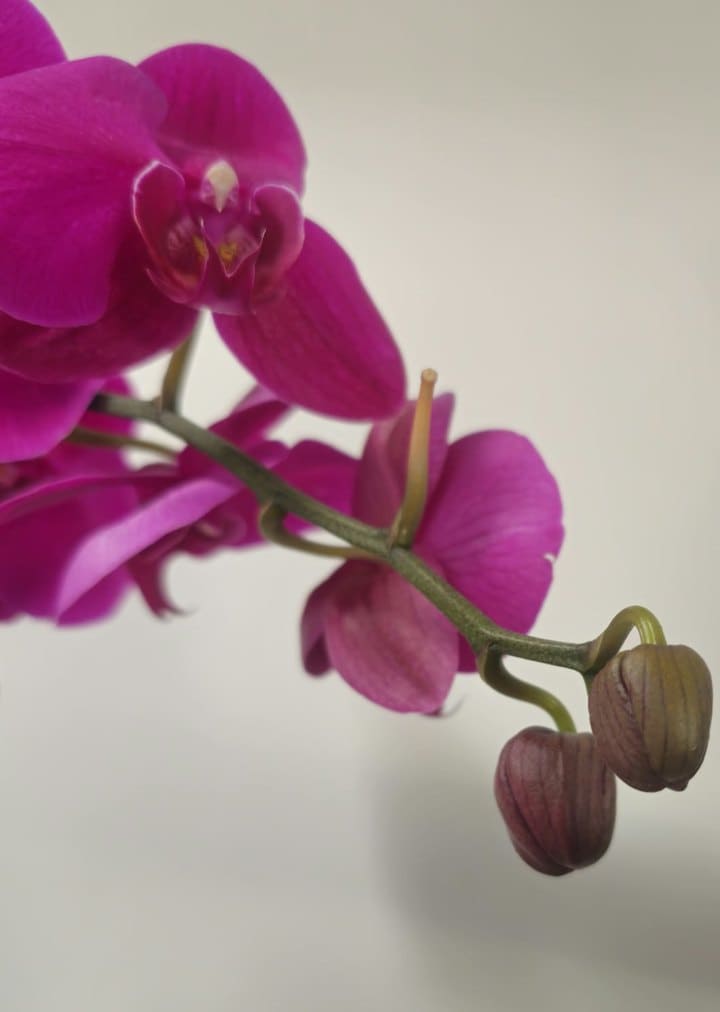
  5. Magenta orchid spike with new buds forming
    3

    Spike & Buds

    Switch to Orchid Bloom as the spike lengthens and buds begin to form.

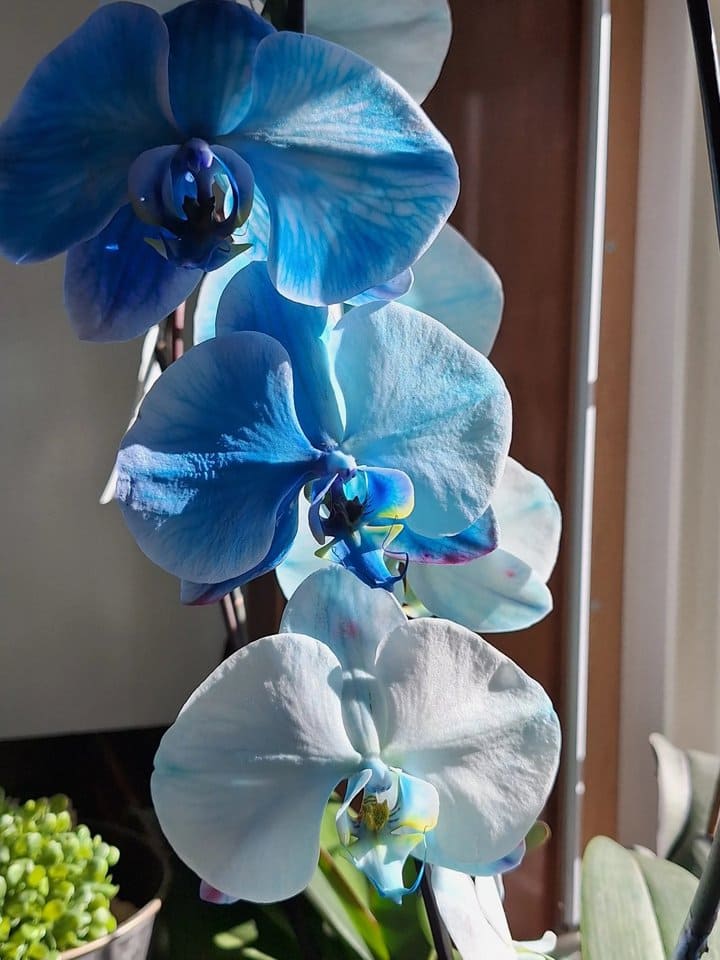
  6. Orchid in full bloom
    4

    Full Bloom

    Supports more blooms and longer-lasting flowers until the last one drops.

Made for orchids

From Moth Orchids to Cymbidiums.

Orchid Grow and Orchid Bloom suit the orchids Australians grow most, in pots, baskets or mounts, indoors or out.

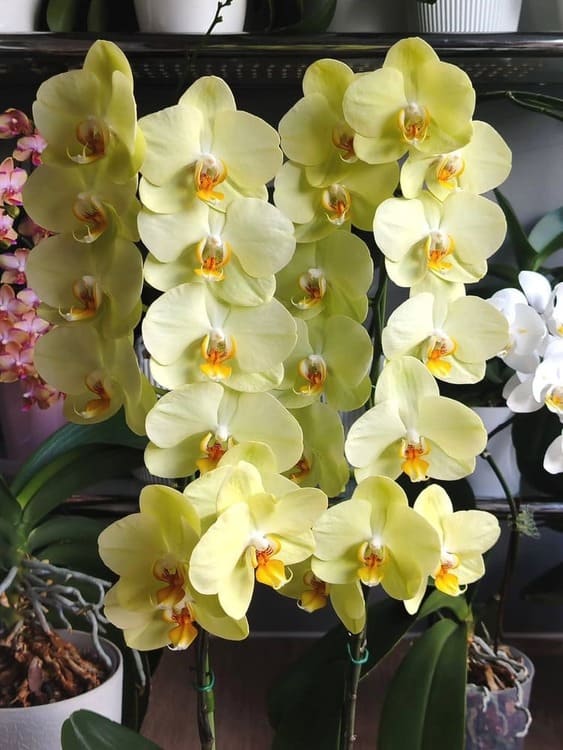
Lemon-yellow moth orchids in full flower

Moth orchid

Phalaenopsis

The most popular indoor orchid, with long-lasting spikes that re-bloom year after year.

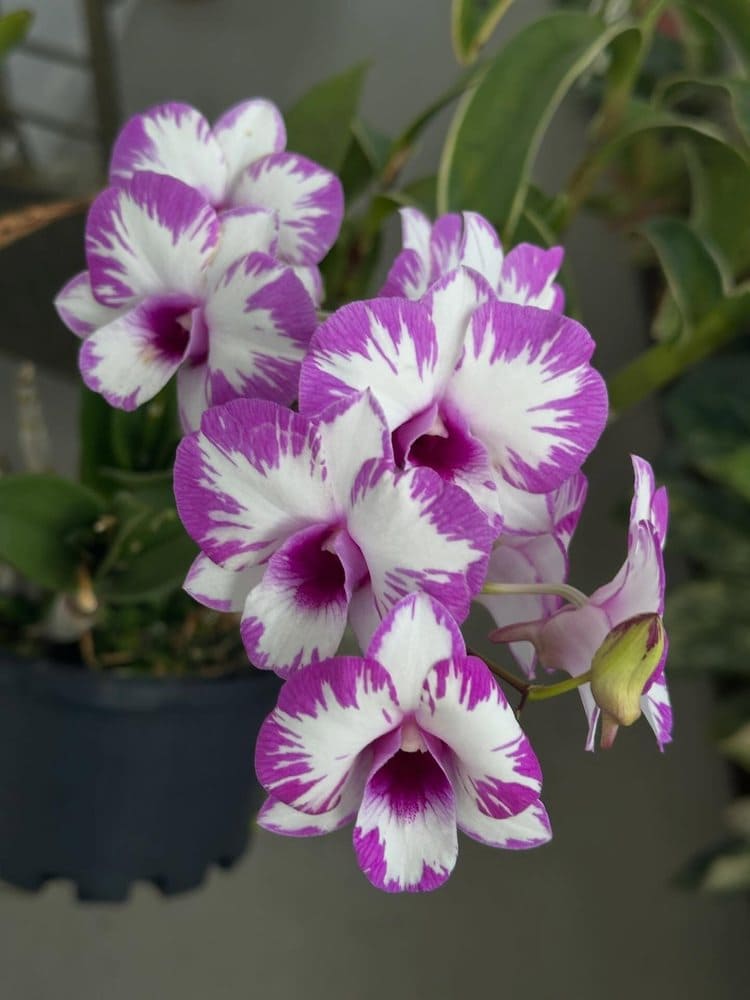
Purple and white soft-cane Dendrobium flowers

Cane orchids

Dendrobium

Soft-cane hybrids to Australian natives like the King and Cooktown orchids.

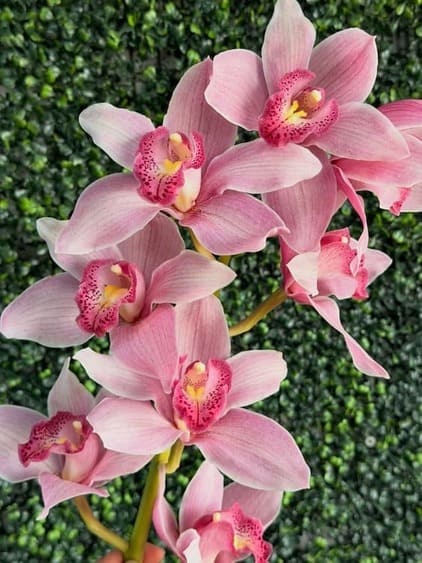
Spray of pink Cymbidium flowers with spotted lips

Boat orchid

Cymbidium

Hardy, cool-growing garden favourites, flowering through winter and spring.

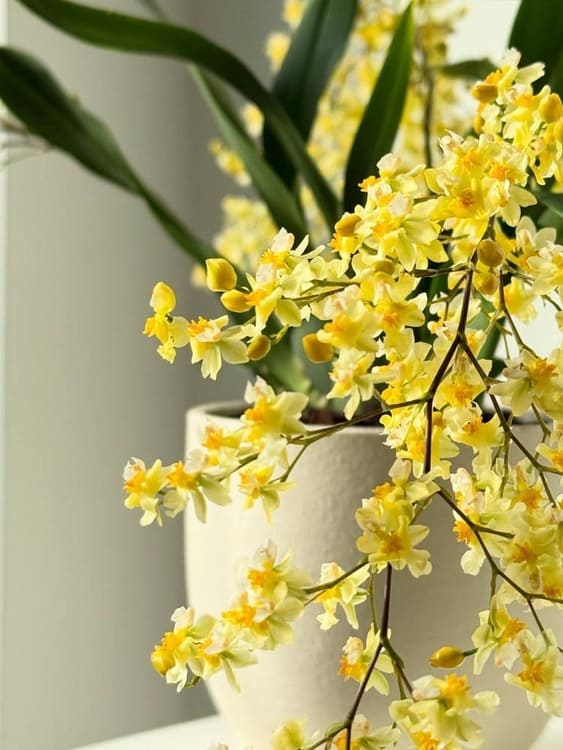
Sprays of small yellow Oncidium flowers

Dancing lady

Oncidium

Branching sprays of small flowers, including scented Sharry Baby.

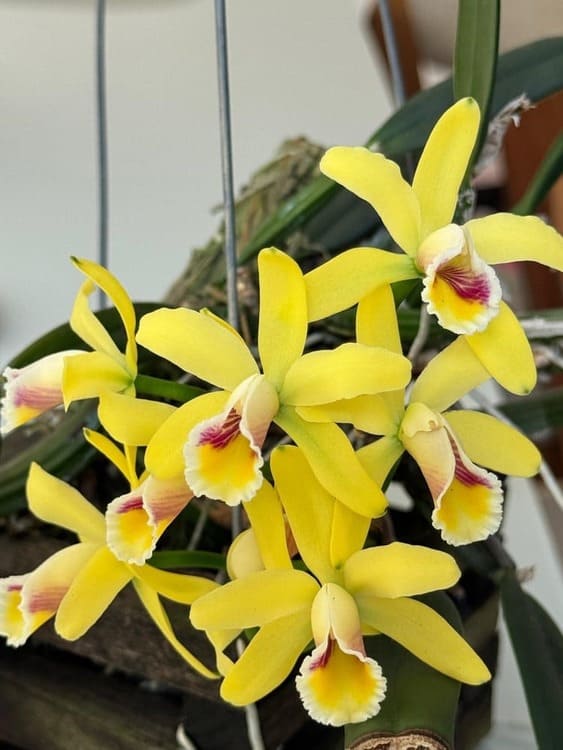
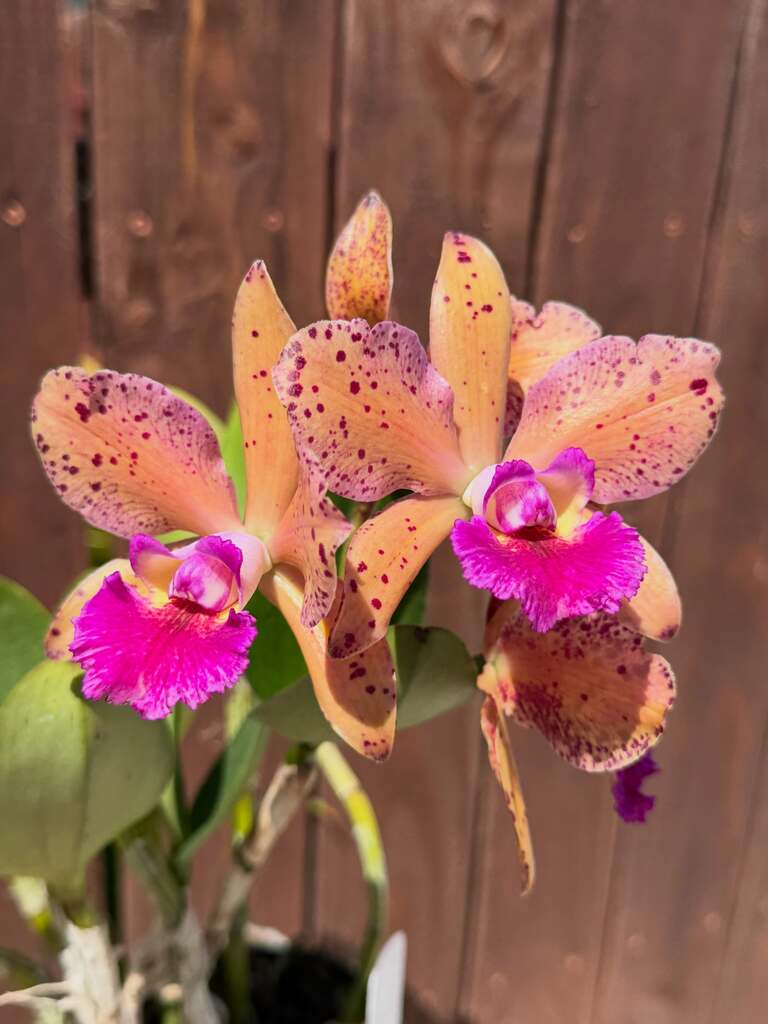
Yellow Cattleya flowers with frilled lips

Corsage orchid

Cattleya

Big, showy and often fragrant flowers on sturdy pseudobulbs.

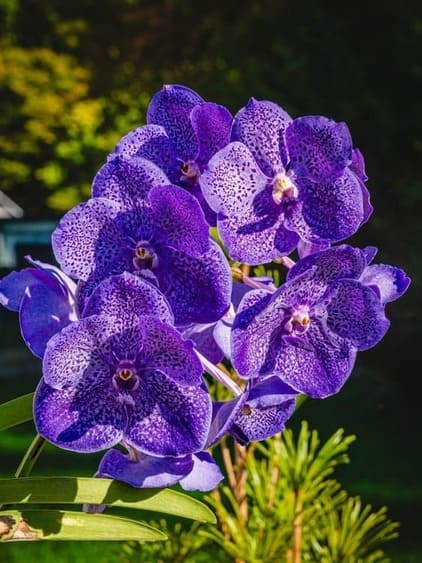
Spray of violet-blue spotted Vanda flowers

Basket orchid

Vanda

Often grown bare-root in baskets, where regular liquid feeding matters most.

See all orchid types it suitsHide the full list Indoor, outdoor, Australian natives & more

Swipe for more groups

Indoor favourites

Windowsill and living-room orchids that flower for months.

  • Moth orchidPhalaenopsis
  • Dancing ladyOncidium, incl. Sharry Baby
  • Pansy orchidMiltoniopsis
  • Slipper orchidPaphiopedilum
  • Corsage orchidCattleya
  • Jewel orchidLudisia
  • Lady of the nightBrassavola nodosa

Cool & outdoor

Like cooler nights; many grow happily outdoors in southern Australia.

  • Boat orchidCymbidium
  • Miniature boat orchidMini Cymbidium hybrids
  • ZygoZygopetalum
  • Necklace orchidCoelogyne
  • Kite orchidMasdevallia
  • OdontOdontoglossum
  • Windowsill orchidPleione

Australian natives

Tree and rock orchids native to Australia.

  • Pink rock orchidDendrobium kingianum
  • King orchidDendrobium speciosum
  • Cooktown orchidDendrobium bigibbum
  • SarcsSarcochilus & Fitzhart hybrids
  • Pencil orchidDockrillia teretifolia
  • Tea-tree orchidDendrobium canaliculatum
  • Swamp orchidPhaius australis

Baskets & mounts

Fast-drying roots, so regular liquid feeding matters most.

  • Basket orchidVanda
  • AscocendaVanda hybrids
  • Hard-cane orchidPhalaenopsis-type Dendrobium
  • Spider orchidBrassia
  • Foxtail orchidRhynchostylis
  • Cockleshell orchidProsthechea & Encyclia
  • BulbophyllumBulbophyllum

Garden orchids

Easy-care orchids for garden beds and large pots.

  • Crucifix orchidEpidendrum (reed-stem)
  • Chinese ground orchidBletilla
  • Ground orchidSpathoglottis
  • Christmas orchidCalanthe
  • Bamboo orchidArundina
Grown in: pots, baskets, mounts, semi-hydro & LECA, glasshouses and Greenhouse. Not for native ground orchids that dislike feeding, like greenhoods and sun orchids.
In their own words

From Our Orchid Growers.

Real photos and reviews from customers feeding with the Orchid Duo.

Customer photo of their moth orchid
It’s alive again New roots, a new leaf and finally a flower spike. Very happy with it. Moth orchid
Customer photo of their moth orchid
Finally! First rebloom in three years. That’s the review. Moth orchid
Customer photo of their oncidium
My oncidium loves this stuff So many tiny yellow flowers. It looks like a completely different plant. Oncidium
Customer photo of their moth orchid
Seven new flowers Short version: easy to use, plant looks healthier, seven flowers opened this week. Long version: I’m obsessed and have already bought another orchid. Moth orchid
Customer photo of their moth orchid
My rescue orchid Recovery was slow, but each new root felt like a tiny victory. Four months later it has two new leaves and is producing its first flower spike. Moth orchid

How to use

One Cap. One Watering Can.

Just 1 mL per litre at every watering, so one bottle makes up to 500 L of orchid feed.

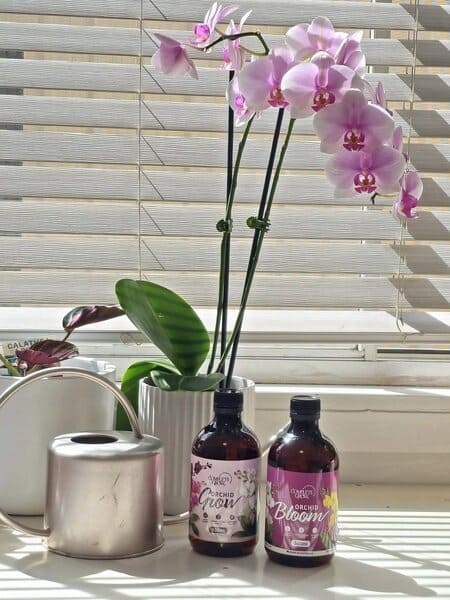
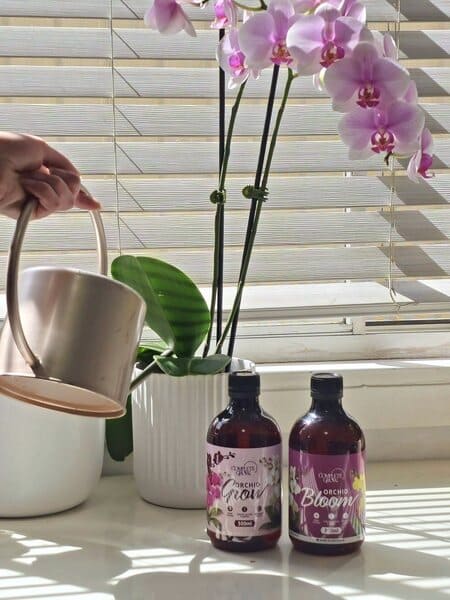
Orchid Grow and Orchid Bloom bottles beside a flowering orchid and watering can
Measure & mix Shake the bottle and add 1 mL per litre with the cap, then stir.
Watering a flowering orchid with Orchid Grow and Orchid Bloom on the windowsill
Water it through Pour until it drains. Use it at every watering.

How much do I add?

1 mL per litre
What are you filling?
Add 5 mL of Orchid Grow to 5 L of water
= 1 cap · 1 teaspoon
Orchid Grow 500 mL bottle Orchid Bloom 500 mL bottle
One bottle makes 100 mixes this size

Use at every watering. Flush monthly with plain water. 1 cap = 5 mL.

See how we stack up

How Does Our Orchid Feed Compare?

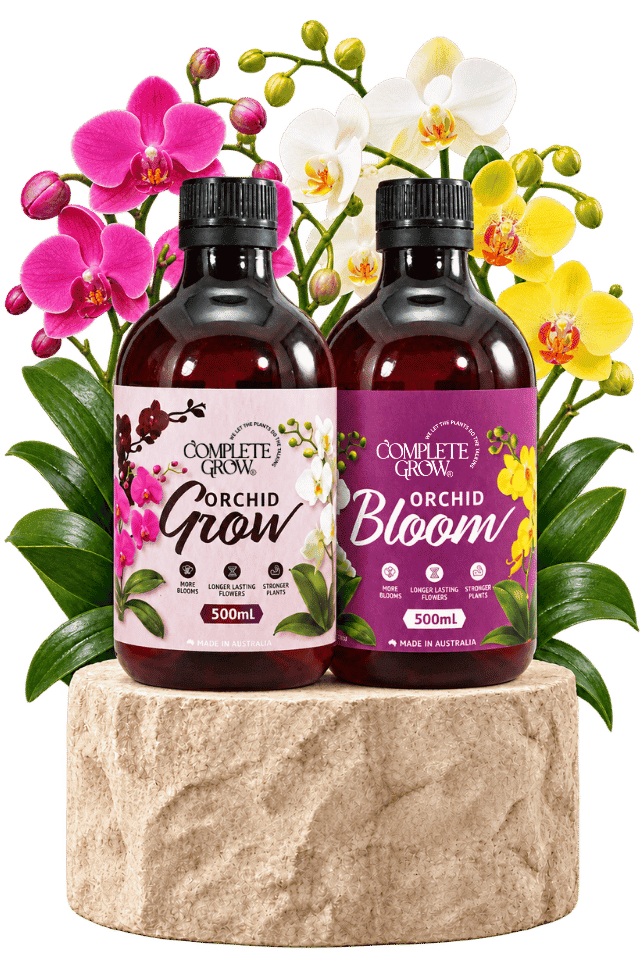
Orchid Grow and Orchid Bloom orchid fertiliser bottles on a stone pedestal with pink, white and yellow orchids
The gold standard

Orchid Grow & Bloom

Specialised two-part orchid fertiliser
  • Two Specialised FormulasGrow for leaves and roots, Bloom for spikes and flowers
  • High-Strength ConcentrateJust 1 mL per litre · 2 × 500 mL makes 1,000 L
  • Bloom Booster, NPK 8-18-24Extra phosphorus and potassium for flowering
  • Urea-Free + Chelated Trace ElementsCalcium, magnesium, iron, zinc and more
  • Australian MadeMade locally by CompleteGrow
  • All Orchid TypesMoth orchids, cymbidiums, dendrobiums and more
Common alternative

Standard Orchid Fertiliser

One formula all year
  • Yes: Made for orchids
  • Partly: One formula all year
  • Partly: Same mix for growth and flowering
  • No: Less concentrated per bottle
  • Partly: Trace elements not always chelated
  • No: Smaller bottles, fewer feeds
Common alternative

Ready-to-Use Orchid Spray

Pre-mixed spray or mist
  • Yes: No mixing needed
  • No: Pre-diluted, so it’s mostly water
  • No: One bottle covers far fewer feeds
  • No: Much higher cost per litre of feed
  • Partly: Often misted on leaves, not the roots
  • No: One formula all year

How Much to Mix

Reviews From Our Gardener's

Be the first to review this product

Tried it in your garden? Tell other gardeners how it went — and share a photo of what you’re growing.

Verified Buyer

Verified Buyer

Common orchid stress signs

Know the Signs. Support Your Orchid.

What your orchid's leaves, roots and buds are telling you, and what to check first.

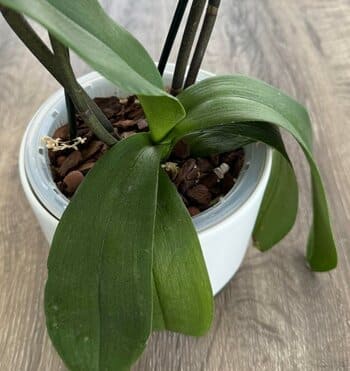
Orchid with soft, drooping leaves hanging over a white pot

Leaves

Limp, wrinkled leaves

Usually the roots can’t take up water, rather than hunger.

Check: the roots. Brown and mushy means repot into fresh mix.

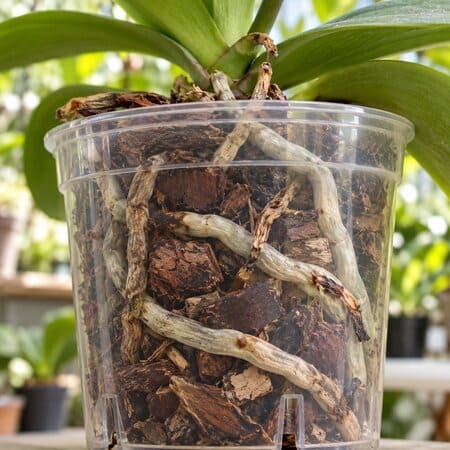
Orchid roots and old bark in a clear pot

Roots

Few new roots

No fresh green root tips while it should be growing.

Check: for old, broken-down mix. Repot and feed Orchid Grow.

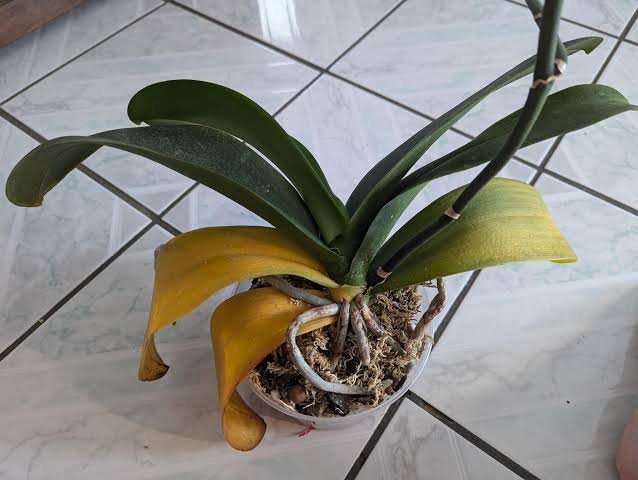
Orchid with its lower leaves turning yellow

Leaves

Yellowing leaves

One old leaf now and then is normal. Several at once isn’t.

Check: watering and light first, then feeding.

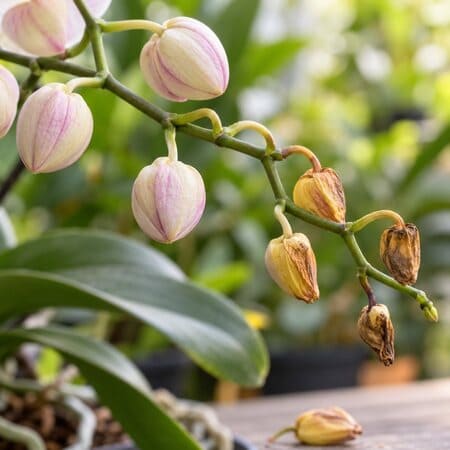
Orchid spike with healthy buds and yellow, shrivelled buds

Buds

Buds dropping

Buds yellow and fall before they open, known as bud blast.

Check: for sudden changes: moving it, draughts, heaters or dry air.

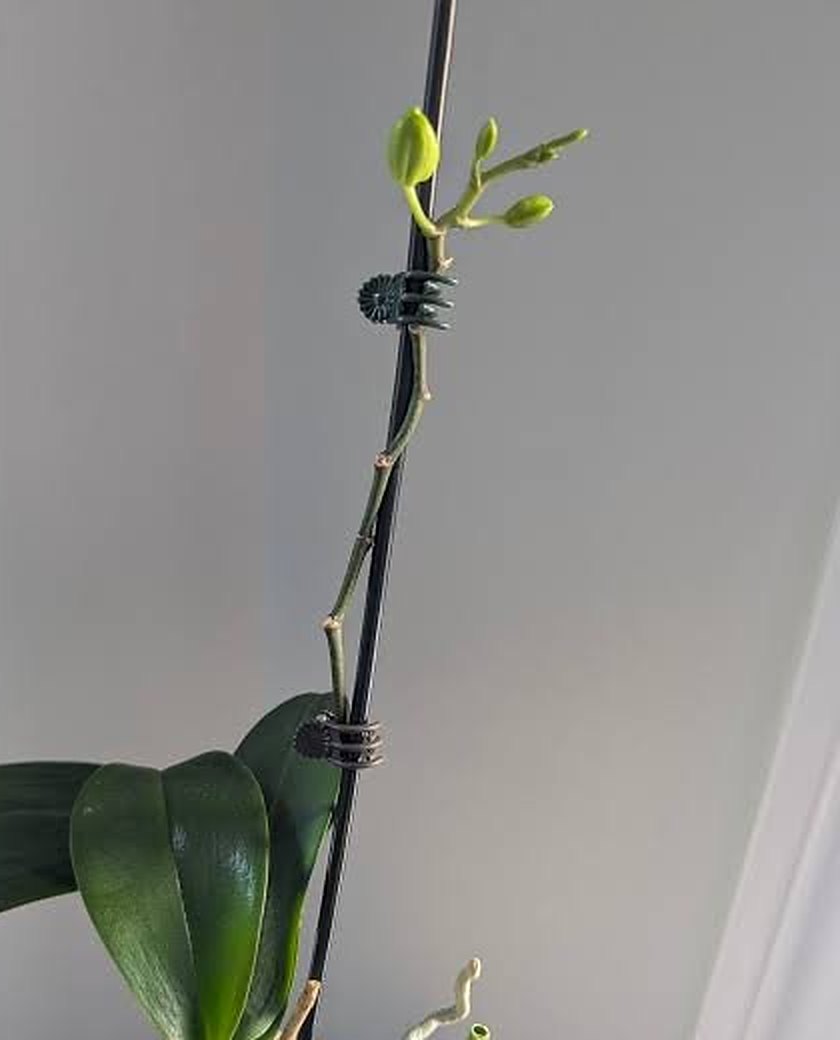
New orchid flower spike with young buds, clipped to a stake

Flowering

Won’t re-bloom

Healthy leaves, but no new spike season after season.

Check: bright, indirect light, cooler autumn nights and steady feeding.

Pink orchid with some flowers wilting

Flowers

Flowers fading fast

Flowers wilt or drop much sooner than expected.

Check: heat and direct sun. Keep it bright, cool and on Orchid Bloom.

Not every problem is nutrition. Light, watering, temperature, pests and old potting mix can cause similar signs.

A year with Australian orchids

Four Seasons. Two Simple Feeds.

Flowering times vary by orchid and region, so choose the bottle by what your orchid is doing.

Australian seasons · Southern Hemisphere
Dec – Feb Summer

Growth season

Many orchids produce new leaves, roots and pseudobulbs during warmer weather. Use Bloom instead if a spike, buds or flowers are present.

Grow—unless flowering
Mar – May Autumn

Watch for new spikes

Cooler nights can trigger spikes in moth orchids. Continue with Grow until the first spike appears, then switch to Bloom.

Grow → Bloom at first spike
Jun – Aug Winter

Many orchids flower

Cymbidiums, moth orchids and many native orchids may flower through winter. Use Bloom whenever spikes, buds or flowers are present.

Bloom if flowering
Sep – Nov Spring

Peak for many orchids

Many Australian orchids flower from August to October. Continue with Bloom until the last flower drops, then return to Grow.

Bloom → Grow after flowering

Typical seasonal pattern only

Orchid Grow No spike, buds or flowers
Orchid Bloom First spike to final flower

No spike, buds or flowers = Grow. First spike to final flower = Bloom.

What’s inside

Two Formulas. One Orchid Cycle.

Orchid Grow is nitrogen-rich for leaves and roots. Orchid Bloom shifts to phosphorus and potassium for spikes and flowers.

Orchid Grow 500 mL bottle

Orchid Grow

NPK 14-3-11

Nitrogen-rich for new leaves, roots and pseudobulbs between flowerings.

14%Nitrogen 3%Phosphorus 11%Potassium
Use when there is no spike, bud or flower
Orchid Bloom 500 mL bottle

Orchid Bloom

NPK 8-18-24

Phosphorus and potassium-rich for spikes, buds and longer-lasting flowers.

8%Nitrogen 18%Phosphorus 24%Potassium
Use from the first spike to the final flower

Also in both formulasChelated

CaCalcium1.2%
MgMagnesium0.5%
FeIron0.10–0.12%
MnManganese0.01%
ZnZinc0.01%
BBoron0.052%
CuCopper0.002%
MoMolybdenum0.001%
Read more: Orchid Grow & Bloom explainedShow less

Orchid fertiliser made for the way orchids grow

Orchids don’t feed like most houseplants. In nature many grow on trees and rocks, taking small amounts of nutrients from rain, leaf litter and the air. In a pot they usually grow in bark or moss, which holds very little food on its own. That’s why regular, gentle feeding with a fertiliser made for orchids makes such a difference.

Orchid Grow and Orchid Bloom are concentrated liquid orchid fertilisers, made in Australia for exactly this: a small dose at every watering, in a nutrient balance that matches what your orchid is doing right now.

What does NPK mean?

Every fertiliser label lists three numbers, known as the NPK. They show the percentage of nitrogen (N), phosphorus (P) and potassium (K), always in that order.

Nitrogen drives leafy growth and healthy roots. Phosphorus supplies the energy plants use to build roots, flower spikes and buds. Potassium controls how water and sugars move through the plant and supports flower colour, strength and lasting power. Change the balance between the three, and you change what your orchid puts its energy into.

What NPK 14-3-11 means in Orchid Grow

Orchid Grow is NPK 14-3-11: 14% nitrogen, 3% phosphorus and 11% potassium, measured as weight per volume (w/v). Put simply, every 100 mL of concentrate contains about 14 g of nitrogen, 3 g of phosphorus and 11 g of potassium.

Nitrogen is the biggest share because this is the growing phase. After flowering, your orchid needs to make new leaves and roots, and in orchids such as cymbidiums and dendrobiums, new pseudobulbs. The potassium keeps that new growth firm and balanced. Strong leaves and roots built now are what store the energy for the next round of flowers.

What NPK 8-18-24 means in Orchid Bloom

Orchid Bloom is NPK 8-18-24: 8% nitrogen, 18% phosphorus and 24% potassium (w/v). Here the balance flips. Nitrogen drops, so your orchid isn’t pushed into making extra leaves while it should be flowering.

Phosphorus and potassium rise to support what matters during flowering: pushing up the spike, setting buds and opening flowers with good colour that last. Potassium is the largest share because flowers use a lot of water and energy, and potassium helps the plant move both to where they’re needed.

Why a two-part orchid fertiliser?

A single all-purpose fertiliser has to compromise. If it’s high in nitrogen, it keeps encouraging leaves when your orchid should be flowering. If it’s high in phosphorus and potassium all year, your orchid misses out on the nitrogen it needs to grow.

Splitting the job into two bottles lets you give your orchid the right balance at the right time. Feed Orchid Grow while there’s no spike, buds or flowers. Switch to Orchid Bloom as soon as the first spike appears, then go back to Grow after the last flower drops. Both use the same rate, so switching is as simple as picking up the other bottle.

Urea-free nitrogen

Both formulas are urea-free. Many general fertilisers use urea as a low-cost source of nitrogen, but it has to be broken down by soil microbes before roots can use it. Orchid mixes of bark, moss or perlite have far fewer of those microbes than garden soil.

Urea-free nitrogen is supplied in forms that orchid roots can take up straight away, which suits roots that are used to quick, light feeds.

Calcium, magnesium and chelated trace elements

NPK is only part of the story. Both formulas include calcium (1.2%) and magnesium (0.5%). Calcium helps build strong cell walls, so new leaves, roots and flower stems grow firm. Magnesium sits at the centre of chlorophyll and keeps leaves a healthy green.

They also contain six trace elements: iron, manganese, zinc, boron, copper and molybdenum. Iron, manganese and zinc are chelated with EDTA, which keeps them dissolved and available to your orchid instead of locking up in the potting mix or in hard tap water.

How to use Orchid Grow and Orchid Bloom

Shake the bottle, then add 1 mL per litre of water (one 5 mL cap makes 5 litres) and use it at every watering. Start with Orchid Grow after your orchid finishes flowering, and switch to Orchid Bloom when flower spikes first appear.

Once a month, water with plain water only to flush out fertiliser salts that build up in the potting mix. This little-and-often routine mirrors how orchids feed in nature and avoids the root damage that strong, occasional doses can cause.

Suitable for all orchid types

Orchid Grow and Orchid Bloom suit all orchid types, including moth orchids (Phalaenopsis), cymbidiums, dendrobiums, oncidiums, cattleyas and vandas. Whether yours lives on a windowsill, a patio or in a shadehouse, the routine is the same: choose the bottle by what your orchid is doing, not by the date.


Full typical analysis (% w/v)

NutrientOrchid GrowOrchid Bloom
Nitrogen (N)14%8%
Phosphorus (P)3%18%
Potassium (K)11%24%
Calcium (Ca)1.2%1.2%
Magnesium (Mg)0.5%0.5%
Iron (Fe)*0.12%0.10%
Manganese (Mn)*0.01%0.01%
Zinc (Zn)*0.01%0.01%
Boron (B)0.052%0.052%
Copper (Cu)0.002%0.002%
Molybdenum (Mo)0.001%0.001%

* Chelated with EDTA. Urea-free. From the product labels.
Quick answers

How much feed does one bottle make?

At 1 mL per litre, each 500 mL bottle makes up to 500 litres of orchid feed.

When do I switch back to Orchid Grow?

When the last flower drops and there are no spikes or buds left. Then keep feeding Grow until the next spike appears.

What does % w/v mean?

Weight per volume: grams of each nutrient in every 100 mL of concentrate, before you dilute it.

hi hji456456546 sdfdsf
npk bar
descirption see more

FAQ

Cart (0 items)

No products in the cart.