Fertilising mandarin trees
Transform Your Garden into a Personal Paradise!
Add Your Heading Text Here
Best Fertiliser for Mandarin Trees
Mandarin trees are heavy feeders, but they are far more sensitive to nutrient balance than many other fruit trees. The wrong fertiliser can produce lush green growth with very little fruit, while the correct formulation supports steady growth, reliable flowering, and consistent cropping.
Why mandarin trees need citrus-specific fertiliser
Mandarins have different nutritional demands to ornamental plants and even other fruit trees. General-purpose fertilisers are often too high in nitrogen, which pushes leaf and shoot growth at the expense of flowers and fruit. This is one of the most common reasons mandarin trees fail to crop well despite appearing healthy.
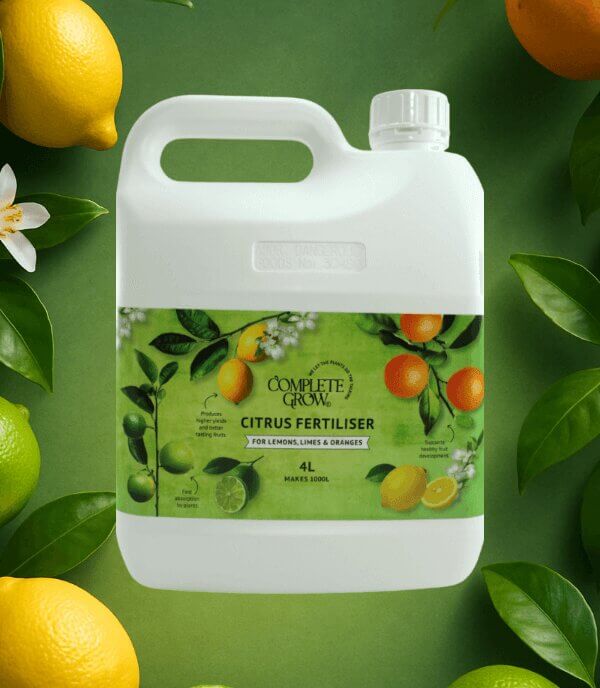
Using a citrus fertiliser designed specifically for citrus plants ensures nutrients are supplied in ratios that favour flowering, fruit retention, and fruit quality rather than excessive foliage. This targeted approach produces more predictable and repeatable results year after year.
Recommended NPK balance for mandarin trees
Mandarin trees require moderate nitrogen to maintain healthy leaves, but they rely heavily on potassium during flowering and fruit development. Potassium plays a key role in flower strength, fruit set, sugar development, and rind quality.
A potassium-forward citrus formulation around NPK 6-2-12 supports controlled vegetative growth while prioritising flowering, fruit size, sweetness, and overall crop quality.
Fertilisers with excessive nitrogen often delay flowering, increase flower drop, and reduce fruit hold. A citrus-focused NPK balance avoids these issues by aligning nutrition with the natural growth cycle of mandarin trees.
The role of calcium and magnesium in mandarin health
Beyond NPK, mandarin trees depend on calcium and magnesium for long-term stability and fruit performance. Calcium strengthens cell walls, helping reduce fruit drop and improve fruit firmness, while magnesium is essential for chlorophyll production and efficient photosynthesis.
Deficiencies are most likely to appear during heavy flowering and fruiting, particularly in container-grown trees or sandy soils where nutrients leach quickly. Supplementing with a Cal-Mag fertiliser during these high-demand periods helps maintain deep green foliage, supports fruit development, and prevents recurring nutrient stress.
When combined with a citrus-specific fertiliser, calcium and magnesium supplementation contributes to stronger trees, improved yields, and more consistent fruit quality over time.


When and How Often to Fertilise Mandarin Trees
Correct timing plays a major role in how effectively mandarin trees use nutrients. Even the best fertiliser will underperform if applied when the tree is inactive or under stress. Mandarins follow a predictable seasonal growth cycle, and feeding should align with that rhythm.
Seasonal fertilising schedule
Mandarin trees should be fertilised during the warmer months, typically from early spring through early autumn. This is when new leaves emerge, flowers form, and fruit begins to develop. During this period, nutrient uptake is high and fertiliser is used efficiently by the tree.
Fertilising during winter is not recommended. Growth slows significantly in cooler temperatures, and excess nutrients can accumulate in the soil, increasing the risk of root stress and salt build-up.
How often to fertilise
For in-ground mandarin trees, fertilising every 3โ4 weeks during the active growing season is generally sufficient. This provides a steady supply of nutrients without overwhelming the root system.
Container-grown mandarin trees require more frequent feeding. Nutrients wash out of pots faster due to regular watering, so lighter but more consistent applications are more effective than heavy, infrequent doses.
A regular feeding routine supports stable growth, reduces flower drop, and improves fruit retention as the season progresses.


Common Fertilising Mistakes, Recovery and Long-Term Results
Many mandarin tree problems are not caused by a lack of fertiliser, but by incorrect product choice, timing, or application rate. Understanding these common mistakes helps prevent long-term decline and inconsistent fruiting.
Mistakes that reduce flowering and fruiting
- Using high-nitrogen fertilisers that promote leaves but suppress flowers
- Applying large doses infrequently instead of steady, moderate feeding
- Fertilising during winter dormancy
- Ignoring calcium and magnesium during heavy fruit development
- Allowing nutrient deficiencies to persist across multiple seasons
Recovering an underperforming mandarin tree
Mandarin trees that have experienced poor flowering or weak growth can often recover within one growing season when nutrition is corrected. Switching to a citrus-specific fertiliser, improving feeding consistency, and supplementing calcium and magnesium during high demand periods stabilises growth and improves fruit set.
Visible improvements typically include darker green leaves, stronger flower clusters, reduced flower drop, and improved fruit size and quality over time.
Frequently Asked Questions
What is the best fertiliser for mandarin trees?
A citrus fertiliser designed specifically for citrus plants with a potassium-forward NPK ratio, such as 6-2-12, delivers the most reliable results.
How often should I fertilise mandarin trees?
Every 3โ4 weeks during the growing season for in-ground trees. Container-grown trees may need more frequent feeding.
Can I use general-purpose fertiliser on mandarins?
General-purpose fertilisers are often too high in nitrogen and can reduce flowering and fruit production over time.
Do mandarin trees need Cal-Mag?
Calcium and magnesium supplementation is beneficial during flowering and fruit development, especially in pots or sandy soils.
Mandarin Tree Guides Hub
How to Grow a Mandarin Tree
A complete mandarin tree care guide covering soil, watering, planting, sunlight, and how to grow your mandarin tree from seed.
Best Fertiliser for Mandarin Trees
Learn when and how to fertilise your mandarin trees to promote healthy growth, better fruiting, and improve the overall tree health.
Mandarin Tree Leaves Curling: Causes & Fixes
Understand why mandarin tree leaves curl and how to fix it, including watering, pests, and nutrient imbalances.
Mandarin Tree Leaves Turning Yellow: Causes & Fixes
Explore common reasons mandarin tree leaves turn yellow and how to prevent or fix it, including watering issues and nutrient deficiencies.
Why is My Mandarin Tree Dropping Fruit? Causes & Fixes
Find out why your mandarin tree is losing fruit and how to prevent it by fixing watering, nutrient issues, or environmental factors.
How to Prune a Mandarin Tree
Learn how to prune mandarin trees for optimal shape, air circulation, and fruiting. Step-by-step guide for healthy tree maintenance.
Recommended Products
- Quick View
- Select options This product has multiple variants. The options may be chosen on the product page
Cal-Mag Hydroponic Nutrients Fertiliser
- Quick View
- Select options This product has multiple variants. The options may be chosen on the product page