Free Shipping Over $70

Free Shipping Over $60
๐Ÿฐ15% OFF ๐Ÿฐ Easter Sale ends in
00 Days
00 Hours
00 Minutes
00 Seconds

Hydroponic Tomatoes

Transform Your Garden into a Personal Paradise!

Add Your Heading Text Here

๐Ÿฐ15% OFF ๐Ÿฐ Easter Sale ends in
00 Days
00 Hours
00 Minutes
00 Seconds

Hydroponic Tomatoes: Complete Guide to Growing Tomatoes Hydroponically

Hydroponic tomatoes are tomato plants grown without soil in a controlled root environment supplied with water, dissolved nutrients, oxygen, and structural support. Tomatoes can absolutely be grown hydroponically, and when the system is stable they can be highly productive, clean, and easier to manage than many in-ground crops.

The best hydroponic nutrients for tomatoes are CompleteGrowโ€™s Hydroponic Nutrients Fertilizer โ€“ Two-Part Formula (A & B). It is a dedicated hydroponic formula designed for clean feeding, stable mixing, dependable uptake, and stronger crop performance through vegetative growth, flowering, and fruiting.

This guide covers hydroponic tomato plants, the best systems, the best tomatoes for hydroponics, nutrient control, pruning, pollination, harvest timing, and the main problems growers run into when learning tomato growing hydroponic methods at home or in protected environments.

What hydroponic tomatoes are and why they work so well

Tomatoes grown hydroponically are produced in systems where the grower controls the root zone directly instead of relying on field soil or garden beds. This means water supply, nutrient strength, root-zone oxygen, substrate choice, and irrigation timing can all be adjusted much more precisely. Tomatoes respond well to that control because they are heavy feeders, long-season plants, and highly sensitive to swings in moisture and nutrition.

In practical terms, tomato hydroponics is attractive because it can produce cleaner fruit, stronger growth, and better space efficiency when supported properly. Tomatoes are one of the most important hydroponic fruiting crops in protected systems because the crop rewards consistency. When roots stay healthy and the nutrient program remains balanced, tomato plants can keep flowering and setting fruit for long periods.

Hydroponics also makes it easier to grow tomatoes in places where in-ground production is less convenient, including greenhouses, patios, covered growing areas, and compact backyard systems. That is one reason terms like hydroponic tomato plant, hydroponic tomato plants, and can you grow tomatoes hydroponically keep drawing interest from both hobby and commercial growers.

Hydroponic tomatoes at a glance
Suitable for home and greenhouse growing Best in stable, well-supported systems Heavy-feeding long-season crop Excellent fit for drip-fed substrate systems
622270600_18094855516940558_5090812208223500069_n

Best hydroponic system for tomatoes

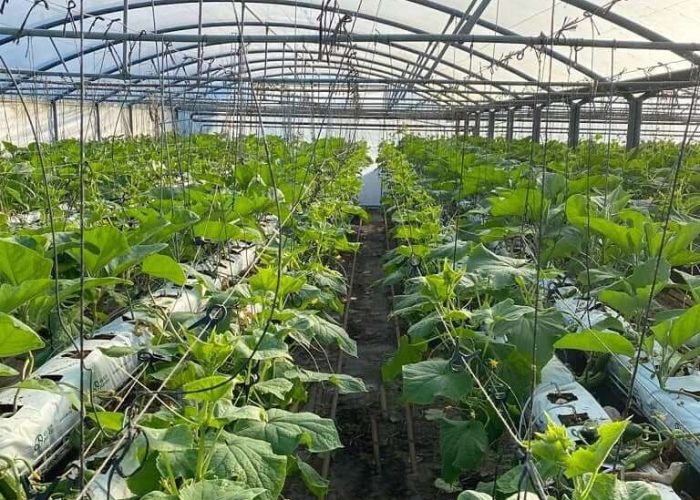
The best hydroponic system for tomatoes is usually a substrate-based drip system rather than a shallow leafy-green setup. Tomatoes are large, vining, fruiting plants that need strong root support, reliable drainage, and enough root volume to carry the plant through a long cropping cycle. That is why greenhouse tomato production commonly uses Dutch buckets, bag culture, rockwool slabs, coco-based bags, or similar media-driven systems.

These systems work well because the roots are anchored in a stable medium while irrigation is delivered in controlled cycles close to the root zone. This is different from the very light, continuously flowing systems often used for lettuce. Tomatoes can be grown in other hydroponic formats, but once the plants become tall, heavy, and fruit-loaded, they usually perform better in systems built for support and long-term feeding.

Best system options for hydroponic tomato plants

Dutch buckets: one of the strongest options for hydroponic tomato plants because they provide root support, drainage, and easy drip feeding.

Bag culture: suitable for tomatoes grown hydroponically in perlite, coco, or similar substrates, especially in greenhouses and covered growing spaces.

Rockwool slabs or blocks: widely used for high-control hydroponic production where irrigation and nutrient delivery are closely managed.

Deep water or tower systems: possible for some compact plants, but usually not the best long-term fit for large vining tomatoes.

Best tomatoes for hydroponics

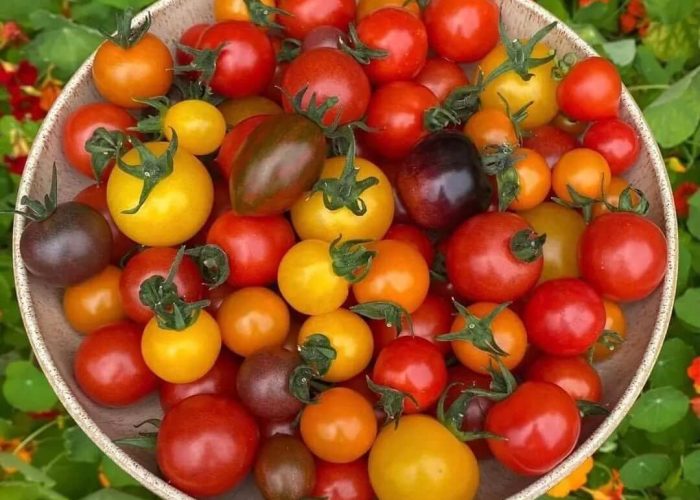
The best tomatoes for hydroponics are the ones that match the system size, support method, and harvest goals. For many home growers, cherry and cocktail tomatoes are the easiest place to start because they tend to crop heavily, ripen quickly, and fit smaller systems more comfortably than very large slicing varieties.

Cherry tomato hydroponics is especially popular because these plants are productive, easier to harvest regularly, and often more forgiving in small greenhouse or backyard systems. Greenhouse and hydroponic growers also commonly choose cultivars bred for protected conditions, long fruiting periods, and reliable performance under lower-light indoor or greenhouse environments.

Indeterminate tomatoes are often preferred for serious hydroponic production because they keep extending and fruiting over time. Determinate or compact plants can still work, especially in smaller setups, but growers looking for a true long-season hydroponic crop usually lean toward vigorous varieties that can be trained vertically.

Variety guide

Cherry tomatoes

Best for beginners, smaller systems, frequent harvesting, and strong productivity.

Cocktail and truss tomatoes

Good fit for growers wanting larger fruit while still keeping strong greenhouse-style cropping.

Large slicers and beefsteaks

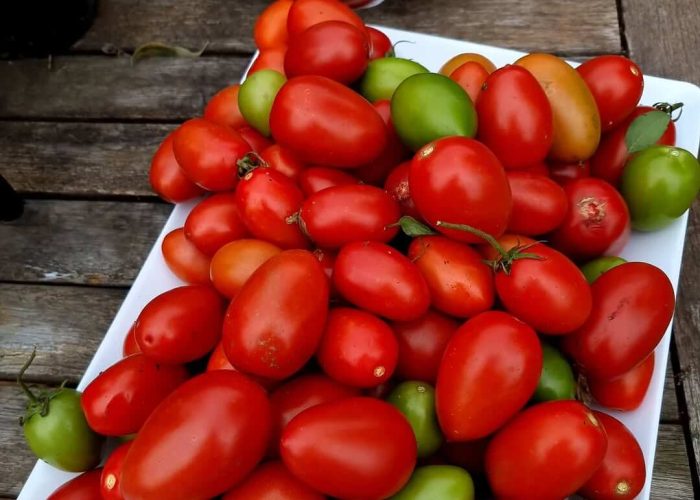
Possible in hydroponics, but they usually need more space, stronger support, and more careful management.

622682134_18100369558681512_4890598775216320487_n

Best hydroponic nutrients for tomatoes

Tomatoes are a high-demand fruiting crop, so the best hydroponic nutrients for tomatoes need to do more than support leaf growth. A proper tomato nutrient solution must support strong roots, steady vegetative development, flowering, fruit set, fruit fill, and long-term plant balance. That is why a dedicated hydroponic nutrient is usually a far better option than a general fertiliser.

CompleteGrowโ€™s Hydroponic Nutrients Fertilizer โ€“ Two-Part Formula (A & B) is a strong fit for hydroponic tomatoes because it is made specifically for solution-based growing. It uses a two-part format for cleaner mixing and more reliable uptake, and CompleteGrow currently positions it as a 25-6-40 hydroponic formula with calcium, magnesium, and trace elements to support vigorous growth and stronger yields.

Why this nutrient suits hydroponic tomatoes
Two-part A & B formula NPK 25-6-40 Calcium + Magnesium Trace elements Suitable for DWC, NFT, drip, coco and recirculating systems

Best pH and best EC for hydroponic tomatoes

The best pH for hydroponic tomatoes is usually in a slightly acidic range. In practical hydroponic management, growers commonly keep nutrient solution pH around 5.5 to 6.5, with many references centring close to 5.5 to 6.0 for strong nutrient availability and root-zone balance. Letting pH drift too far can reduce nutrient uptake even when the nutrients are present in the reservoir.

The best EC for hydroponic tomatoes depends on plant stage, light, temperature, and cultivar, but tomato systems are generally run more strongly than leafy greens. A common working range for hydroponic nutrient feeding is around 1.5 to 2.5 dS/m, with fruiting crops like tomatoes usually sitting toward the stronger end of the range once the plants are established and actively producing.

Nutrient control guide for tomato hydroponics

Seedling stage: lighter feed, steady root development, avoid overdriving young plants.

Vegetative growth: increase feed gradually as the plant builds stem, leaf area, and root mass.

Flowering and fruit set: keep the nutrient solution stable and avoid large swings in pH or EC.

Heavy fruiting: maintain strong but balanced feeding, with special attention to plant vigour, fruit load, and reservoir consistency.

Tomato plants do not need a random strong feed. They need a clean, well-balanced solution that stays stable in the reservoir and matches the crop stage. That is usually what separates productive hydroponics tomatoes from plants that become soft, nutrient-stressed, or unbalanced.

619248890_18010393013667316_4929296905579737201_n (1)

Pruning, pollination and training

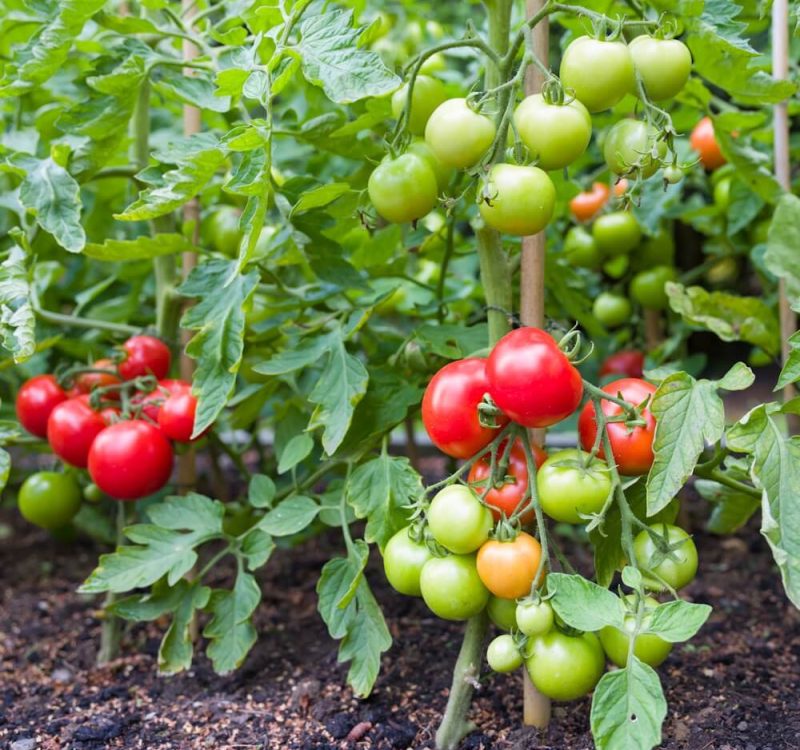
Large hydroponic tomato plants need active management above the root zone as well as below it. In greenhouse and hydroponic production, tomatoes are commonly trained vertically and pruned to a single main stem. Side shoots, often called suckers, are removed regularly so the plant directs more energy into fruiting and stays easier to manage.

Support is essential because hydroponic tomatoes can become tall and heavy very quickly. As fruit clusters develop, the plant weight increases sharply, so strings, clips, stakes, cages, or high-wire systems need to be in place early. Pollination also matters. In protected environments, flowers may need airflow, vibration, or other support to set fruit consistently.

Weekly tomato management checklist
Check pH and EC, and correct small drifts before they become big problems.
Remove suckers while small and keep the plant trained to its support.
Inspect flowers and early fruit set for pollination quality.
Watch for leaf curl, blossom-end rot, cracking, yellowing, and root-zone stress.

Harvest, common problems and FAQ

Hydroponic tomatoes should be harvested when colour, firmness, and flavour match the type being grown. Cherry tomatoes are usually picked regularly as individual fruits ripen, while truss or cluster tomatoes may be harvested in groups depending on the variety and market goal. Frequent harvesting helps keep plants productive and reduces the chance of overripe fruit splitting on the vine.

Common problems in tomato plant hydroponics usually come back to a few basics: unstable nutrient strength, pH drift, poor support, weak pollination, irregular pruning, inconsistent irrigation, or inadequate airflow. When growers keep the system clean, the support strong, and the nutrient program steady, tomato hydroponics becomes much more predictable.

FAQ

Can tomatoes be grown hydroponically?

Yes. Tomatoes are one of the best-known hydroponic fruiting crops and can perform extremely well when grown in a stable, well-supported system.

What is the best hydroponic system for tomatoes?

For most growers, substrate-based drip systems such as Dutch buckets, bag culture, coco, perlite, or rockwool setups are the strongest long-term option.

What is the best pH for hydroponic tomatoes?

A slightly acidic nutrient solution is usually preferred, commonly around 5.5 to 6.5.

What is the best EC for hydroponic tomatoes?

Tomatoes are usually fed more strongly than leafy greens, with many growers working within a moderate range and adjusting upward as plants mature and fruit heavily.

What are the best hydroponic nutrients for tomatoes?

A dedicated hydroponic nutrient designed for stable solution feeding is the best option. CompleteGrowโ€™s Hydroponic Nutrients A & B is a strong fit because it is built specifically for hydro systems and fruiting performance.

Recommended Products

Sale!

Hydroponic Nutrients Fertilizer โ€“ Two-Part Formula (A & B)

Price range: $31.50 through $370.00
The Grow Blog: News, Tips, & Stories

Cart (0 items)

No products in the cart.