
Fertilize Grape Vines
Transform Your Garden into a Personal Paradise!
How Often Should You Fertilize Grape Vines?
Short answer: Feed regularly, but not constantly. In Australia, fertilize grape vines every 3–4 weeks in spring (budburst → pre-flower) and every 4 weeks in summer (fruit set → sizing). Stop in winter. Pots need lighter doses more often. The exact cadence depends on vine age, soil type, and your climate.
3 factors that set your feeding frequency
- Growth stage: Grapes need more nutrition while building canopy (spring) and loading berries with sugars (mid–late summer). Dormant vines (winter) need none.
- Soil & irrigation: Sandy/coastal soils and frequent watering leach nutrients fast → feed a bit more often. Heavier loams hold nutrients longer → slightly less often.
- Container vs in-ground: Pots lose nutrients quickly. Use half-strength, but feed every 2–3 weeks in active growth and flush monthly with plain water.
For simplicity and reliability: use a two-phase program—balanced feed for canopy, then fruiting feed for sugars and berry quality:
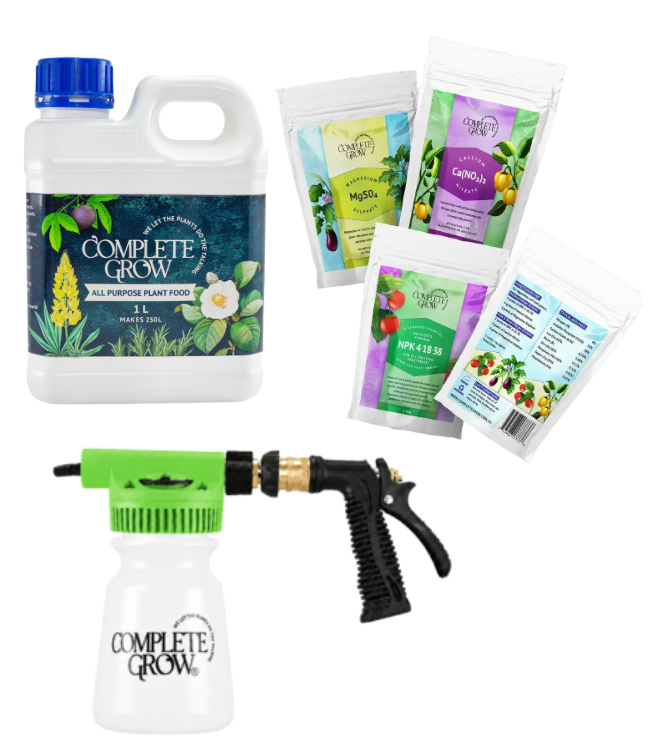
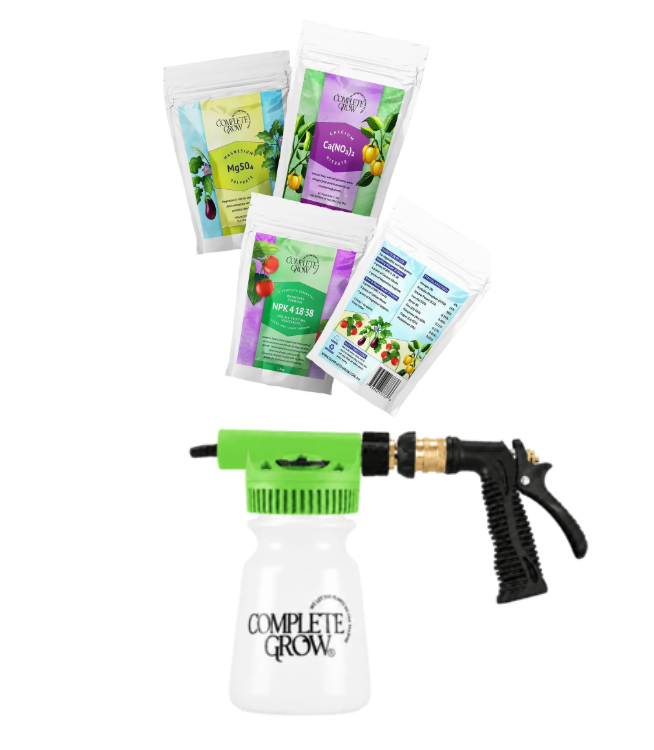
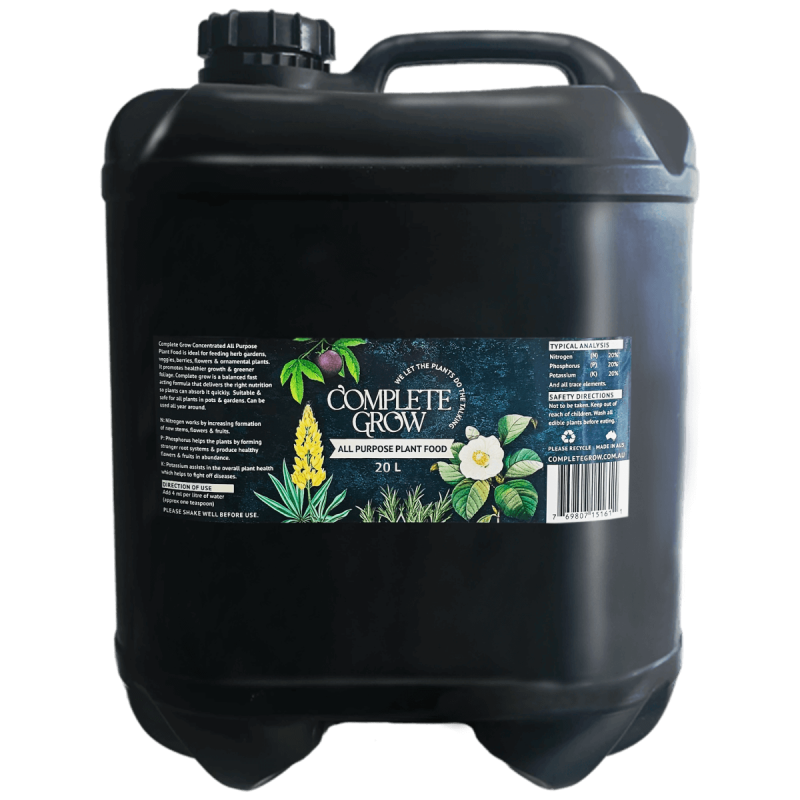
• Spring canopy: CompleteGrow NPK 20-20-20
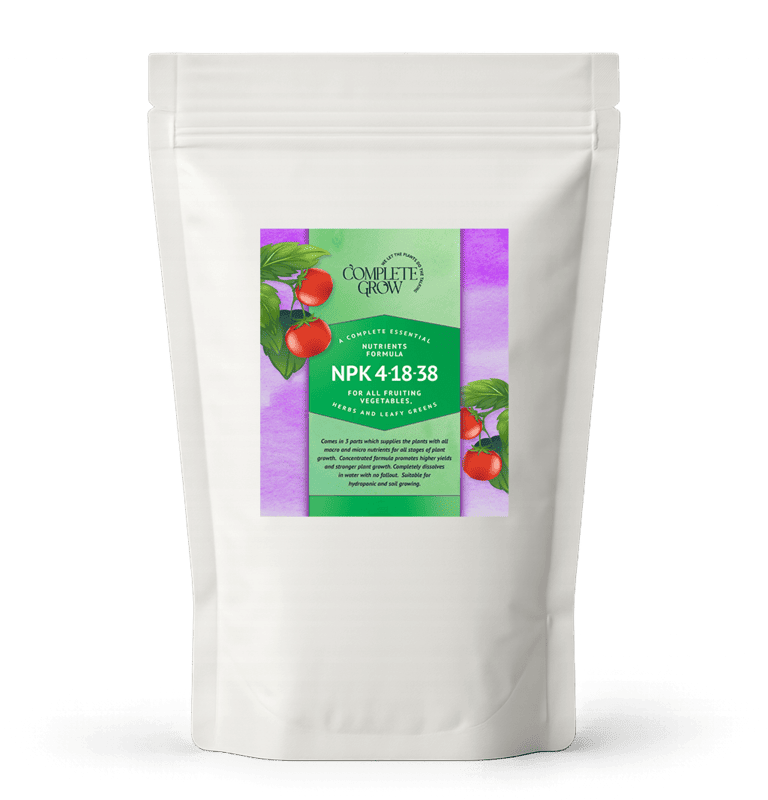
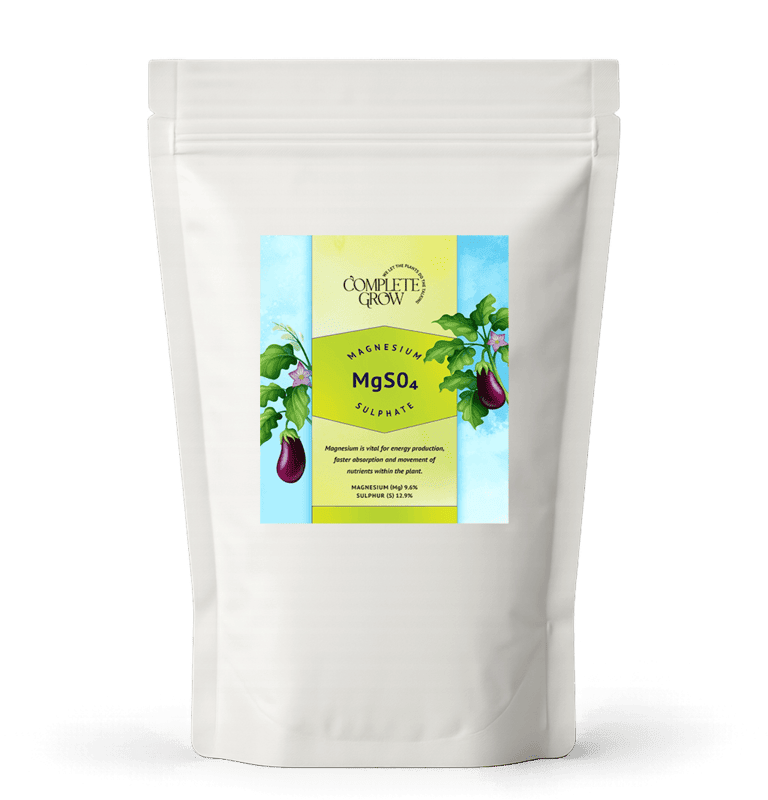
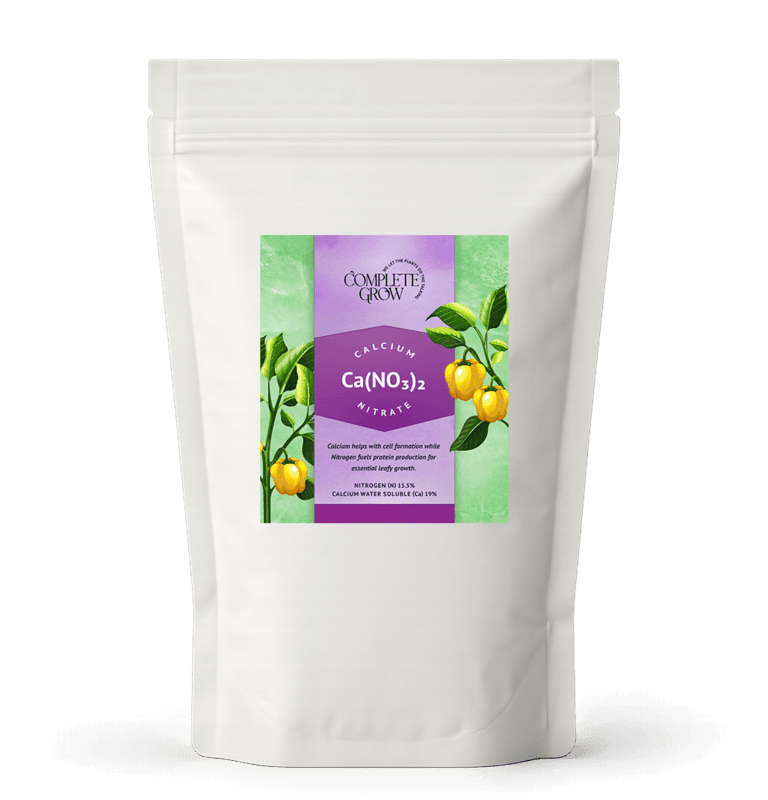
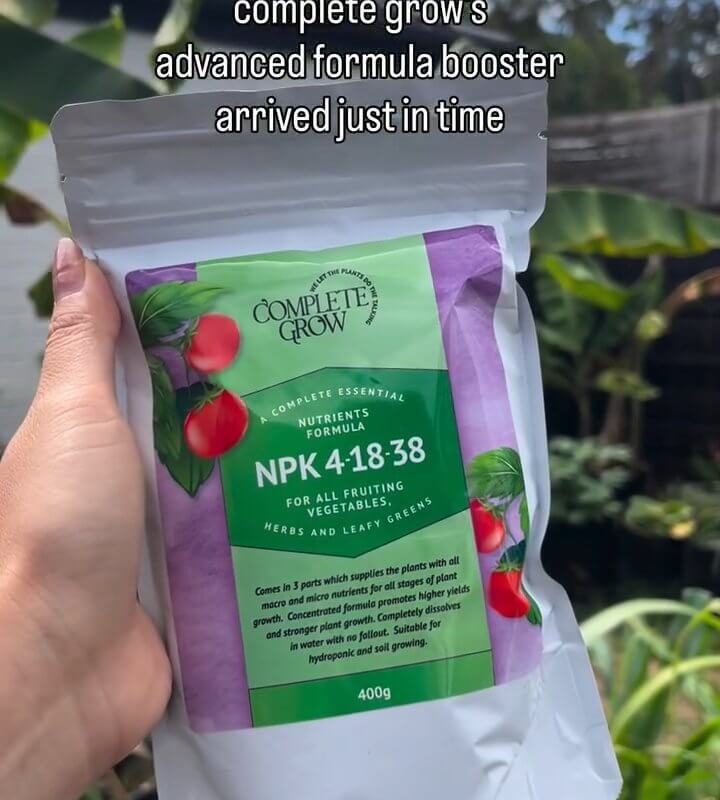
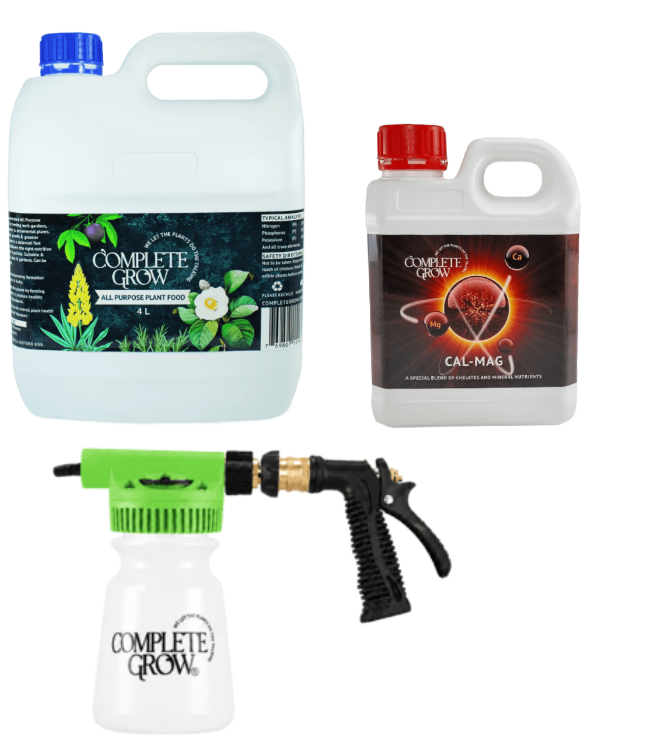
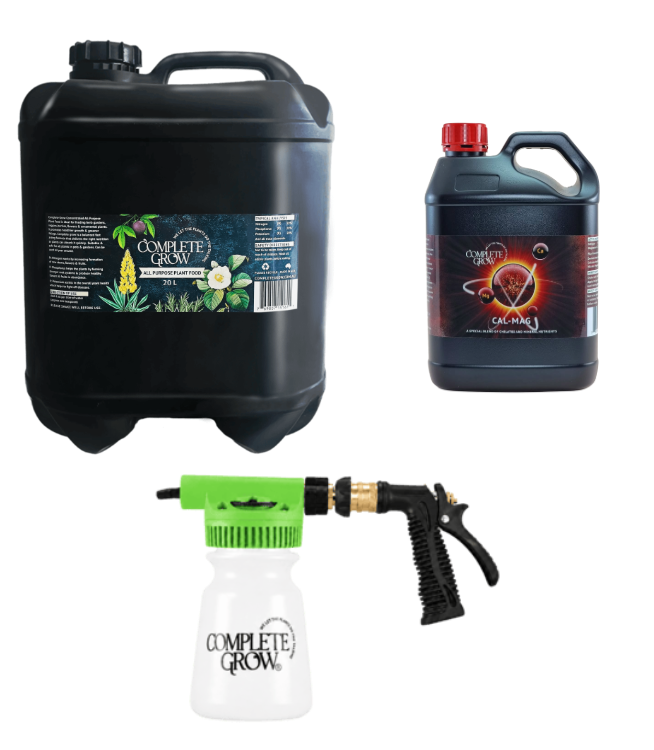
• Summer fruiting: CompleteGrow NPK 4-18-38 + CaMg
Seasonal Feeding Schedule (Australia)
| Season & Stage | How Often | What to Use | Notes |
|---|---|---|---|
| Spring (Sep–Nov) Budburst → Pre-flower | Every 3–4 weeks | NPK 20-20-20 | Builds canopy & roots for photosynthesis. Water first, then feed, then water in. |
| Early Summer (Dec) Flower → Fruit set | Every 4 weeks | Transition to NPK 4-18-38 + CaMg | P raises flower/fruit set; K drives berry build; CaMg improves skin strength & chlorophyll. |
| Mid–Late Summer (Jan–Feb) Berry sizing → Colouring | Every 4 weeks (pots: 2–3 weeks, half-strength) | NPK 4-18-38 + CaMg | High K = sugars & flavour; Ca = firmer berries, less splitting in heatwaves. |
| Autumn (Mar–Apr) Ripening → Post-harvest | Optional light feed once | Light 4-18-38 + CaMg | Helps replenish reserves; avoid late, lush growth in frost-prone zones. |
| Winter (May–Aug) Dormant | Do not fertilize | — | Prune, mulch, improve drainage/structure; no nutrient demand now. |
Regional & age adjustments
- Warm QLD/NT & coastal WA: Longer season; you may add one extra light summer feed in January if vines aren’t over-vigorous.
- Cool VIC/TAS & upland NSW: Tight, cool springs—delay first feed until soils warm and shoots extend 10–15 cm.
- Young vines (years 1–2): Slightly more frequent, lighter feeds to build framework. Focus on structure, not yield.
- Mature vines (year 3+): Standard cadence above. If canopy gets too leafy, skip a spring feed rather than cutting summer potassium.
Application best practice (to protect roots & maximise uptake)
- Water → Feed → Water-in: Pre-moisten soil, apply diluted solution, then a brief water-in to move nutrients to feeder roots.
- Target the drip line: Apply around the outer canopy where the fine feeder roots live—not against the trunk.
- Mulch: 5–8 cm of straw/sugarcane mulch reduces leaching and evens soil temperature for smoother nutrient uptake.
- Foliar rescue (optional): For visible deficiencies, a light foliar mist at dawn speeds correction (don’t replace soil feeding).
Are you feeding often enough? Use the plant as your meter.
- Pale leaves / slow shoots (spring): Increase frequency to every 3 weeks with NPK 20-20-20.
- Plenty of leaves, poor flowering: You’re feeding too nitrogen-heavy or too often. Hold one spring feed and move to 4-18-38 earlier.
- Small/sour berries (mid-summer): Not enough potassium. Keep the 4-18-38 + CaMg cadence consistent.
- Berry splitting in heatwaves: Keep CaMg support steady and water deeply but less often to avoid sudden osmotic swings.
- Leaf margins scorch after feeding: Roots were dry or mix was too strong. Always water first; halve the dose next time.
Quick FAQ
How often should you fertilize grape vines in pots? Every 2–3 weeks at half-strength during active growth, plus a plain-water flush every 4–6 weeks to prevent salt build-up.
Should I fertilize right after pruning? Wait until buds push and shoots are 5–10 cm long—then begin spring’s first balanced feed.
Can I use compost instead? Compost improves structure and moisture holding, but doesn’t deliver the precise N-P-K + CaMg grapes need at each stage. Pair compost with NPK 20-20-20 in spring and 4-18-38 + CaMg in summer.
Do I ever feed more than monthly? Only in very sandy soils or during prolonged hot, irrigated spells—then tighten to every 3 weeks (still at label rates). Don’t stack heavy doses.
Pro tips for smarter scheduling
- Match water to feeding: Deep, infrequent irrigation pairs best with monthly feeds—prevents leaching and keeps roots active.
- Skip a feed if canopy explodes: You want dappled shade over fruit, not a jungle. Hold one spring feed rather than sacrificing summer potassium.
- Watch pH: Grapes prefer ~6.0–7.0. If leaves yellow between veins (high pH lockout), CaMg foliar rescue + soil organic matter help.
Set your cadence by the season, then fine-tune by what the vine tells you. For most Aussie backyards, the “every 3–4 weeks in spring, monthly in summer, stop in winter” rhythm—using NPK 20-20-20 then 4-18-38 + CaMg—delivers vigorous vines and sweet, full-sized clusters year after year.
Related Grapevine Topics
- How to Plant a Grape Vine Timing • soil • spacing
- Best Fertilizer for Grape Vines 20-20-20 → 4-18-38 + CaMg
- What Is a Good Fertilizer for Grapes? Balanced vs fruiting feeds
- How to Fertilize Grape Plants Methods • doses • cadence
- How Often to Fertilize Grapes Seasonal schedule (AU)
- Make Grapes Sweeter on the Vine Light • K feeding • water
- How to Revive a Grape Vine 10–14 day recovery plan
- Grape Leaves Turning Brown Scorch • nutrients • disease
Recommended Products
- Quick View
- Select options This product has multiple variants. The options may be chosen on the product page
Advanced Formula – Boost Flowering & Fruiting – NPK 4-18-38 + Calcium & Magnesium
- Quick View
- Select options This product has multiple variants. The options may be chosen on the product page