Hydroponic Nutrients for Herbs
Transform Your Garden into a Personal Paradise!
Add Your Heading Text Here
Hydroponic Nutrients for Herbs
Recommended nutrient for hydroponic herbs: CompleteGrow Hydroponic Nutrients Fertilizer โ Two-Part Formula (A & B)
- Two-part A & B hydroponic nutrient for clean mixing and stable solution feeding
- NPK 25-6-40 with calcium, magnesium, sulphur and trace elements
- 100% water-soluble and suited to DWC, NFT, drip, coco and recirculating setups
- Hydro rate: 3 mL Part A + 3 mL Part B per 1 L of water
- Strong fit for herbs where clean foliage, steady regrowth and flavour quality matter
Hydroponic herb nutrients are the dissolved minerals supplied directly to herb roots in a soil-free system. Because herbs are grown mainly for clean foliage, aroma and repeated harvests, the nutrient solution needs to support balanced leafy growth without pushing the plants into weak, over-soft growth.
The most successful hydroponic herb gardens are usually the ones that stay simple and stable. Most culinary herbs prefer a slightly acidic root zone, lower-to-moderate nutrient strength compared with fruiting crops, strong light, good airflow, and regular harvesting. Herbs do not use soil in hydroponics, but their natural preferences still matter. Soft leafy herbs generally like steadier moisture and moderate feeding, while woody Mediterranean herbs usually prefer lighter feeding, stronger light and a drier canopy.
Basil, mint and parsley nutrient guide
These three herbs are among the best hydroponic starter crops because they respond well to repeated cutting and generally recover fast when the nutrient solution is clean and consistent. Even so, they do not all behave the same way. Basil likes warmth and steady growth, mint is vigorous and can overtake mixed systems, and parsley is slower early but productive once established.
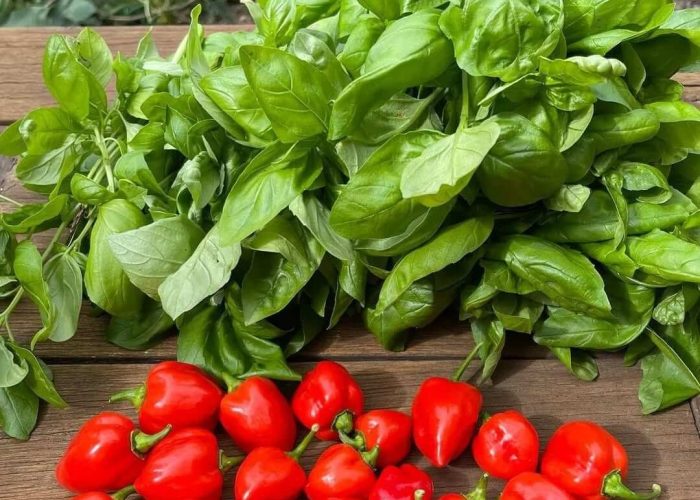
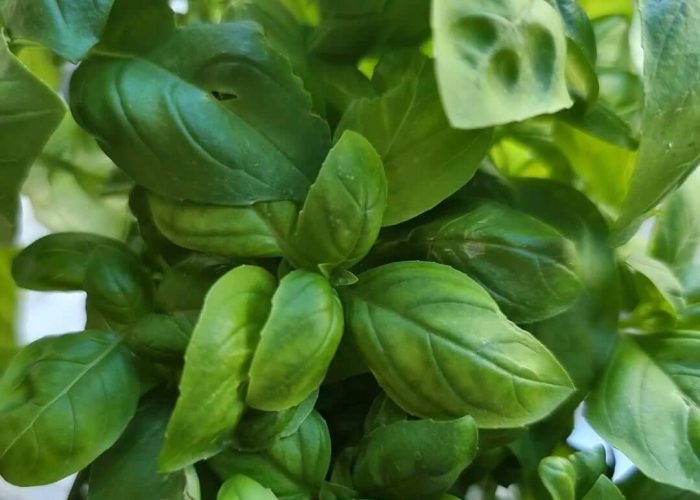
How it grows: Fast, soft and leafy. Basil is one of the easiest and most productive hydroponic herbs.
Nutrient approach: Moderate feed suits basil well. Too much nutrient can produce overly soft growth, while weak feeding often leads to pale leaves and slower regrowth.
pH and EC: Basil is commonly kept around pH 5.5 to 6.0 and EC about 1.0 to 1.6.
Light and temperature: Basil likes strong light and warmer conditions than many other herbs. Indoors, it performs best when light is consistent and the canopy stays warm rather than cold and damp.
Harvest tip: Pinch above leaf nodes, not just off the top, so the plant branches and becomes bushier instead of tall and leggy.
How it grows: Aggressive, spreading and fast to recover after cutting. Mint can become the dominant plant in mixed systems.
Nutrient approach: Mint likes steady mild-to-moderate feeding. It usually performs better with consistency than with strong nutrient pushes.
pH and EC: Mint is commonly grown around pH 5.5 to 6.0 with EC about 1.2 to 1.8.
Light and temperature: Strong light helps keep mint dense and aromatic. It tolerates a wider range of conditions than basil, but still dislikes stale air and poor root oxygen.
Harvest tip: Cut often and keep roots managed. If left untrimmed, mint can become coarse and overshadow nearby herbs.
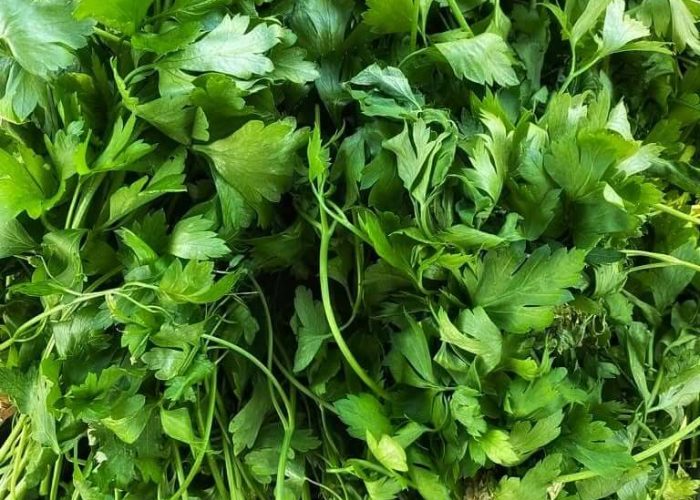
How it grows: Slower to establish than basil or mint, but very reliable once mature.
Nutrient approach: Parsley generally prefers stable, moderate nutrition and does not reward big feed swings. Once established it can handle a little more structure in the program than basil.
pH and EC: Parsley is commonly kept in a slightly acidic range around pH 5.5 to 6.5, with mild-to-moderate EC depending on stage and system.
Light and temperature: Strong light keeps parsley compact and productive. It is usually less heat-sensitive than coriander but slower than basil.
Harvest tip: Remove outer stems first and leave the centre intact so the plant keeps producing new shoots.
In a mixed hydroponic herb garden, basil and mint usually show problems quickly if light is weak or the reservoir is stale. Parsley usually shows stress more slowly, but when it stalls it often points to inconsistent feeding, poor light or a tired root zone.
Coriander, dill and chives nutrient guide
These herbs are excellent in hydroponics, but they are more sensitive to environmental timing than many growers expect. Coriander and dill can bolt quickly when warm or stressed, while chives are steady and forgiving but still lose quality if overcrowded or overfed.
How it grows: Fast and tender, but more sensitive to heat than basil, mint or parsley.
Nutrient approach: Coriander prefers a moderate, stable nutrient solution rather than a strong one. Overly rich feeding combined with warmth often pushes poor leafy quality and earlier bolting.
pH and EC: Commonly grown around pH 5.5 to 6.7 with EC about 1.2 to 1.8.
Light and temperature: Good light is important, but cooler conditions are just as important. Coriander is one of the herbs most likely to rush to flower if the canopy gets too warm.
Harvest tip: Harvest young and regularly if the goal is leaf production. Do not let plants sit too long in heat without cutting.
How it grows: Upright, airy and quick to crop, especially in bright systems.
Nutrient approach: Dill usually prefers lighter feeding than basil or parsley. It grows well when the nutrient program is clean and not too heavy.
pH and EC: Dill is commonly kept around pH 5.5 to 6.5 with EC about 0.8 to 1.4.
Light and temperature: Bright light keeps dill strong and upright. Warmth can speed growth, but too much heat can shorten the leafy stage.
Harvest tip: Harvest fronds before flowering if the goal is leaf quality rather than seed heads.
How it grows: Clumping, upright and repeat-harvest friendly. Chives are one of the best compact herbs for indoor systems.
Nutrient approach: Chives usually prefer moderate feeding. Like many herbs, they often taste better when growth is compact rather than overly lush.
pH and EC: Chives are commonly grown around pH 6.0 to 6.5 and EC about 1.2 to 1.8.
Light and temperature: Strong light is important for sturdy leaves. Chives generally tolerate indoor conditions well if the crown is kept clean and not smothered.
Harvest tip: Cut low, but leave a small green base for fast regrowth. Repeated light trimming is usually better than one severe cut.
Coriander and dill are often the first herbs to show seasonal stress in a warm indoor setup. Chives are usually easier, but flavour and structure still suffer if the plant is overfed, too shaded or left crowded for too long.
Oregano, thyme, rosemary and sage nutrient guide
Woody or Mediterranean herbs can be grown hydroponically very well, but they usually behave differently from basil or mint. These herbs often prefer lighter feeding, stronger light, better airflow, and a drier canopy. The roots still need a healthy nutrient solution, but the foliage usually performs best when it is not kept soft, humid and crowded.
How it grows: Compact, branching and naturally firmer than basil.
Nutrient approach: Oregano usually prefers lighter feed levels than soft leafy herbs. Too much nutrient can create soft growth and weaker flavour.
pH and EC: Commonly grown at low EC, often around 0.8 to 1.2, with a slightly broader pH tolerance than basil.
Key tip: Keep airflow strong and avoid a constantly damp canopy.
How it grows: Small-leaved, woody and slower than basil or mint.
Nutrient approach: Thyme generally prefers gentle to moderate feeding and does not need a heavy nutrient push.
pH and EC: Commonly grown around low-to-moderate EC with pH in the slightly acidic to near-neutral range.
Key tip: Give thyme strong light and avoid crowding, as dense damp canopies reduce quality quickly.
How it grows: Slower, woody and more demanding indoors than basil, dill or mint.
Nutrient approach: Rosemary usually performs best under controlled, lighter feeding rather than rich soft growth conditions.
pH and EC: Commonly grown around EC 1.0 to 1.6 with pH around 5.5 to 6.0.
Key tip: Give rosemary the strongest light of the common culinary herbs and keep humidity and crowding under control.
How it grows: Woody, aromatic and more structured than basil or parsley.
Nutrient approach: Sage usually responds well to light-to-moderate feeding and strong light rather than rich soft growth.
pH and EC: Commonly grown around EC 1.0 to 1.6 with pH about 5.5 to 6.5.
Key tip: Harvest lightly and regularly to keep the plant branching instead of becoming woody and sparse.
Light, seasonal care, harvesting and FAQ
Most indoor hydroponic herbs perform best when they receive strong light every day, good airflow around the canopy, and a clean reservoir. For established herbs grown indoors, 12 to 14 hours of light is a practical target. Seedlings usually need a little more support early on, while mature herbs need regular trimming to stay productive.
Seasonal care still matters indoors. In summer, reservoirs warm up faster and herbs use more water. In winter, light levels often drop, growth slows, and herbs can stay damp for longer. Basil usually struggles first in cool, dim conditions. Coriander often struggles first in hot conditions. Woody herbs usually need the brightest positions year-round.
What is the best nutrient for hydroponic herbs?
A dedicated hydroponic nutrient is usually the best option because it is designed for clean solution feeding, stable mixing and reliable uptake. CompleteGrow Hydroponic Nutrients A & B is a strong fit for hydroponic herbs.
Do all herbs need the same nutrient strength?
No. Basil, mint and parsley usually handle moderate feeding well, while dill, oregano, thyme, rosemary and sage often prefer lighter feeding and a cleaner, firmer style of growth.
Do hydroponic herbs need soil?
No. Hydroponic herbs do not use soil. They use water, dissolved nutrients, oxygen and a support medium such as rockwool, coco or clay pebbles.
How often should hydroponic herbs be harvested?
Most herbs respond best to frequent light harvesting rather than occasional hard cutting. Regular trimming keeps them bushier and more productive.
How much light do indoor hydroponic herbs need?
Most established indoor hydroponic herbs do well with about 12 to 14 hours of light per day, while seedlings often benefit from a little more during establishment.
More Hydroponic Herb Resources
Recommended Products
- Quick View
- Select options This product has multiple variants. The options may be chosen on the product page