Orchid fertiliser made for the way orchids grow
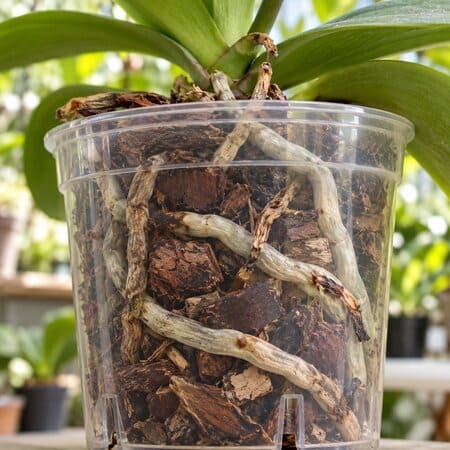
Orchids don’t feed like most houseplants. In nature many grow on trees and rocks, taking small amounts of nutrients from rain, leaf litter and the air. In a pot they usually grow in bark or moss, which holds very little food on its own. That’s why regular, gentle feeding with a fertiliser made for orchids makes such a difference.
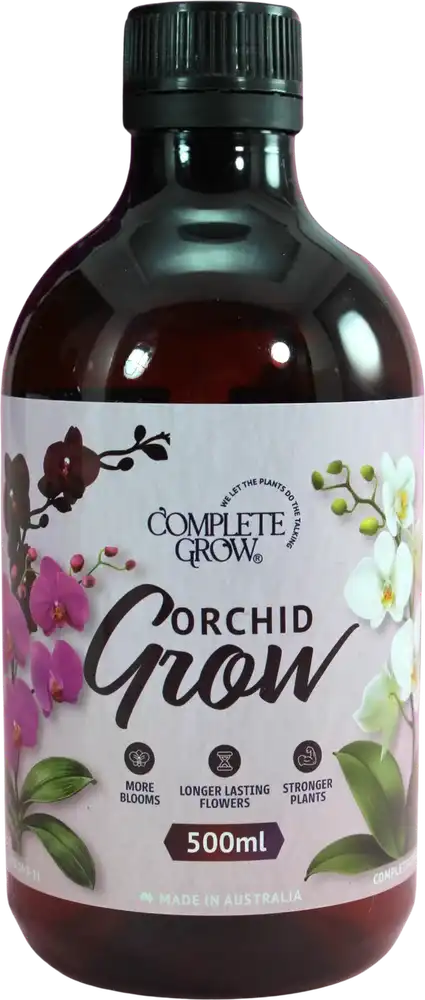
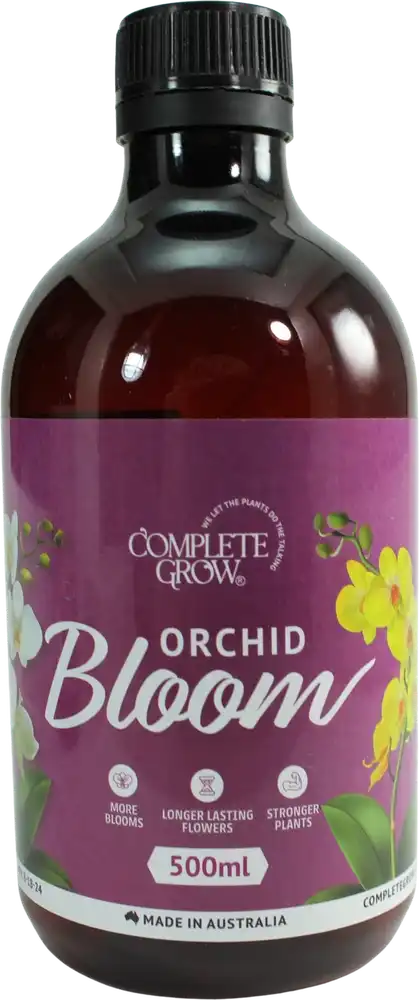
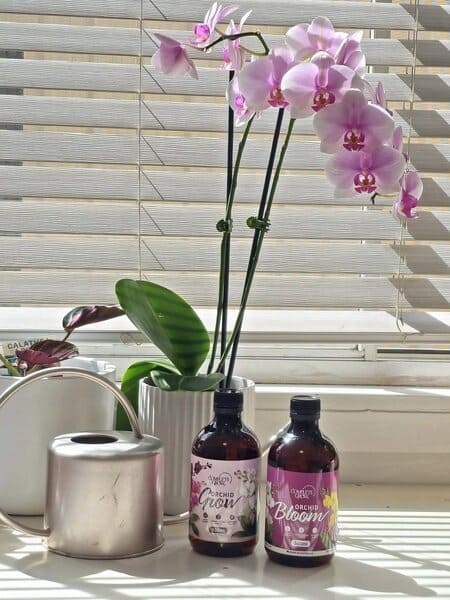
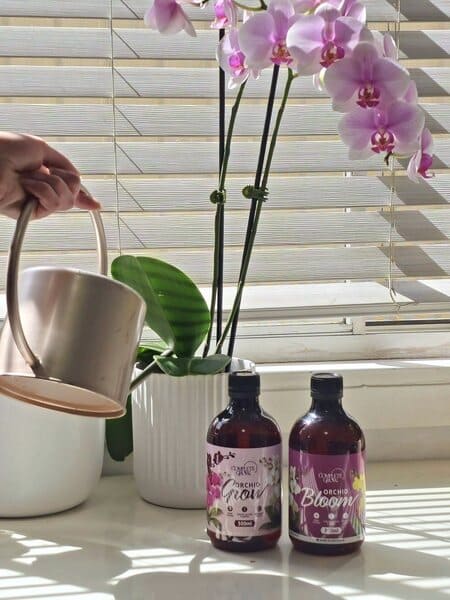
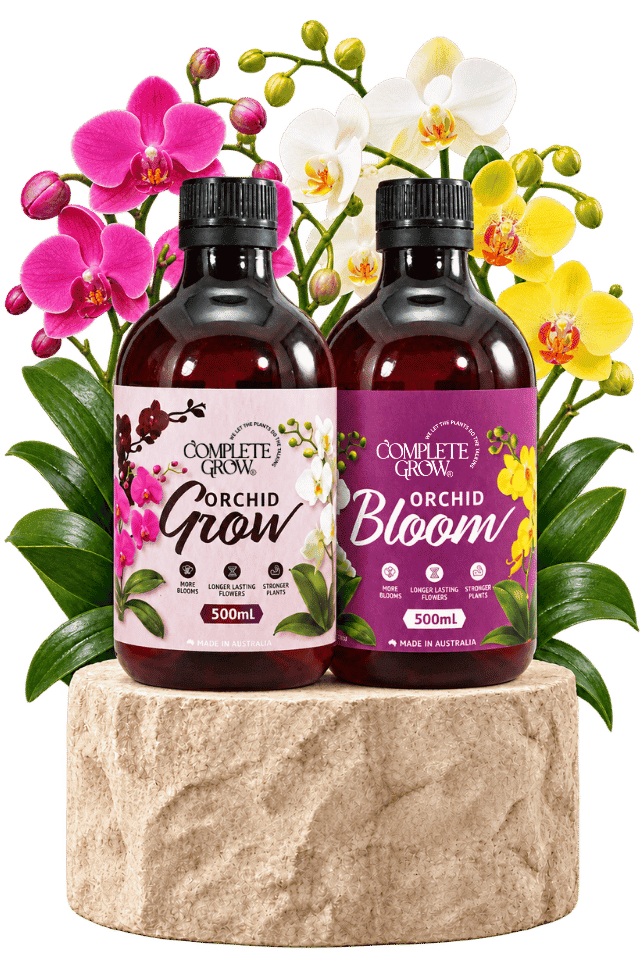
Orchid Grow and Orchid Bloom are concentrated liquid orchid fertilisers, made in Australia for exactly this: a small dose at every watering, in a nutrient balance that matches what your orchid is doing right now.
What does NPK mean?
Every fertiliser label lists three numbers, known as the NPK. They show the percentage of nitrogen (N), phosphorus (P) and potassium (K), always in that order.
Nitrogen drives leafy growth and healthy roots. Phosphorus supplies the energy plants use to build roots, flower spikes and buds. Potassium controls how water and sugars move through the plant and supports flower colour, strength and lasting power. Change the balance between the three, and you change what your orchid puts its energy into.
What NPK 14-3-11 means in Orchid Grow
Orchid Grow is NPK 14-3-11: 14% nitrogen, 3% phosphorus and 11% potassium, measured as weight per volume (w/v). Put simply, every 100 mL of concentrate contains about 14 g of nitrogen, 3 g of phosphorus and 11 g of potassium.
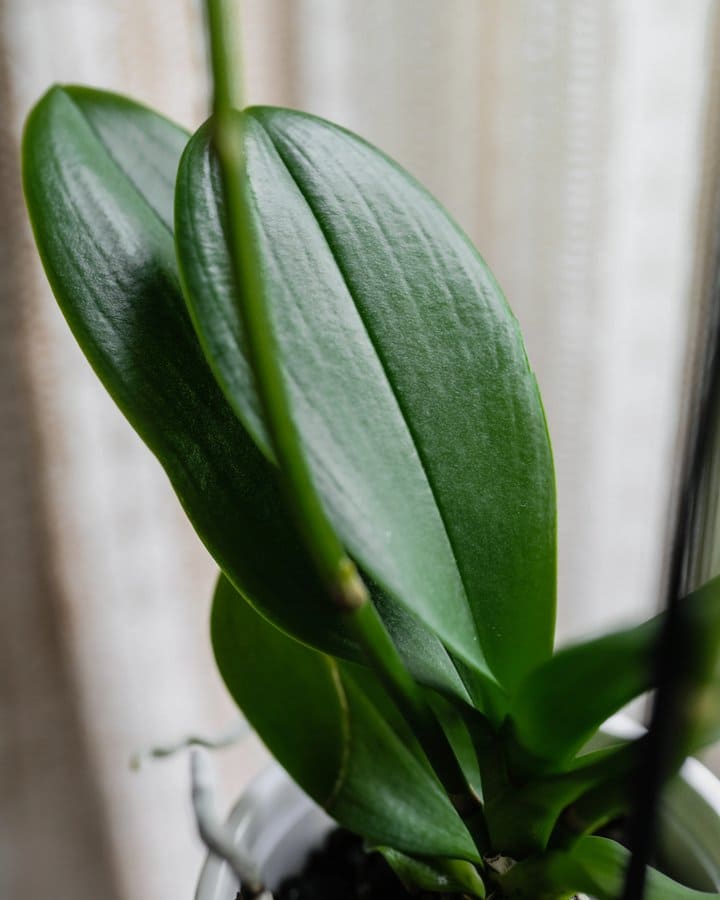
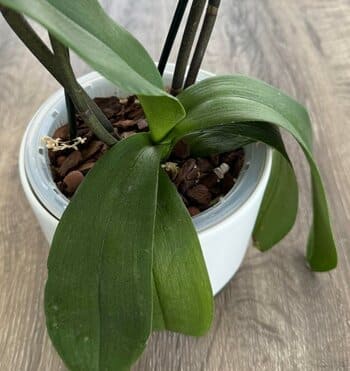
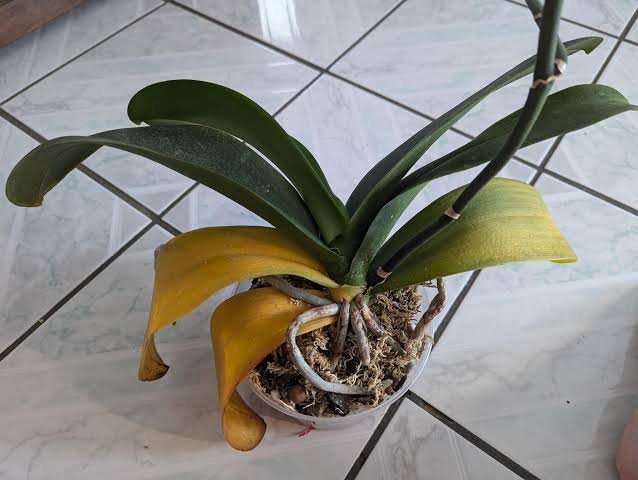
Nitrogen is the biggest share because this is the growing phase. After flowering, your orchid needs to make new leaves and roots, and in orchids such as cymbidiums and dendrobiums, new pseudobulbs. The potassium keeps that new growth firm and balanced. Strong leaves and roots built now are what store the energy for the next round of flowers.
What NPK 8-18-24 means in Orchid Bloom
Orchid Bloom is NPK 8-18-24: 8% nitrogen, 18% phosphorus and 24% potassium (w/v). Here the balance flips. Nitrogen drops, so your orchid isn’t pushed into making extra leaves while it should be flowering.
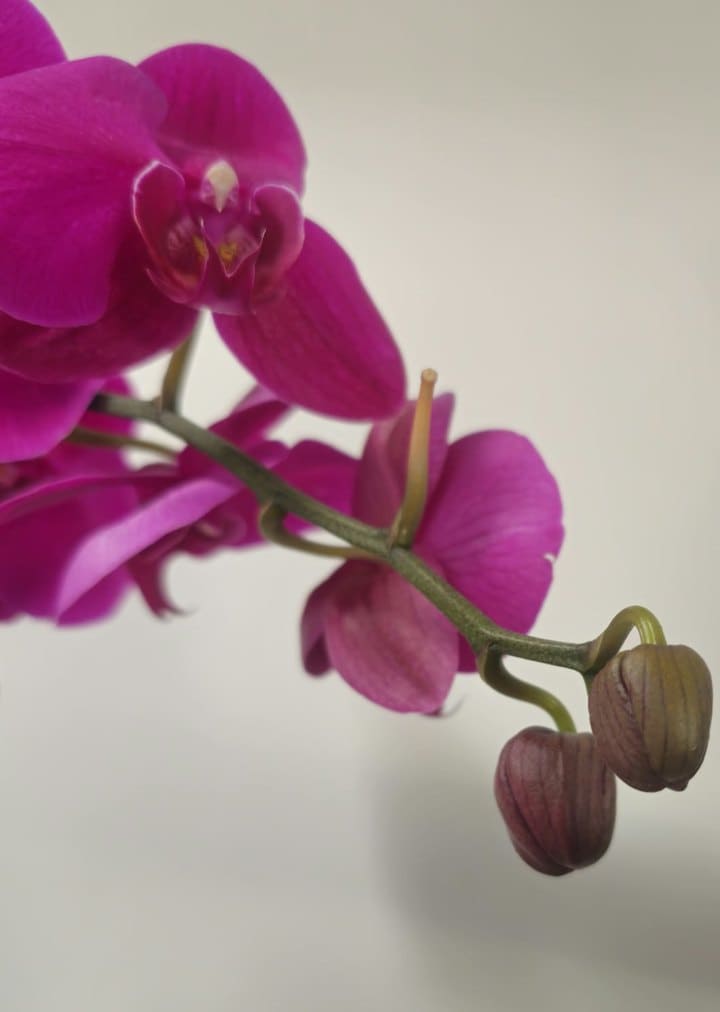
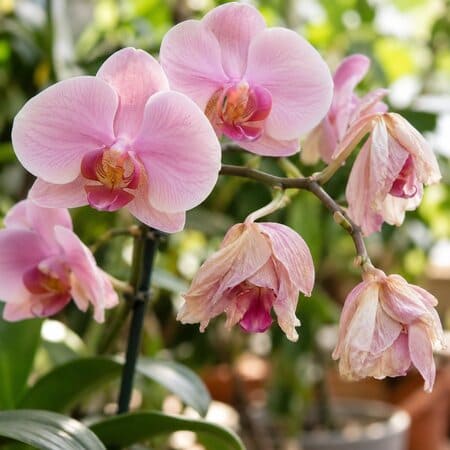
Phosphorus and potassium rise to support what matters during flowering: pushing up the spike, setting buds and opening flowers with good colour that last. Potassium is the largest share because flowers use a lot of water and energy, and potassium helps the plant move both to where they’re needed.
Why a two-part orchid fertiliser?
A single all-purpose fertiliser has to compromise. If it’s high in nitrogen, it keeps encouraging leaves when your orchid should be flowering. If it’s high in phosphorus and potassium all year, your orchid misses out on the nitrogen it needs to grow.
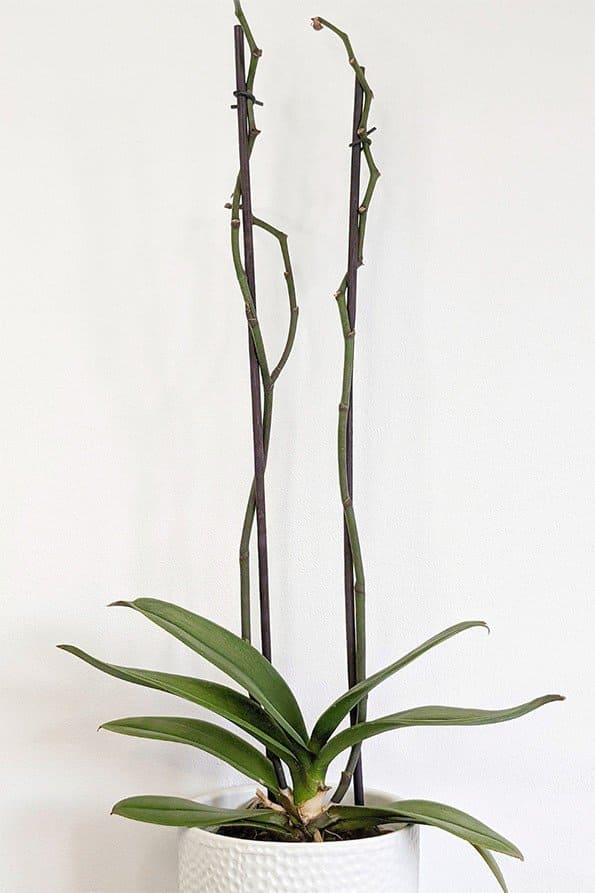
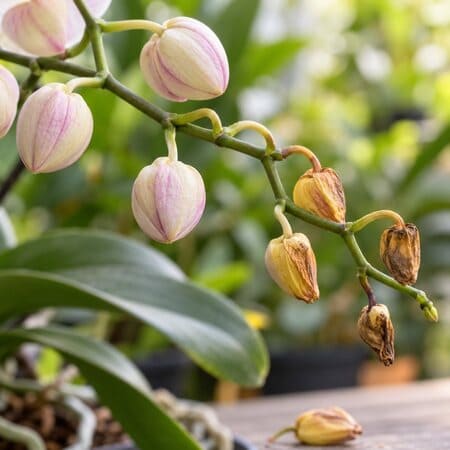
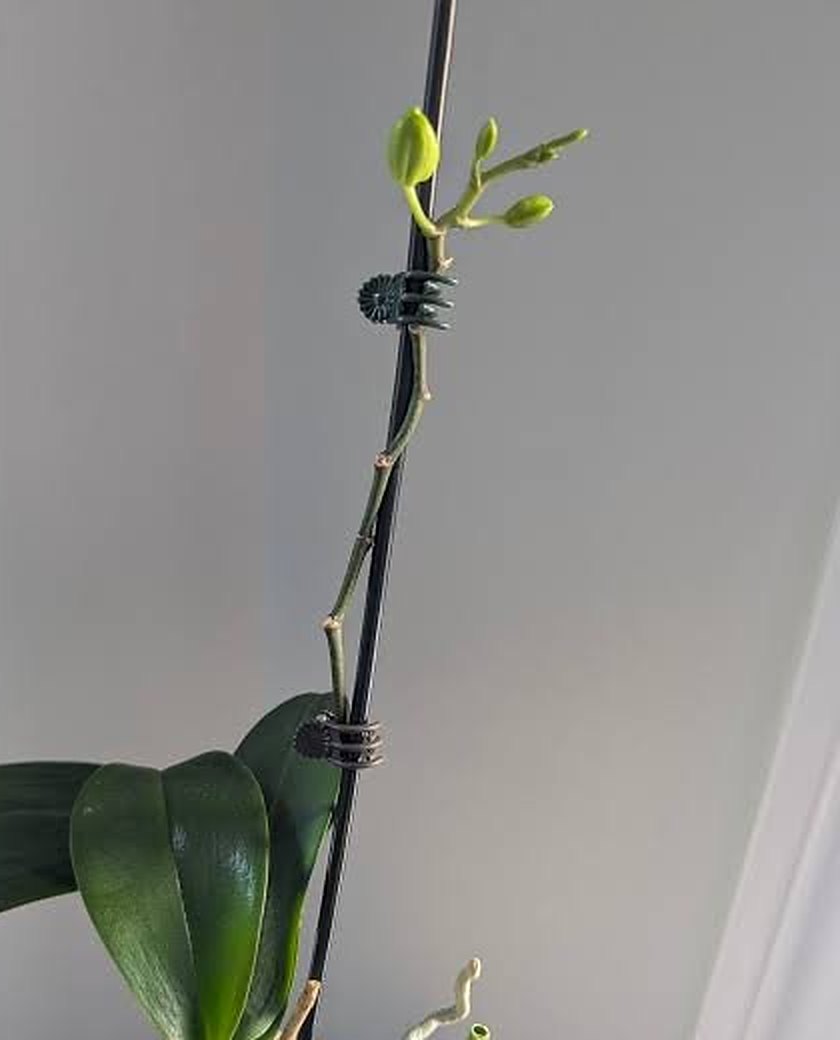
Splitting the job into two bottles lets you give your orchid the right balance at the right time. Feed Orchid Grow while there’s no spike, buds or flowers. Switch to Orchid Bloom as soon as the first spike appears, then go back to Grow after the last flower drops. Both use the same rate, so switching is as simple as picking up the other bottle.
Urea-free nitrogen
Both formulas are urea-free. Many general fertilisers use urea as a low-cost source of nitrogen, but it has to be broken down by soil microbes before roots can use it. Orchid mixes of bark, moss or perlite have far fewer of those microbes than garden soil.
Urea-free nitrogen is supplied in forms that orchid roots can take up straight away, which suits roots that are used to quick, light feeds.
Calcium, magnesium and chelated trace elements
NPK is only part of the story. Both formulas include calcium (1.2%) and magnesium (0.5%). Calcium helps build strong cell walls, so new leaves, roots and flower stems grow firm. Magnesium sits at the centre of chlorophyll and keeps leaves a healthy green.
They also contain six trace elements: iron, manganese, zinc, boron, copper and molybdenum. Iron, manganese and zinc are chelated with EDTA, which keeps them dissolved and available to your orchid instead of locking up in the potting mix or in hard tap water.
How to use Orchid Grow and Orchid Bloom
Shake the bottle, then add 1 mL per litre of water (one 5 mL cap makes 5 litres) and use it at every watering. Start with Orchid Grow after your orchid finishes flowering, and switch to Orchid Bloom when flower spikes first appear.
Once a month, water with plain water only to flush out fertiliser salts that build up in the potting mix. This little-and-often routine mirrors how orchids feed in nature and avoids the root damage that strong, occasional doses can cause.
Suitable for all orchid types
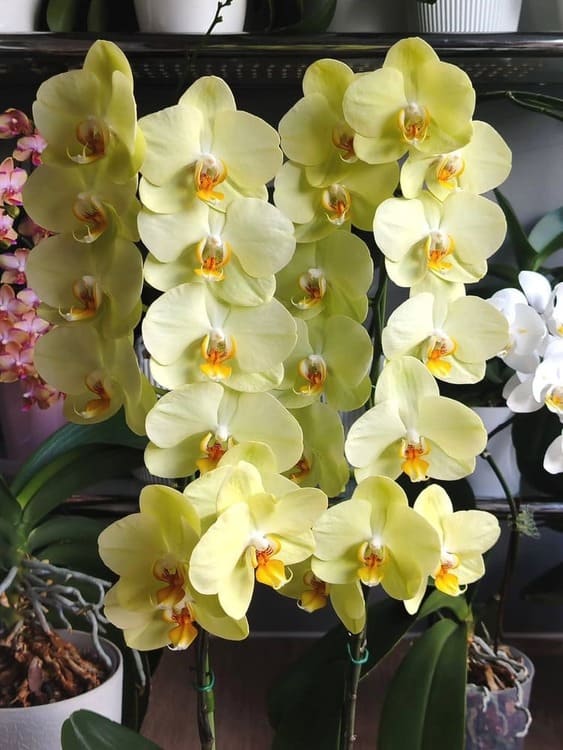
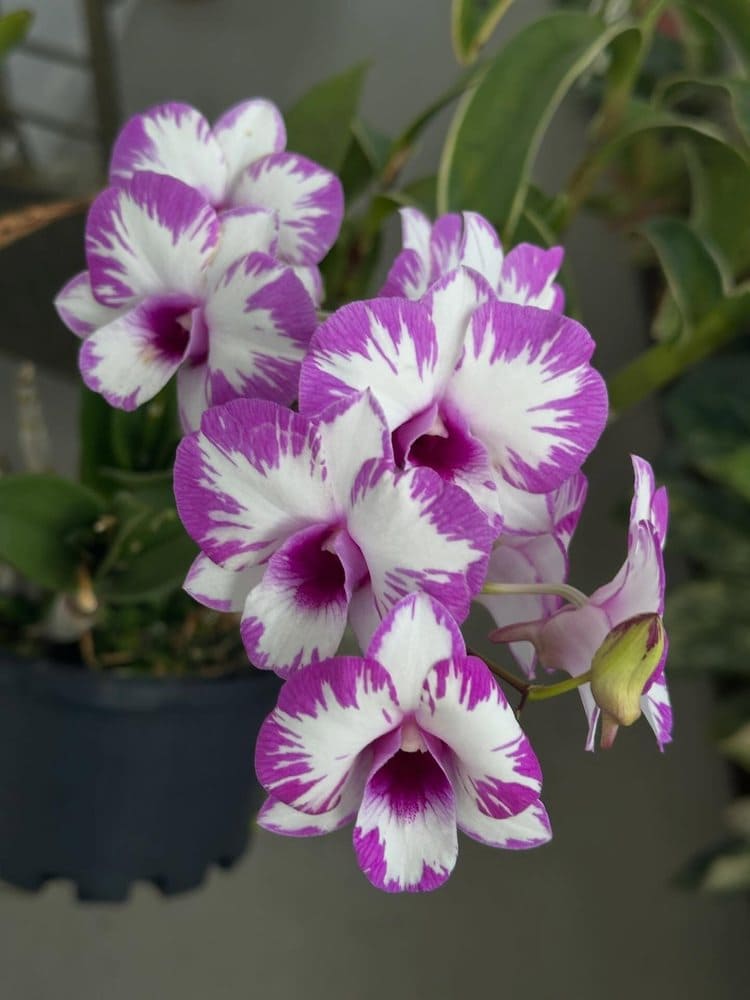
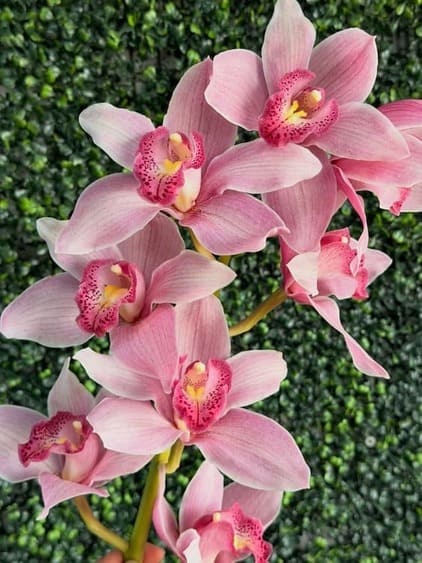
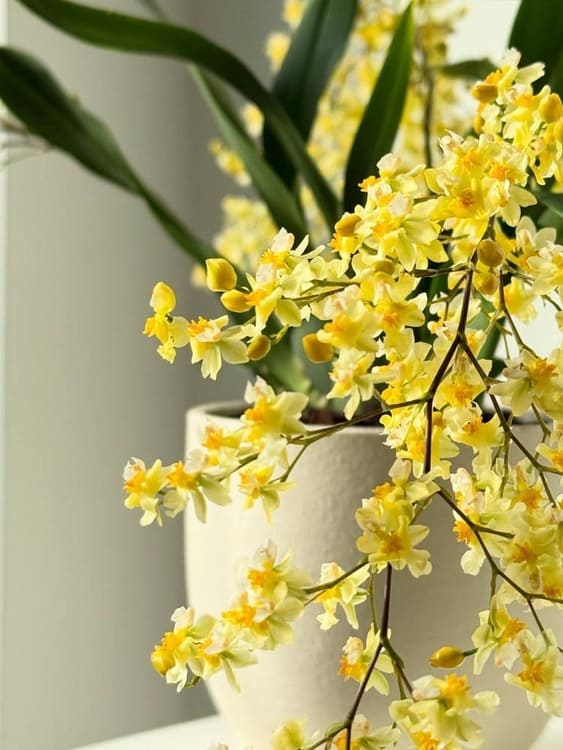
Orchid Grow and Orchid Bloom suit all orchid types, including moth orchids (Phalaenopsis), cymbidiums, dendrobiums, oncidiums, cattleyas and vandas. Whether yours lives on a windowsill, a patio or in a shadehouse, the routine is the same: choose the bottle by what your orchid is doing, not by the date.