Tall Fescue

Transform Your Garden into a Personal Paradise!

Tall Fescue Turning Yellow? Causes, Fixes & Common Lawn Problems Explained

If your tall fescue is turning yellow, it’s usually caused by water stress (too dry or waterlogged), nutrient issues (low nitrogen or iron), heat and summer stress, or disease such as brown patch. Checking mowing height, watering depth, soil compaction and recent fertilising will usually reveal whether the lawn is just stressed or if parts of it are actually dying and need repair.

This guide is written to directly answer searches like “tall fescue yellowing”, “why is my tall fescue turning yellow”, “does tall fescue die in the summer”, and “tall fescue brown patch”. We’ll walk through the most common tall fescue grass problems, how to diagnose them, and the practical fixes that actually work.

Tall Fescue Yellowing Overview: What It Usually Means

When you see tall fescue yellowing, think of it as an early warning signal rather than an instant death sentence. The grass is telling you something is wrong with either its roots, nutrition, or environment. The key is to work out which:

  • Wide, even yellowing across large areas often points to nutrient deficiency or general water stress.
  • Pale green to yellow leaf blades with visible veins can indicate iron or nitrogen deficiency.
  • Patches of yellowing turning brown can signal heat damage, drought stress, or disease.
  • Circular or irregular brown patches bordered by yellowing grass can be signs of brown patch disease.

The rest of this page breaks down exactly why your tall fescue grass is turning yellow, how to tell if it is simply stressed or genuinely dying, and what you can do to turn things around.

491773121_1489904975714789_4097064140242768584_n (1)
384146957_277183978607077_8734354891143914608_n

Main Reasons Tall Fescue Turns Yellow

Most tall fescue grass problems fall into a few predictable buckets. When someone says “my tall fescue grass is turning yellow” or “why is my tall fescue dying?”, it is usually one or more of the following:

1. Water Stress: Too Dry, Too Wet, or Poor Drainage

Tall fescue prefers deep, infrequent watering. Shallow daily sprinkling keeps roots at the surface, while severe underwatering or waterlogged soil both starve the roots of oxygen.

  • Underwatering: Leaves lose their deep green, become dull and yellow, then crisp and brown from the tips down.
  • Overwatering / poor drainage: Roots suffocate, thatch stays wet, and the lawn yellows in blotchy patterns, often with a soft or spongy feel underfoot.

Check soil moisture by pushing a screwdriver or small trowel into the lawn. If the top 10–15 cm is bone dry or constantly saturated, adjusting your watering pattern is one of the fastest ways to stop tall fescue grass dying back.

2. Nutrient Deficiency: Low Nitrogen or Low Iron

Pale, washed-out tall fescue with slow growth is often a sign of low nitrogen. If the lawn looks yellow-green overall but the veins remain slightly darker, iron deficiency (chlorosis) is another common cause.

  • Low nitrogen: General yellowing, thin growth, weak recovery after mowing or wear.
  • Low iron: Yellowing between veins, especially on newer leaves, even when the lawn is otherwise well-fed.

A balanced, iron-rich liquid lawn fertiliser (like a 7-1-1.5 analysis with added iron) can quickly correct this type of tall fescue yellowing, especially when applied during active growth in autumn and spring.

3. Heat & Summer Stress

Tall fescue is a cool-season grass. It can tolerate warm weather with irrigation, but prolonged high heat and dry wind will push it into stress. Leaves lose colour, turn yellow, then brown if the roots can’t keep up with moisture loss.

  • Yellowing starting on exposed slopes or full-sun areas first is a classic sign of heat and drought stress.
  • If the crown (base of the plant) stays firm and white, the plant is often still alive and able to recover with better care.

Raising mowing height, watering deeply, and avoiding heavy nitrogen in peak heat are your main tools to prevent tall fescue grass dying in summer.

4. Soil Compaction & Thatch

Hard, compacted soil restricts roots and water movement. A build-up of thatch (a layer of dead stems and roots) holds water at the surface, encouraging disease and shallow rooting. Both issues show up as thinning, yellowing patches that don’t respond well to fertiliser alone.

  • Compaction: Worse along paths, goal mouths, dog runs, and high-traffic areas.
  • Thatch: A springy, spongy feel when you walk on the lawn, with a visible brown layer above the soil line.

In these cases, core aeration and light thatch reduction, followed by feeding and deep watering, are needed to fix the underlying problem.

Does Tall Fescue Die in the Summer or Just Go Dormant?

A common worry is: “Does tall fescue die in the summer?” The honest answer is:

  • Healthy, deep-rooted tall fescue will often survive summer with correct mowing and deep, occasional watering.
  • Under extreme heat and drought, it can partially go dormant, yellowing and browning above while the crown stays alive.
  • If the crown and roots dry out or rot, individual plants can die completely, leading to open patches that need overseeding.

The difference between a lawn that looks rough but recovers, and one that truly fails, usually comes down to how you manage watering, mowing height, and fertiliser in the months leading up to and during summer.

490272783_18381305872184228_4415028904669195653_n (1)
159379950_477578260284604_8999689521932989997_n (1)

Tall Fescue Brown Patch & Disease-Related Problems

If you see circular or irregular brown areas with a fringe of yellowing grass, you may be dealing with tall fescue brown patch or another fungal disease rather than simple stress.

  • Patches can be from a few centimetres to over a metre wide.
  • Edges often appear yellow or orange-brown while the centre is more straw-coloured.
  • Problems worsen after warm, humid nights and overhead watering in the evening.

Brown patch thrives in warm, humid, wet conditions, especially on over-fertilised lawns with excessive leaf growth. Managing water and nitrogen is just as important as any fungicide:

  • Water early in the morning so leaves dry quickly.
  • Avoid heavy night watering and constantly wet thatch.
  • Do not over-feed with high nitrogen in hot, sticky weather.
  • Improve air flow by trimming back dense surrounding vegetation where possible.

7-Step Troubleshooting Checklist for Tall Fescue Grass Dying

Use this quick checklist whenever you feel “my tall fescue grass is dying” and you’re not sure why:

  1. Check soil moisture. Dig or probe 10–15 cm down. Is it bone dry, sopping wet, or somewhere in the middle?
  2. Look at mowing height. If you are cutting below ~40 mm, raise the height and avoid scalping.
  3. Review recent fertilising. Has the lawn been unfed for months (pale, thin) or over-fed in heat (soft, disease-prone)?
  4. Inspect for compaction. Are problem areas along paths, kids’ play zones or pet tracks? If so, core aeration will help.
  5. Examine the pattern. Wide, general yellowing suggests nutrients or water; spots and rings suggest disease or localised issues.
  6. Check the crowns. Gently scrape soil around the base of plants. If crowns are firm and off-white, the grass is often still alive.
  7. Plan recovery. Adjust watering and mowing, apply a balanced, iron-rich lawn fertiliser in the next growth window, and overseed genuinely dead patches.

Often, correcting water, height and nutrients is enough to turn around most tall fescue grass problems without drastic measures.

FAQ: Why Is My Tall Fescue Dying or Turning Yellow?

Why is my tall fescue turning yellow?
Most yellowing is linked to water stress, nutrient deficiency, heat stress or disease. Start by checking soil moisture and mowing height, then consider when you last fertilised and whether the pattern looks like brown patch.

My tall fescue grass is turning yellow in patches – is it dying?
Not necessarily. If the crowns at the base of the plants are still firm and off-white, the grass is often stressed rather than dead. Relieving compaction, adjusting watering and applying a balanced, iron-containing fertiliser during active growth can help it recover.

Does tall fescue die in the summer?
Healthy, deep-rooted tall fescue usually survives summer with proper care, but it can yellow, thin and partially go dormant. Individual plants can die under extreme heat and drought if watering and mowing are not managed well.

Why is my tall fescue dying only in sunny spots?
Full-sun slopes and exposed areas dry out fastest and collect the most heat. If those areas are also cut too short or receive the same water as shaded zones, they are the first to yellow and thin.

How do I fix tall fescue yellowing from nutrient problems?
Introduce a balanced lawn fertiliser with nitrogen and iron during autumn and spring growth periods, and follow a regular schedule. Pale, hungry fescue will usually respond with deeper green, thicker growth within a few weeks.

What can I do about tall fescue brown patch?
Improve drainage and air flow, avoid heavy night watering, reduce high-nitrogen feeding in warm, humid weather, and consider targeted fungicide if conditions strongly favour disease. Combine this with overseeding once the disease is under control.

How do I stop tall fescue grass problems from coming back?
Keep to a simple system: correct mowing height, deep and sensible watering, seasonal aeration of compacted zones, and a consistent fertiliser plan using an iron-rich lawn product in autumn and spring. That routine prevents most yellowing and thinning before it starts.

If your tall fescue has recovered from stress and you want to bring back strong colour and density, pairing good cultural care with a quality, iron-containing lawn fertiliser on the care and fertiliser schedules from your other pages will help keep it thick, green and resilient long term.

Recommended Products

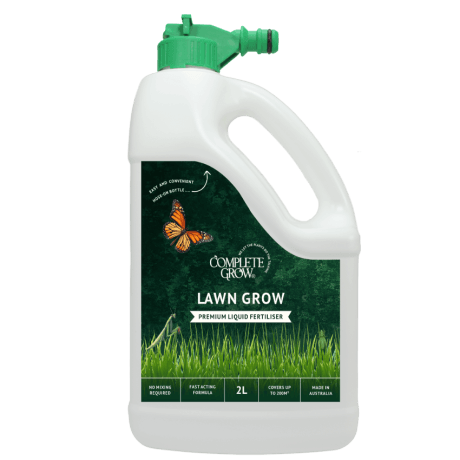
Lawn Grow – Hose-On Liquid Lawn Fertiliser (2L) – Greener, Thicker Lawn Fast

Original price was: $41.00.Current price is: $34.80.

The Grow Blog: News, Tips, & Stories

Cart (0 items)

No products in the cart.