
Free shipping over $0
Free Shipping Limited Time

Flowering Plants

Transform Your Garden into a Personal Paradise!

Best Fertilizer for Flowering Plants in Australia

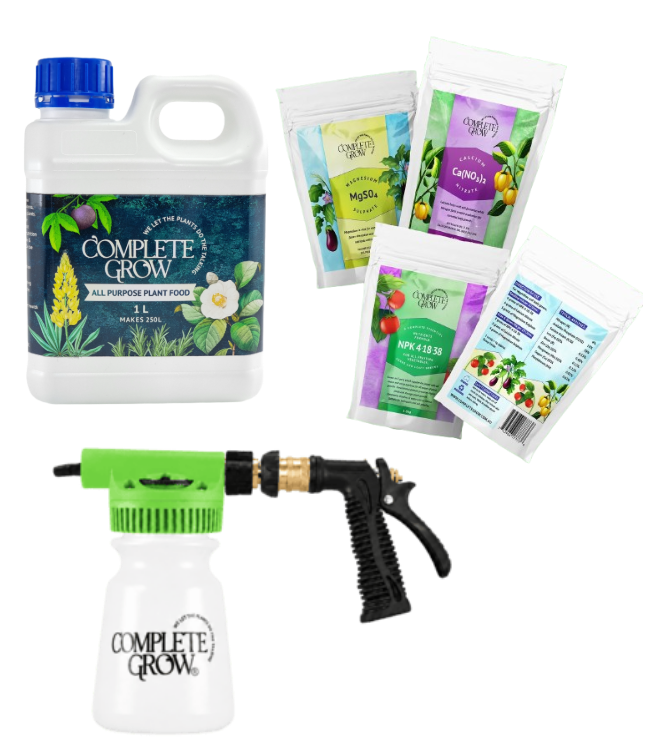
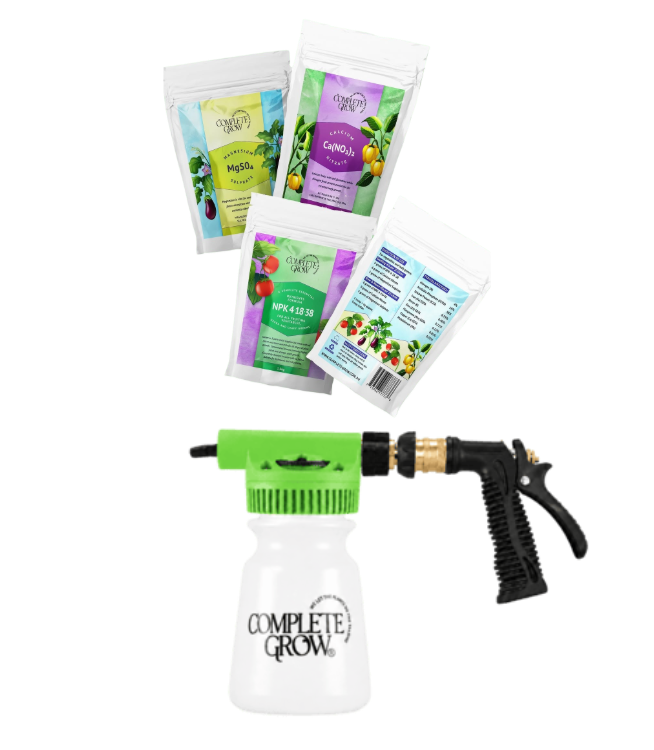
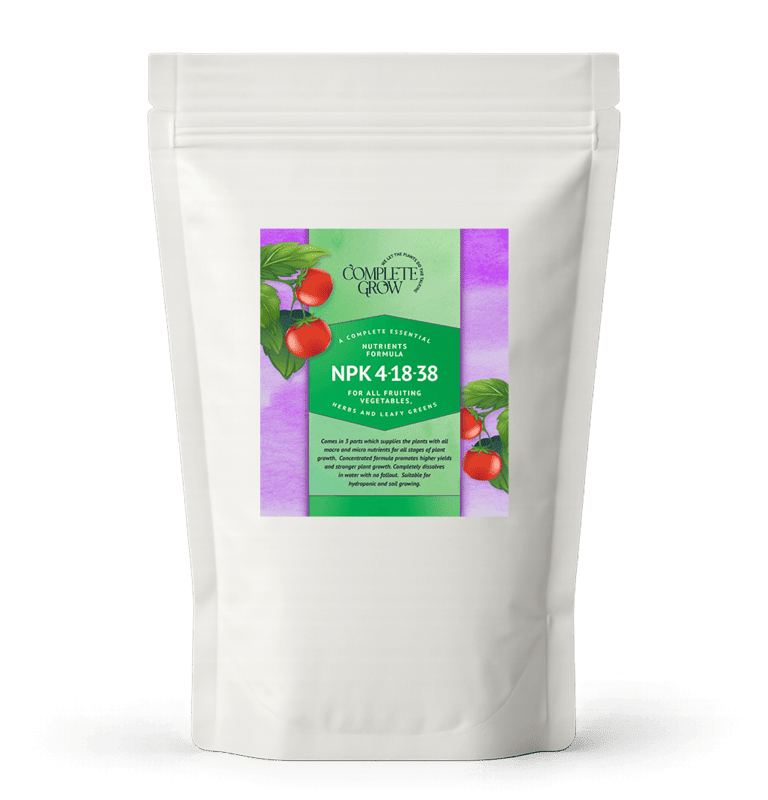
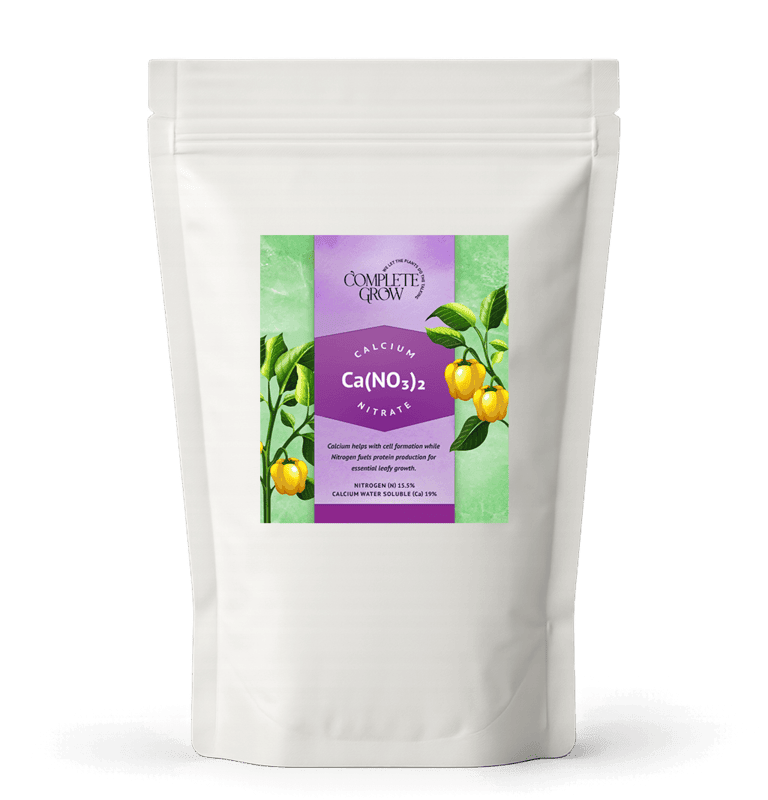
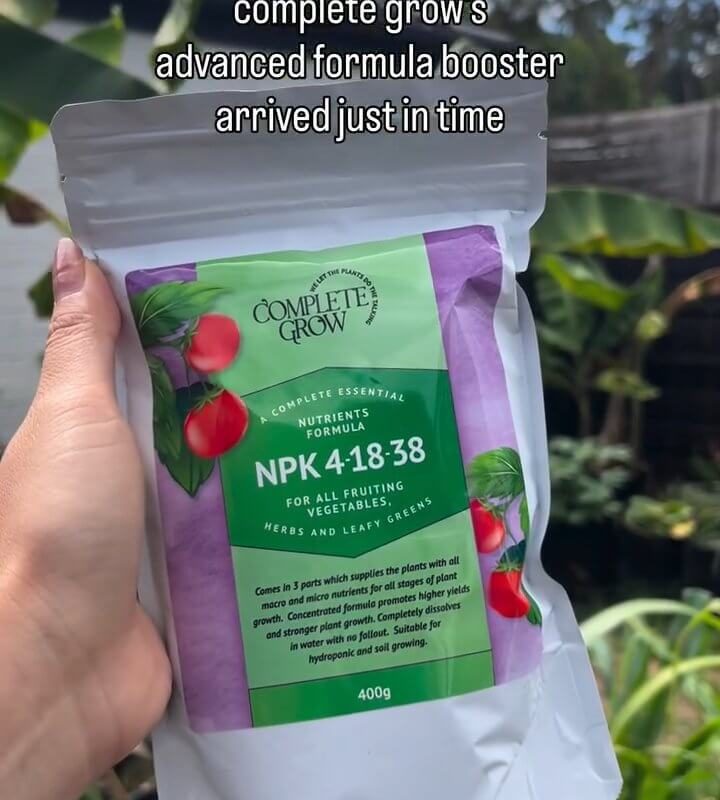
For most flowering plants in Australia, the best fertilizer is a water-soluble, high-potassium formula such as NPK 4-18-38, which supports bud and flower development without encouraging excessive leafy growth. CompleteGrow’s Advanced Formula pairs this NPK ratio with calcium and magnesium to promote more buds, stronger growth, greener leaves and longer-lasting flowers. For general use, apply 8 g NPK 4-18-38, 8 g Calcium Nitrate and 4 g Magnesium Sulphate per 10 L of water, following the mixing instructions below.

Give your flowers more than sunlight — give them balance, energy and lasting colour.

A water-soluble NPK fertilizer is one of the simplest and most effective ways to feed flowering plants across Australia.

  • Delivers nutrients directly to the roots for faster uptake.
  • Encourages more buds and longer flowering periods.
  • Improves leaf health and stem strength for better support.
  • Prevents nutrient stress during dry or humid conditions.

Feeding in water keeps nutrition even and predictable — no waiting for granules to dissolve or pellets to break down after rain.

Because the nutrients reach the roots already dissolved, plants can respond quickly with richer colour and more consistent flowering cycles.

Why water-soluble fertilizer works best

  • Easy to mix and apply to indoor and outdoor flowering plants.
  • Provides measured, consistent nutrition to every plant.
  • Allows feeding strength and frequency to be adjusted as conditions change.

Regular feeding with a quality water-soluble blend helps maintain strong growth, vivid blooms and faster recovery after pruning or repotting.

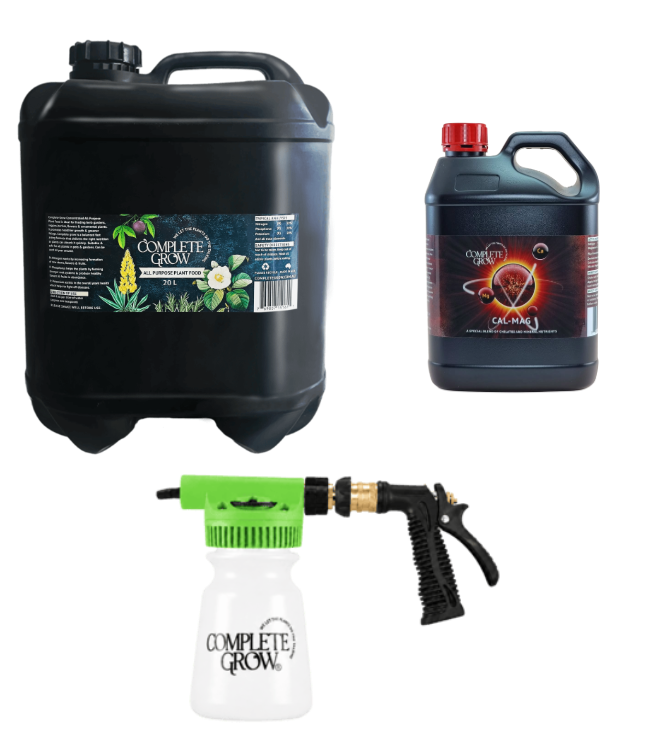
For the best results, choose a professional-grade water-soluble fertilizer formulated for flowering plants: Advanced Formula NPK 4-18-38 + Calcium & Magnesium.

It is designed to support vibrant colour, firm petals and continuous flowering in Australian growing conditions.

How to Mix the Advanced Formula

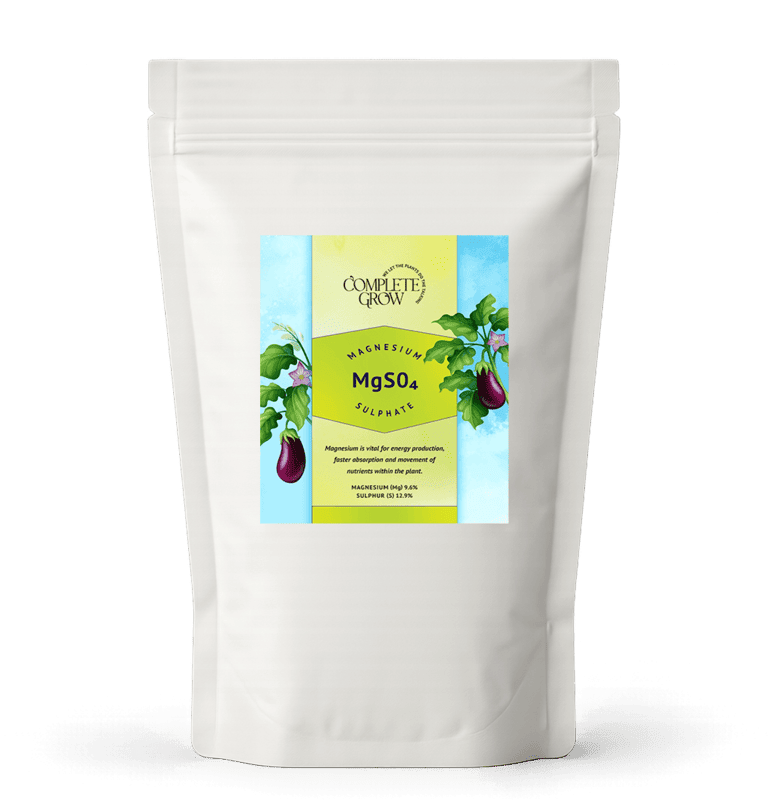
  • Per 10 L of water: 8 g NPK 4-18-38, 8 g Calcium Nitrate and 4 g Magnesium Sulphate. One scoop is approximately 6 g.
  • Pots and indoor plants: use the lighter rate of 6 g, 6 g and 3 g per 10 L.
  • Mix each part separately and rinse the watering can between applications. Calcium can react with phosphate and sulphate at high concentrations, causing nutrients to fall out of the solution.
  • Acid-loving flowers such as gardenias, azaleas and camellias: leave out the Calcium Nitrate and use only the NPK 4-18-38 and Magnesium Sulphate to avoid raising the soil pH.

CompleteGrow’s view: why 4-18-38 for flowers

NPK 4-18-38 contains 18% phosphorus and 38% potassium, with only 4% nitrogen. Nitrogen supports leafy growth, while phosphorus and potassium support bud development, flower size, colour and petal strength. This is why an all-purpose or lawn fertilizer may produce a lush green plant with relatively few flowers. The Calcium Nitrate component supplies the additional nitrogen flowering plants still need, helping the foliage remain healthy while the plant directs more energy towards blooms.

From the field: Dural, NSW

A rose farmer we work with in Dural, NSW switched to the Advanced Formula NPK 4-18-38 + Calcium & Magnesium and recorded a 22% increase in yield.

485733407_18398666287100460_8153682107188833855_n (1)
465546132_555557883839534_914404532231030943_n (2)

Troubleshooting & FAQs

Even healthy flowering plants can show signs of stress — knowing what each symptom means helps you fix problems fast.

🌼 Common Problems

  • Yellowing leaves: Often from irregular watering or nutrient imbalance. Flush with plain water, then resume a gentle feed the following week.
  • Few or no flowers: Too much nitrogen or low light. Move plants to brighter conditions and use a high-potassium fertilizer focused on flowering, like NPK 4-18-38.
  • Buds dropping before opening: Sudden temperature swings or dry soil. Keep watering consistent and avoid feeding during extreme heat.
  • Burnt leaf tips: Fertilizer concentration too strong. Dilute the mix to half strength and water well after feeding.

💧 Feeding Tips

  • Always water lightly before applying fertilizer to avoid root shock.
  • Mix only what you’ll use that day — fresh solutions absorb best.
  • Feed in the cool parts of the day to reduce evaporation and stress.
  • Clean leaves occasionally to remove residue and improve photosynthesis.

❓ FAQs

  • What NPK is best for flowering plants? A low-nitrogen, high-potassium ratio like NPK 4-18-38. The phosphorus and potassium build buds and bigger, longer-lasting flowers, while too much nitrogen gives leaves instead of blooms.
  • Is the Advanced Formula a liquid fertilizer? No. It’s a water-soluble powder in three parts (NPK 4-18-38, Calcium Nitrate and Magnesium Sulphate). You dissolve each part in water and apply it as a liquid feed, so it reaches the roots as quickly as a liquid fertilizer.
  • Can I use it on gardenias, azaleas and camellias? Yes, but leave out the Calcium Nitrate part. These acid-loving plants don’t like anything that raises soil pH, so use only the NPK 4-18-38 and Magnesium Sulphate.
  • Can I use the same fertilizer indoors and outdoors? Yes — simply reduce the dilution for indoor plants and feed less often.
  • Is it safe for flowering vegetables? Absolutely. It improves fruit set and bloom health without harsh residue.
  • How soon will I see results? Leaves often look healthier within a week or two. More buds and stronger flowers follow over the next few weeks, as new growth develops.
  • Can I mix fertilizer with pest control sprays? It’s best to apply separately — feed one day, spray the next, to prevent leaf stress.
Healthy flowers respond quickly to steady, gentle feeding — not heavy doses. Keep the rhythm light and consistent for lasting colour all season.

Advanced Formula NPK 4-18-38 + Calcium & Magnesium The go-to water-soluble fertilizer for continuous blooms, stronger stems and professional-grade results in Australian gardens.

499452081_1242269020806884_2516915376820635177_n
501230158_18507067618014176_5877384854663806437_n (1)

Troubleshooting & FAQs

Even healthy flowering plants can show signs of stress — knowing what each symptom means helps you fix problems fast.

🌼 Common Problems

  • Yellowing leaves: Often from irregular watering or nutrient imbalance. Flush with plain water, then resume a gentle feed the following week.
  • Few or no flowers: Too much nitrogen or low light. Move plants to brighter conditions and use a high-potassium fertilizer focused on flowering, like NPK 4-18-38.
  • Buds dropping before opening: Sudden temperature swings or dry soil. Keep watering consistent and avoid feeding during extreme heat.
  • Burnt leaf tips: Fertilizer concentration too strong. Dilute the mix to half strength and water well after feeding.

💧 Feeding Tips

  • Always water lightly before applying fertilizer to avoid root shock.
  • Mix only what you’ll use that day — fresh solutions absorb best.
  • Feed in the cool parts of the day to reduce evaporation and stress.
  • Clean leaves occasionally to remove residue and improve photosynthesis.

❓ FAQs

  • What NPK is best for flowering plants? A low-nitrogen, high-potassium ratio like NPK 4-18-38. The phosphorus and potassium build buds and bigger, longer-lasting flowers, while too much nitrogen gives leaves instead of blooms.
  • Is the Advanced Formula a liquid fertilizer? No. It’s a water-soluble powder in three parts (NPK 4-18-38, Calcium Nitrate and Magnesium Sulphate). You dissolve each part in water and apply it as a liquid feed, so it reaches the roots as quickly as a liquid fertilizer.
  • Can I use it on gardenias, azaleas and camellias? Yes, but leave out the Calcium Nitrate part. These acid-loving plants don’t like anything that raises soil pH, so use only the NPK 4-18-38 and Magnesium Sulphate.
  • Can I use the same fertilizer indoors and outdoors? Yes — simply reduce the dilution for indoor plants and feed less often.
  • Is it safe for flowering vegetables? Absolutely. It improves fruit set and bloom health without harsh residue.
  • How soon will I see results? Leaves often look healthier within a week or two. More buds and stronger flowers follow over the next few weeks, as new growth develops.
  • Can I mix fertilizer with pest control sprays? It’s best to apply separately — feed one day, spray the next, to prevent leaf stress.
Healthy flowers respond quickly to steady, gentle feeding — not heavy doses. Keep the rhythm light and consistent for lasting colour all season.

Advanced Formula NPK 4-18-38 + Calcium & Magnesium The go-to water-soluble fertilizer for continuous blooms, stronger stems and professional-grade results in Australian gardens.

Related Guides

Recommended Products

Sale!
Cart (0 items)

No products in the cart.