
CompleteGrow container plant guide
Are coffee grounds and eggshells good for potted plants?
Coffee grounds contain nitrogen. Eggshells contain calcium. But containing a nutrient is not the same as supplying a balanced meal that a plant can use when it needs it.
Social media makes kitchen-scrap fertilising look wonderfully simple: sprinkle coffee grounds over the potting mix, crush an eggshell around the stem and wait for greener leaves. The missing step is decomposition. Until microorganisms break those materials down and release nutrients into the soil solution, most of what they contain remains unavailable, inconsistent or far too slow to correct a struggling container plant.
Used coffee grounds and eggshells are better treated as compost ingredients than as complete fertilisers. Raw grounds can suppress plant growth when applied heavily, while coarse eggshell fragments release calcium very slowly. Compost them properly for future organic matter, and use an accurately diluted, complete fertiliser when a potted plant needs predictable nutrition now.
A small and controlled root zone
Why potted plants are different from garden soil
A garden bed contains a large volume of soil, a complex community of organisms and room for roots to move away from localised problems. A pot is a much smaller system. Its roots share limited air, moisture and nutrients, and the entire root zone can be affected by one concentrated amendment.
Container plants also lose soluble nutrients through repeated watering and drainage. That is why soluble fertilisers are commonly used in pots: when mixed correctly, the nutrients are distributed through the root zone in a known dilution rather than waiting for an unknown amount of kitchen waste to decompose.
Coffee grounds
They contain organic matter and small quantities of nutrients, but direct application is unpredictable. Thick, wet layers can interfere with air and water movement, while uncomposted grounds have suppressed germination and growth in research trials.
Eggshells
They are largely calcium carbonate, but visible shell pieces can remain for months or longer. The calcium is physically present; it simply is not a rapid or precisely measured treatment for a plant showing symptoms today.
The coffee-ground shortcut
Coffee grounds are not a balanced potted-plant fertiliser
Spent coffee grounds are often promoted as a nitrogen fertiliser and a way to acidify potting mix. Both claims need context. Grounds do contain nitrogen and other nutrients, but only modest amounts become useful to plants as decomposition progresses. Used grounds are also not a dependable way to lower pH; their acidity varies and most of the acid in coffee is water-soluble and leaves during brewing.
The larger concern is direct, repeated application. Research summarised by university extension services has found reduced seed germination and poorer plant growth where uncomposted grounds were used at excessive rates. Caffeine, polyphenols and other compounds may contribute to those effects.
A fine layer can also dry into a compact mat. Instead of helping water penetrate evenly, that layer may shed water or keep the surface damp in patches. In indoor pots, moist decomposing organic material also creates the kind of environment in which fungus gnats thrive.
The practical verdict: do not use repeated handfuls of coffee grounds as a top-dressing, do not add them to seedling pots and do not expect them to correct a diagnosed nitrogen deficiency quickly. Add modest quantities to a balanced compost system instead.
Calcium locked inside a shell
Eggshells contain calcium—but availability and timing matter
Eggshells are rich in calcium carbonate. That sounds ideal for plants, but a coarse shell fragment has very little surface area relative to its mass. Microorganisms, moisture and acidity must act on it before much of that calcium can enter the soil solution. Large fragments may still be recognisable long after the rest of a compost pile has broken down.
Grinding shells into a very fine powder increases their surface area and can accelerate the process. Even then, an eggshell treatment is not balanced plant nutrition. It supplies no dependable dose of nitrogen or potassium, and adding calcium without identifying the real problem may change the potting mix without improving the plant.
This is particularly important with blossom-end rot in tomatoes and capsicums. The damaged fruit involves calcium movement within the plant, but inconsistent moisture and root stress are common triggers. A shell scattered on top of the pot cannot correct water moving irregularly through the roots and developing fruit.
The practical verdict: rinse and compost eggshells, or grind them very finely if you have a reason to use them. Do not treat coarse shells as a fast calcium supplement or a substitute for diagnosing watering, drainage and pH.
From material to root uptake
Plants absorb nutrients from the soil solution—not from the kitchen scrap itself
Roots take up mineral nutrients in dissolved ionic forms. Nitrogen, potassium, calcium, magnesium and trace elements must be released into water around the roots before they can move into the plant. A nutrient can therefore be present in the pot but unavailable because it is locked in undecomposed material, has reacted with the growing medium or sits outside a suitable pH range.
The nutrient exists
Coffee grounds contain nitrogen and eggshells contain calcium, but most remains bound within the original material.
It becomes soluble
Decomposition and chemical reactions must release the nutrient into water in the root zone.
The root can use it
The dissolved nutrient reaches a healthy root in a suitable moisture and pH environment.
Chelation helps with certain metal micronutrients such as iron, manganese and zinc. A chelating agent holds the nutrient in a stable, soluble complex and can reduce the chance of it becoming unavailable before reaching the root. Chelation does not make every nutrient automatic, nor does it replace good drainage and correct pH, but it can make micronutrient delivery more reliable.
| Question | Raw grounds or shells | Finished compost | Complete soluble fertiliser |
|---|---|---|---|
| Main role | Undecomposed organic material | Organic matter and gradual nutrient contribution | Measured plant nutrition |
| Availability | Slow and unpredictable | Gradual and variable | Readily soluble when mixed correctly |
| Nutrient balance | Incomplete | Variable | Declared formula and dilution |
| Best use in pots | Compost first | Small, appropriate amounts in the growing medium | Routine feeding according to the label |
Waste less without guessing
A better way to use coffee grounds and eggshells
Kitchen scraps do not need to go to landfill, and mineral nutrition does not make compost irrelevant. They perform different jobs. Finished compost supports the physical and biological qualities of a growing medium; a complete fertiliser supplies a defined concentration of nutrients.
- Compost coffee grounds with varied materials. Mix them with dry leaves, shredded paper and other inputs instead of creating a pile dominated by grounds.
- Keep coffee grounds below about 20% of the compost volume. A diverse compost mixture decomposes more reliably than a single concentrated ingredient.
- Rinse and crush eggshells before composting. Fine grinding increases surface area, but composting remains a better default than scattering shell pieces through indoor pots.
- Use only mature, finished compost around established plants. Incompletely composted organic material can continue decomposing in the pot and encourage fungus-gnat activity.
- Add compost modestly. Container mixes still need air-filled pore space and drainage; filling a pot with dense compost can create a different set of root problems.
Reliable nutrition for a limited root zone
What should you feed a potted plant instead?
Start with the plant, not the trend. A foliage houseplant, a fruiting tomato and a slow-growing succulent do not need the same nutrient balance or frequency. Choose a complete fertiliser suited to the plant type, dilute it accurately and apply it to an appropriately moist root zone according to the current product directions.
For indoor foliage plants
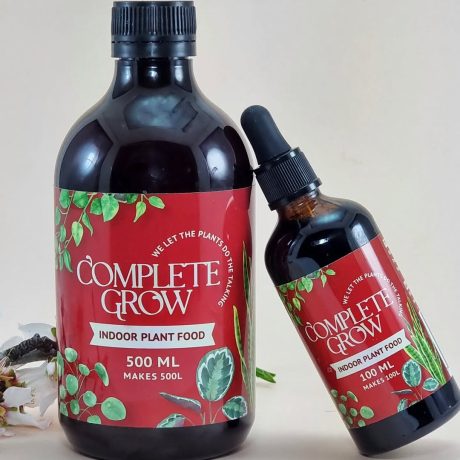
CompleteGrow Indoor Plant Food
A concentrated NPK 16-4-14 liquid formula with essential trace elements, including chelated forms of iron, manganese and zinc. Designed for foliage-focused houseplants and mixed at 1 mL per litre of water.
View Indoor Plant Food →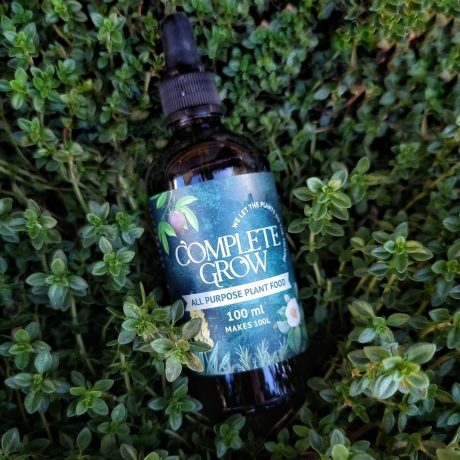
For mixed pots and gardens
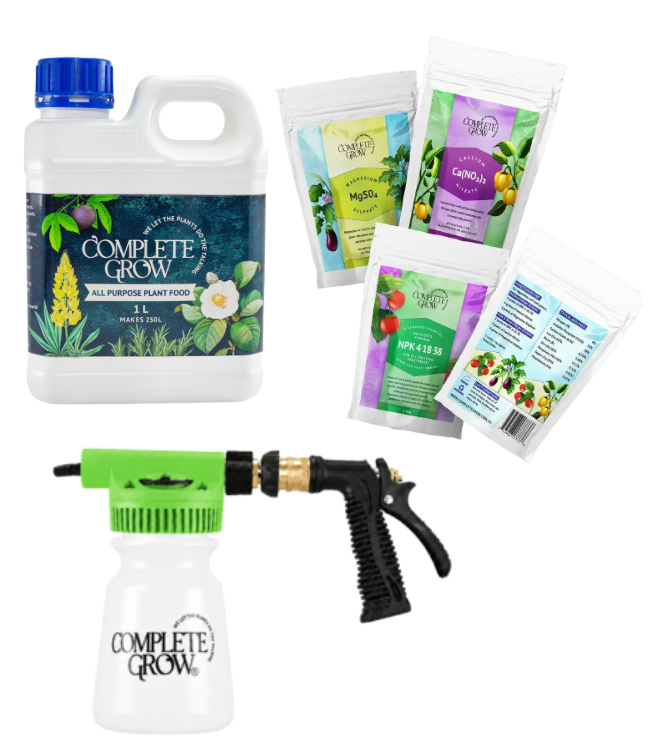
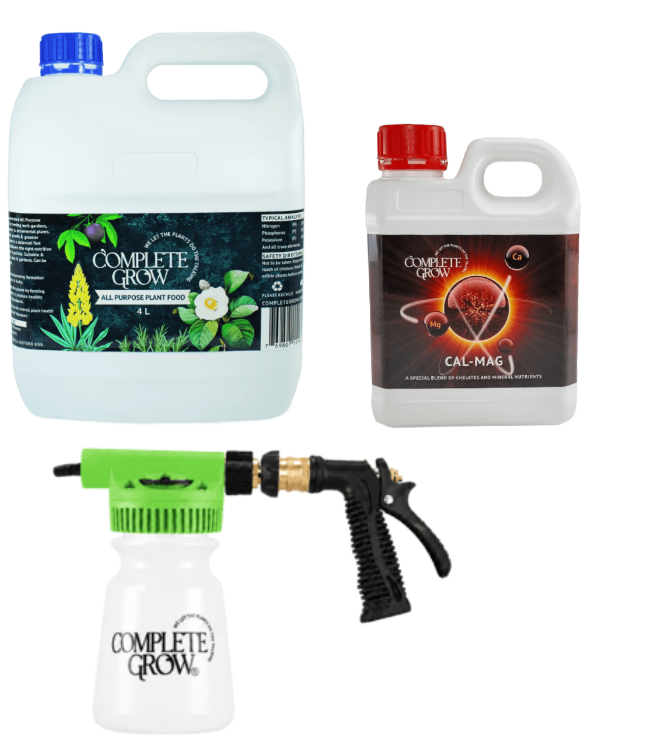
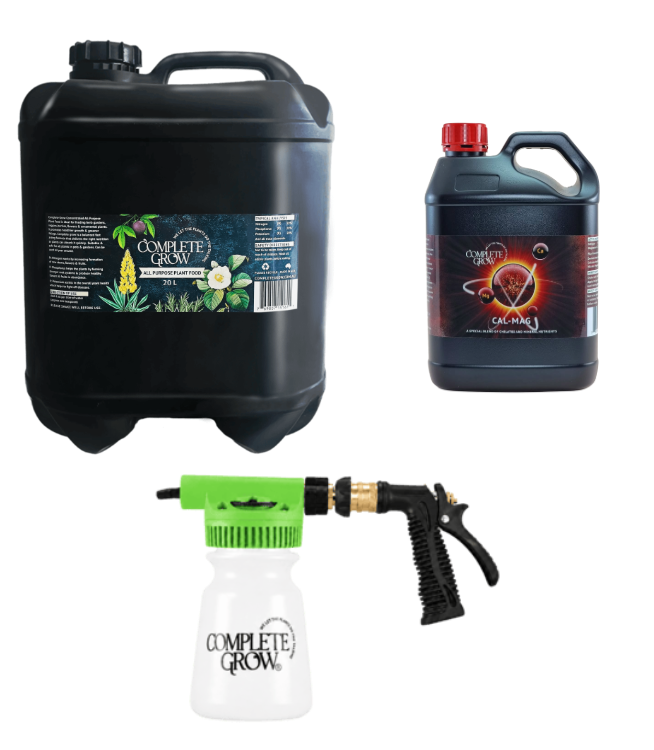
CompleteGrow All Purpose Plant Food
A balanced all-purpose option for active plant growth across many vegetables, herbs, flowers and ornamental plants. Always follow the product label and use a plant-specific formula where appropriate.
View All Purpose Plant Food →More fertiliser is not better. If the potting mix is waterlogged, compacted, extremely dry or unsuitable in pH, correct the root-zone problem before adding another feed. Even perfectly formulated nutrients cannot compensate for roots that lack oxygen or functioning growing points.
Quick answers
Coffee grounds and eggshells FAQs
Can I put used coffee grounds directly into a potted plant?
A very small accidental amount is unlikely to ruin an established plant, but repeated or thick applications are not recommended. Grounds can compact at the surface, affect water movement and suppress plant growth at higher concentrations. Compost them with other materials first.
Do coffee grounds make potting mix more acidic?
Not reliably. The pH of spent and decomposing grounds varies, and much of coffee's acidity is removed into the drink during brewing. Test and adjust the growing medium with a suitable product rather than trying to control pH with coffee waste.
Do eggshells prevent blossom-end rot?
Coarse eggshells do not release calcium quickly enough to act as a dependable treatment. Blossom-end rot is commonly associated with disrupted calcium movement caused by inconsistent moisture and root stress, even when calcium exists in the growing medium.
Will grinding eggshells make them useful?
Grinding increases surface area and helps shells break down faster, but it still does not turn them into a balanced fertiliser. Use them in compost or only where there is a genuine reason to add calcium carbonate.
Are organic matter and mineral fertiliser opposites?
No. Mature compost can support potting-mix structure and biological activity, while a correctly formulated fertiliser supplies measurable nutrients. Many successful growing systems use both for their different roles.
Why are chelated micronutrients used in fertiliser?
Chelating agents bind certain metal nutrients and help keep them soluble and stable in the root zone. This can improve the reliability of iron, manganese or zinc delivery within the pH range for which the chelate is effective.
Sources and further reading
- Washington State University Extension: Using Coffee Grounds in Gardens and Landscapes
- Oregon State University Extension: Using Coffee Grounds in Soil and Compost
- University of Illinois Extension: Using Eggshells in the Garden and Compost
- University of Minnesota Extension: Fertilising and Watering Container Plants
- University of California IPM: Fungus Gnats in Potting Mix
- Penn State Extension: Chelated Micronutrients and Nutrient Availability