santa ana couch
Transform Your Garden into a Personal Paradise!
Santa Ana Couch Problems: Fast Diagnosis & Proven Fixes
Seeing yellowing, browning, thin patches or scalping on Santa Ana (fine-leaf couch/Bermuda)? Use this quick visual checklist to identify the cause, apply the right fix, and lock in prevention. Works for home lawns and high-wear areas in Australian conditions.Spot the Problem (What it looks like → Most likely cause)
- Uniform tan in cold months → Normal winter dormancy (returns in spring).
- Yellow edges/tips after mowing → Dull blades or scalping (height too low, bumpy ground).
- Patchy bronze/brown in hot spells → Drought stress or hydrophobic soil (water not penetrating).
- Interveinal yellowing (veins green, tissue pale) → Iron/micronutrient unavailability (often higher pH) or uneven feeding.
- Soft, spongey surface; mower sinks → Thatch and/or compaction, shallow roots.
- Circles/irregular brown patches in humid weather → Brown patch / leaf diseases (extended leaf wetness).
- Ragged chew, thinning that quickly browns → Armyworms/cutworms; turf lifts easily → possible grubs.
- Edges lighter than centre → Scalping & dry perimeter (concrete heat, wind) or poor spreader/spray coverage.
- Persistent thinness in shade/traffic lanes → Insufficient light or wear exceeding recovery.
Immediate Fixes (Do this now)
- Mowing: Set 20–30 mm; obey the one-third rule; sharpen blades. Raise deck 2–4 mm on bumpy zones; light topdress to level highs/lows.
- Watering: Deep, infrequent sessions to ~25–38 mm/week in warm months. Use cycle/soak on hydrophobic areas and add a wetting agent.
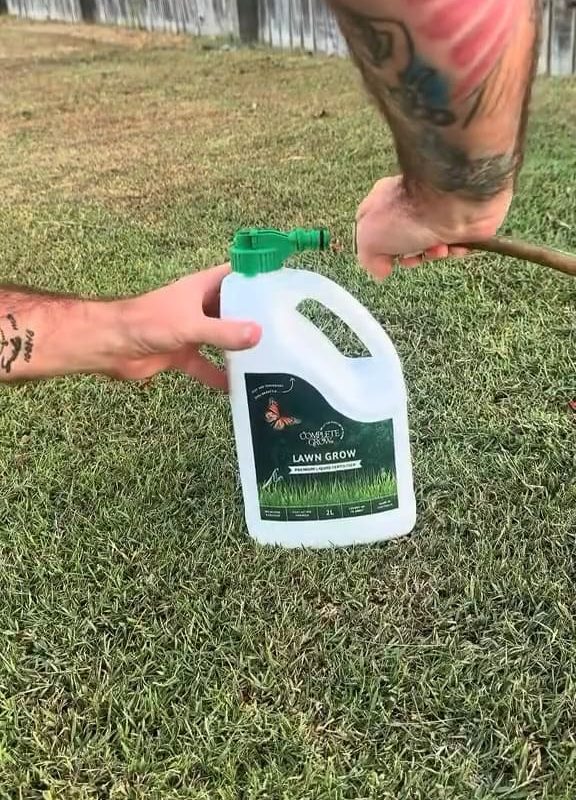
- Colour recovery: Use a hose-on with iron/micros for fast green-up without surge growth. Keep the bottle’s exact coverage and adjust only timing.
- Thatch/compaction: Core-aerate in active growth; light verticut if thatch >12 mm; follow with steady, not heavy, feeding.
- Disease pressure: Water mornings only, improve airflow, avoid feeding right before humid/rainy nights; treat with a labelled fungicide if confirmed.
- Pests: Soap-flush or night scout for caterpillars; treat if present. For grubs, check for easy “tug-up” of turf before choosing a control.
- Edges & high-heat strips: Hand-water after hot/windy days; raise mow height on perimeter passes; feed evenly (outline edges first, then fill).
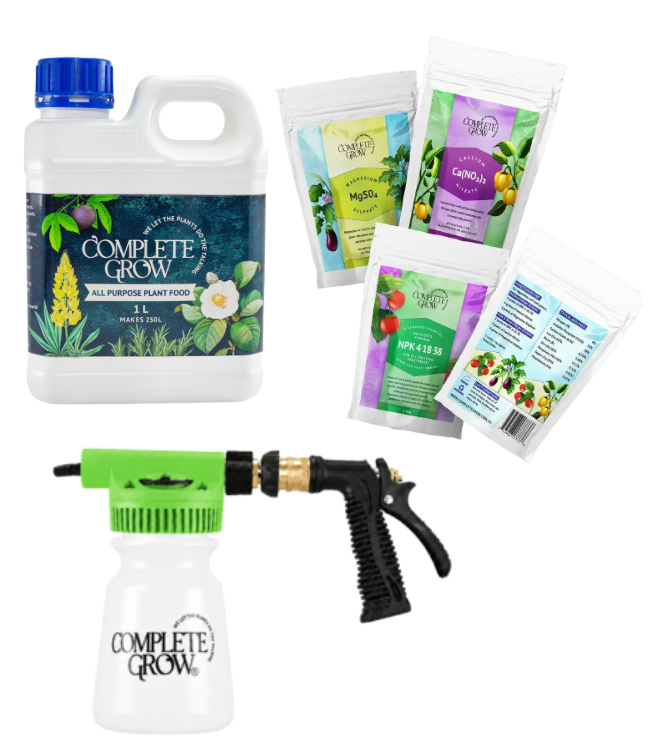
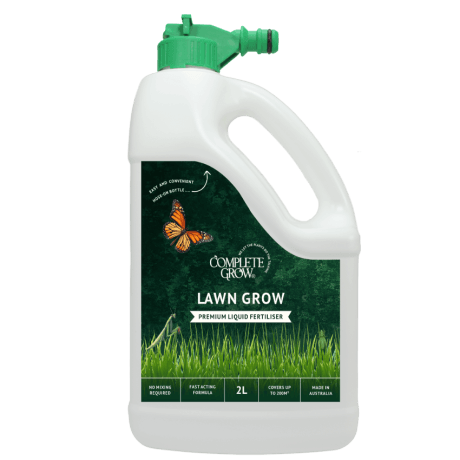
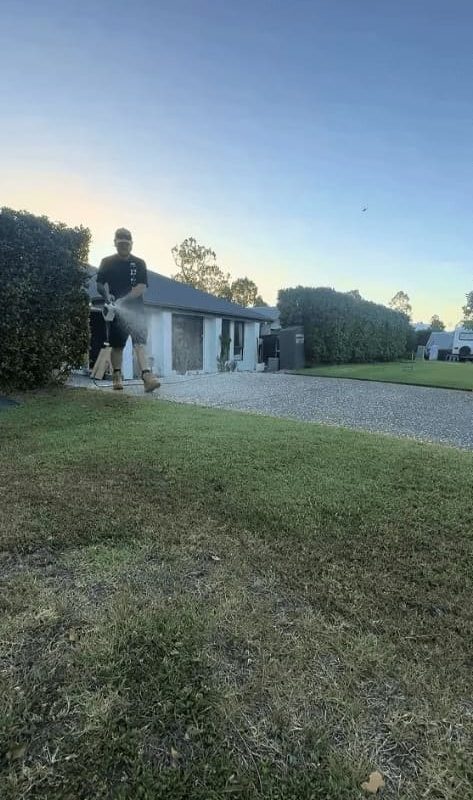
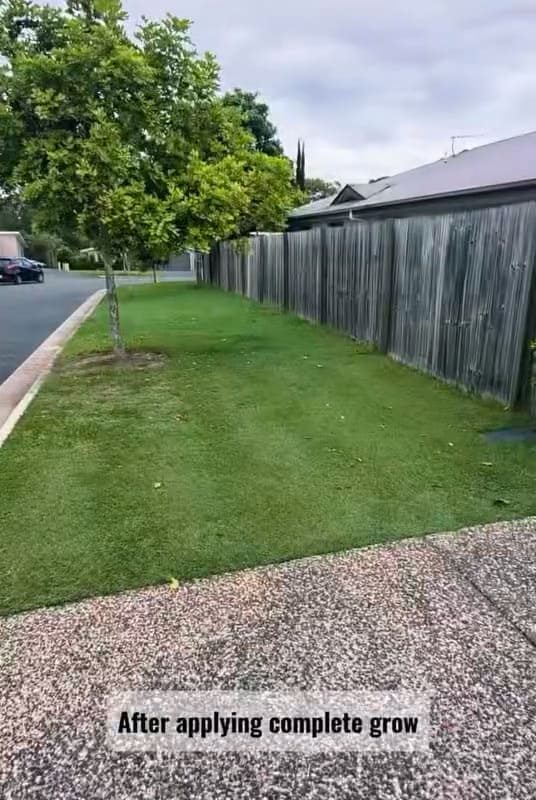
Recommended for quick, even recovery between granular work: CompleteGrow Lawn Grow – Hose-On Liquid Lawn Fertiliser (fixed-rate hose-on; apply by interval, not dose).
Root Causes & How to Prevent Them (Dial in the program)
Mowing & Traffic
- Height & cadence: 20–30 mm; increase frequency in peak growth to avoid scalping. Reel or sharp rotary only.
- Levelling: Light sand/topdress in spring–summer to smooth humps that get shaved.
- Wear lanes: Rotate play routes; consider stepping stones or a higher cut in heavy-use strips.
Water & Soil
- Deep/infrequent watering: 1–2 sessions/week to total ~25–38 mm. Short daily sprinkles = thatch, disease.
- Uniformity: Check output with catch cups; fix clogged heads and low pressure zones.
- Hydrophobic sands: Wetting agent + cycle/soak; consider core aeration to improve infiltration.
- Soil reaction: If repeated iron-style yellowing, get a soil test and plan pH correction; use iron/micros for immediate cosmetic lift.
Feeding (Hose-On Interval Only)
- Spring: Apply every 3–4 weeks once growth starts.
- Summer: Apply every 2–3 weeks (use the longer interval if mowing races).
- Autumn: Every 4 weeks for 1–2 passes, then pause as growth slows.
- Winter: Pause fertilising; irrigate only to prevent desiccation.
- Application pattern: Outline edges first, then cross-hatch the interior; keep the bottle’s stated coverage per zone.
Disease & Pests
- Brown patch / leaf disease: Morning water only; avoid evening leaf wetness; don’t overfeed before humid nights; fungicide only when confirmed.
- Armyworms/cutworms: Night inspect; treat promptly; resume normal feeding to speed recovery.
- Grubs: Look for spongy turf that lifts easily; treat per label and irrigate in as directed.
Sunlight rule: Santa Ana wants 6–8+ hours direct sun. In shade, accept a slightly higher cut and longer fertiliser interval; don’t try to force growth.
FAQ & Quick Reference (Santa Ana Couch)
FAQ
Why does my Santa Ana go brown in winter?
It’s warm-season and naturally goes tan in cold. That’s dormancy, not death. Resume your normal program when growth restarts in spring.
Best quick fix for pale colour?
A hose-on with iron/micros for rapid cosmetic green-up (use exact bottle coverage). Keep mowing sharp and regular.
How do I stop scalping?
Raise height to 20–30 mm, mow more often, level small highs with light topdressing, and never remove more than a third of the leaf at once.
Wet spots stay brown—why?
Likely compaction or thatch blocking infiltration. Core-aerate in active growth and use cycle/soak; add a wetting agent on hydrophobic sands.
Only the edges look off-colour.
They dry and heat up first and are often scalped. Hand-water after hot days, raise deck on perimeter passes, and start fertiliser passes by outlining borders.
Recommended product for colour recovery and steady growth: CompleteGrow Lawn Grow – Hose-On Liquid Lawn Fertiliser. Apply by interval only; never change the bottle’s coverage.
Santa Ana Couch Guides Hub
Best Fertiliser for Santa Ana Couch
Fixed-rate hose-on schedule, coverage method, and seasonal timing for deep green colour.
Santa Ana Couch Care & Maintenance
Mowing height, deep watering, interval-based feeding, regional tweaks, and winter care.
Santa Ana Couch Problems
Diagnose yellowing, browning, scalping, drought stress, disease, and pests—with quick fixes.
Recommended Products
The Grow Blog
Seasonal tips from our growers, written for real Aussie gardens.