
Free Shipping Over $70

Free Shipping Limited Time Only

Communal Garden

Transform Your Garden into a Personal Paradise!

Communal Garden Layouts: Practical, Low-Maintenance Design

Communal gardens function like small public parks but are typically shared by residents and maintained on a predictable schedule. The most robust layouts balance access, durability, and year-round structure, then overlay seasonal colour that’s easy to refresh without disrupting daily use.

Background reading:

Communal garden (Wikipedia)

1) Structure first

  • Circulation: Define clear paths and sightlines from entries and benches; avoid tight corners and blind spots.
  • Zones: Separate quiet seating lawns from high-activity edges (bins, mail, prams, pet tie-ups). Use hedging or low shrub ribbons to signal boundaries without creating hiding spots.
  • Scale: Combine a few small trees (light canopy), evergreen hedges for structure, and layered perennials/groundcovers to reduce bare soil.

2) Durable hardscape & services

  • Edges & mow-strips: Crisp lawn edges (stone/bricks flush) lower trimming load and fertiliser drift.
  • Irrigation: Prefer drip/MP rotators for beds; isolate lawn zones. Place hose points where seasonal pots are refreshed.
  • Drainage: Keep beds 25–50 mm higher than paths; avoid water pooling at gates and seating.

3) Planting logic for shared spaces

  • Evergreen backbone: Compact hedges and shrubs that hold form year-round.
  • Swap-outs up front: Seasonal colour in pots/bed fronts for easy, fast refresh.
  • Safety & access: Maintain 700–900 mm path clearances; keep plants low near gates for visibility.
Goal: A resilient backbone (hedge + lawn + layered perennials) that needs predictable feeding and minimal pruning, with seasonal highlights that can be changed without redesigning the garden.
23507027_175982182985766_2461315727202713600_n (1)
449842137_943096834298702_8549647421506284485_n

Planting Palettes & Fertiliser Programs for Shared Gardens

Select species for reliability and low mess (compact foliage, limited fruit drop). Feed by plant type so maintenance is simple to schedule. The programs below reference CompleteGrow formulations; always trial on a small area first and adjust to growth and season.

A) Lawns (cool- or warm-season)

  • Core feed: All Purpose Plant Liquid Fertiliser NPK 20-20-20 & Micro Nutrients every 4–6 weeks in growth seasons (typical drench 2–3 mL/L). After renovations, a single higher-nitrogen push is acceptable, then resume the 20-20-20 balance.
  • Deficiency support: Cal-Mag Hydroponic Nutrients Fertiliser 1 mL/L monthly if chlorosis/magnesium fade appears.
  • Mow & water: Little-and-often to avoid stress; feed 24–48 h after irrigation or rain for even uptake.

B) Hedges & evergreen shrubs

  • Establishment: NPK 20-20-20 Powder Soluble at 1–2 g/L drench every 3–4 weeks for the first 3 months.
  • Maintenance: Shift to liquid 20-20-20 every 6–8 weeks; light trim immediately after feeding flush for dense regrowth.
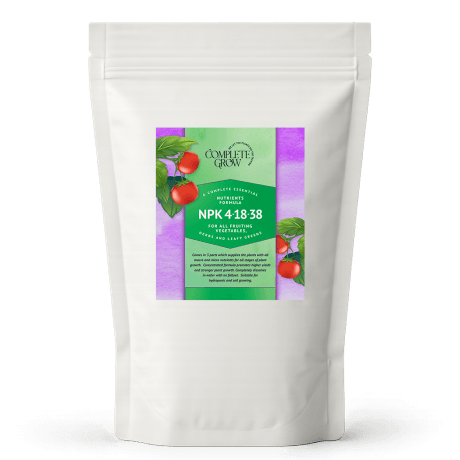
  • Flowering hedges: In bud/flower phases, alternate one feed with NPK 4-18-38 + CaMg at 1–2 mL/L to support bloom without leggy growth.

C) Perennials, groundcovers & seasonal colour

  • Routine feed: Liquid 20-20-20 at 2 mL/L every 3–4 weeks during active growth.
  • For heavy bloomers: Rotate feeds with 4-18-38 + CaMg (1–2 mL/L) to sustain flowering without excessive foliage.
  • Planters/pots: Use lighter, more frequent feeds (1–1.5 mL/L weekly) to match higher leaching from irrigation.

D) Dry-tolerant & succulent accents

  • Feed: Cactus Succulent Plant Food Fertiliser Concentrate at 1 mL/L monthly in warm months only; avoid over-watering.
Simple rotation idea: For mixed beds, alternate 20-20-20 and 4-18-38 + CaMg through spring–summer, then taper to a single balanced feed in early autumn. Use Cal-Mag only on visible symptoms or on known soft-water sites.
449742938_854952609822127_6323615412680768823_n
271810907_948087232478629_5791622903651811127_n (1)

Maintenance Calendar, Budgeting & FAQs for Shared Spaces

Keep tasks predictable and grouped: feed, prune, refresh colour, then clean paths. A quarterly rhythm reduces call-outs and helps committees track costs.

Quarterly rhythm (typical)

  • Late winter: Light tidy; first balanced feed (20-20-20) as growth resumes. Check irrigation.
  • Spring: Main structural prune; swap-in seasonal pots; rotate one feed with 4-18-38 + CaMg for bloomers.
  • Summer: Short, frequent irrigation windows; lighter, more frequent feeds on planters; monitor lawns for Cal-Mag needs.
  • Autumn: Final balanced feed to harden growth; reduce irrigation; schedule any re-edging and lawn repair.

Budget & operations

  • Product consolidation: Most sites run on two core SKUs: All Purpose Liquid NPK 20-20-20 and NPK 4-18-38 + CaMg, with optional Cal-Mag and Cactus/Succulent for niche areas.
  • Bulk value: For multi-dwelling gardens, the 20L All Purpose NPK Liquid Plant Food reduces per-application cost and storage swaps.
  • Scheduling: Lock fertiliser and pruning windows to access times (gates/quiet hours). Post simple signage the day before.

FAQ

  1. Is a communal garden the same as a community garden?
    Not exactly. Communal gardens are shared by local residents (often private with controlled access); community gardens are typically public/allotment-style plots. Feeding plans here are written for ornamental/shared resident spaces.
  2. How do we keep fertilising simple across mixed plantings?
    Adopt one balanced base (20-20-20) and one bloom-support feed (4-18-38 + CaMg). Use Cal-Mag only if leaf yellowing or soft-water conditions persist.
  3. What about indoor foyers or covered entries?
    Use Indoor Plant Food Concentrate (small containers) at low dose and extend intervals; light is the limiting factor, not fertiliser.
  4. Do we need soil tests?
    Annual quick tests help prevent over-application. Start with conservative doses (e.g., liquid 2 mL/L; powder 1 g/L) and adjust to plant response.
  5. Can we feed during access-restricted hours?
    Prefer early morning with paths roped for 30–60 minutes; post a notice for residents and reopen once foliage is dry.
CompleteGrow at a glance: Base growth (NPK 20-20-20), bloom support (4-18-38 + CaMg), targeted correction (Cal-Mag), and niche dry-tolerant accents (Cactus/Succulent). One simple toolkit for most communal gardens.

Recommended Products

Sale!

Cactus Succulent Plant Food Fertiliser Concentrate

Price range: $32.00 through $56.00
Sale!

The Grow Blog: News, Tips, & Stories

Cart (0 items)

No products in the cart.