Free Shipping Storwide

๐Ÿ”ฅ20 % OFF ๐Ÿ”ฅ Boxing Day Sale ends in
00 Days
00 Hours
00 Minutes
00 Seconds

citrus plant

Transform Your Garden into a Personal Paradise!

Add Your Heading Text Here

๐Ÿ”ฅ20 % OFF ๐Ÿ”ฅ Boxing Day Sale ends in
00 Days
00 Hours
00 Minutes
00 Seconds

How to Choose and Plant Citrus Trees

Citrus trees are a great addition to Australian gardens, thriving in subtropical and tropical climates. The key to a successful citrus tree lies in choosing the right variety for your climate and soil. Here’s a breakdown of how to choose the best citrus tree for your garden:

Popular Citrus Varieties

  • Lemon Trees: Varieties like Eureka, Lisbon, and Meyer thrive in full sunlight and well-drained soil. Meyer lemons are great for small gardens.
  • Mandarins: Imperial, Ellendale, and Clementine mandarins are perfect for Australian climates, requiring ample sun and warmth.
  • Oranges: Navel, Valencia, and Blood oranges grow best in warm, dry conditions. These trees need plenty of space.
  • Limes: Tahitian and Persian limes are suited for tropical climates, requiring plenty of sunlight and well-drained, slightly acidic soil.

Planting Your Citrus Tree

To plant citrus trees successfully, follow these simple steps:

  • Step 1: Choose a sunny location with well-drained soil.
  • Step 2: Dig a hole twice as wide as the root ball, but no deeper than the treeโ€™s current root level.
  • Step 3: Place the tree in the hole, ensuring the top of the root ball is level with the surrounding soil.
  • Step 4: Fill the hole with soil and water thoroughly.
  • Step 5: Add a layer of mulch around the base to retain moisture and regulate temperature.
280748683_749843689722203_7724863250967651661_n
301541998_3371907233135901_8854022028884645813_n

Essential Care for Citrus Trees: Watering, Pruning, and Feeding

Watering Citrus Trees

Citrus trees need consistent moisture, but they hate sitting in wet soil. The goal is deep watering that reaches the root zone, then letting the surface dry slightly so roots can breathe.

  • Water deeply: Soak the soil slowly so water penetrates 20โ€“30cm into the ground (deeper for established trees).
  • Young trees: Water more often while they establish (especially in their first summer), but keep drainage sharp.
  • Established trees: Aim for a deep water once a week in warm weather, adjusting based on rainfall and soil type.
  • Pots dry faster: Container citrus may need watering every 2โ€“4 days in summer, depending on pot size and heat.
  • Avoid over-watering: If the soil stays wet for days, roots can rot and leaves may yellow and drop.
  • During fruit set: Keep watering consistent. Big swings (dry then drenched) often cause fruit drop or split fruit.
Quick check: Push a finger into the soil. If itโ€™s damp 5โ€“7cm down, hold off watering. If itโ€™s dry, water deeply.

Pruning Citrus Trees

Pruning is essential for citrus trees to maintain shape, improve airflow, and encourage healthy growth. Follow these pruning tips:

  • Best time to prune: Late winter or early spring is ideal for pruning before new growth begins.
  • Remove dead or damaged branches: Cut away any branches that are dead or diseased to maintain tree health.
  • Shape the tree: Prune for a balanced, open shape to allow light penetration and airflow.

Feeding Citrus Trees with Citrus Fertiliser

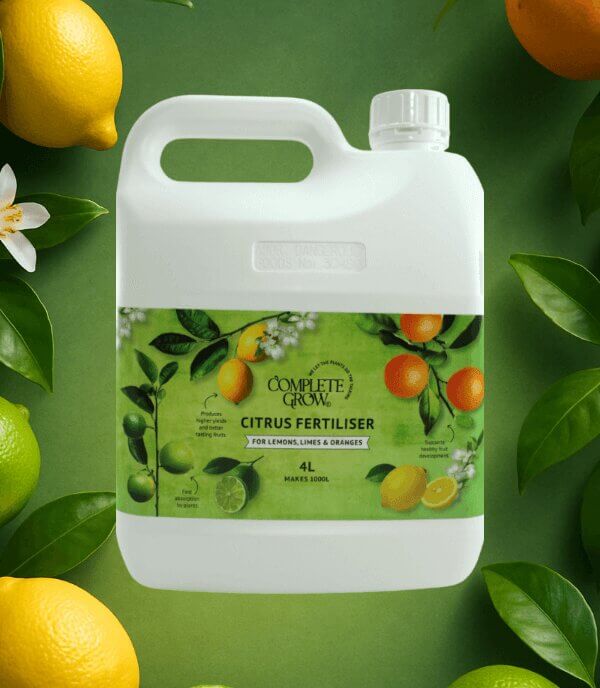
Citrus trees are heavy feeders, especially when theyโ€™re flushing new leaves, flowering, and filling fruit. A potassium-forward feed supports stronger flowering, improved fruit set, better fruit development, and greener leaves. Complete Grow’s Citrus Fertiliser is specifically designed for all citrus trees, including lemons, limes, oranges, and mandarins. It provides all the key nutrients your citrus tree needs to thrive, especially during the critical growing and fruiting seasons.

  • Why potassium matters: Potassium supports fruit size, fruit quality, and helps the tree handle the stress of fruit load.
  • Why trace elements matter: Complete Grow’s Citrus Fertiliser includes chelated iron, zinc, and manganese, which help keep leaves green and promote overall plant health.
  • How to apply: Mix 4ml per litre of water and apply around the base of the tree, making sure the soil is consistently moist.
  • During fruit set: Feeding during fruit development encourages better fruit retention and improves the fruit’s overall taste and appearance.
  • Potted citrus trees: For potted trees, apply the diluted fertiliser every 2โ€“3 weeks during the growing season. Be sure to water thoroughly after feeding.
Feeding Timing for Healthy Citrus Trees
Start feeding in early spring as the tree begins to bloom, continue through the fruiting phase, and reduce the feed to once a month during the dormant phase in winter.
347075667_787743609648699_9180909863294951471_n (1)
558209030_122229508718332418_2233230122453465313_n (1)

Common Problems with Citrus Trees and How to Fix Them

Citrus trees can face a variety of challenges, from pests to nutrient deficiencies. Here are some common problems and solutions:

Yellowing Leaves

Yellowing leaves are often caused by nutrient deficiencies or water stress. Here’s how to address it:

  • Nutrient deficiency: Check for signs of iron or nitrogen deficiency. Apply a fertilizer with adequate micronutrients like Complete Grow Citrus Plant Food.
  • Water stress: Ensure the tree is not over-watered or under-watered. Consistent watering is key.

Leaf Curl

Leaf curl in citrus trees is often caused by environmental stress or pests.

  • Environmental stress: Check for temperature fluctuations or water stress. Make sure the tree is not exposed to harsh winds or direct frost.
  • Pests: Aphids and citrus leaf miners can cause leaf curl. Use insecticidal soap or neem oil to control pests.

Common Pests

Citrus trees are susceptible to pests such as aphids, scale insects, and mealybugs. Here’s how to tackle them:

  • Aphids: These tiny insects can weaken your tree by feeding on the sap. Use insecticidal soap or a strong jet of water to remove them.
  • Scale insects: Remove these pests by scrubbing the affected areas with a soft brush or applying horticultural oil.

FAQs: Common Questions About Citrus Trees

What is the best time to prune citrus trees?

The best time to prune citrus trees is in late winter or early spring, before the tree begins its new growth cycle. This ensures proper shaping and removes any dead or damaged wood.

How often should I water my citrus trees?

Water your citrus trees deeply once a week during the growing season. In hotter months, you may need to water more frequently. Be sure to avoid over-watering, as this can lead to root rot.

Why are my citrus tree leaves turning yellow?

Yellowing leaves are often a sign of nutrient deficiency, particularly nitrogen or iron. Make sure youโ€™re using a well-balanced citrus plant food with all the necessary micronutrients.

Shop Complete Grow Citrus Plant Food here.

Recommended Products

Sale!

Cal-Mag Hydroponic Nutrients Fertiliser

Price range: $36.00 through $46.70
Sale!

The Grow Blog: News, Tips, & Stories

Cart (0 items)

No products in the cart.