Free Shipping Storwide

๐Ÿ”ฅ20 % OFF ๐Ÿ”ฅ Boxing Day Sale ends in
00 Days
00 Hours
00 Minutes
00 Seconds

leaf curl on mandarin treeโ€‹

Transform Your Garden into a Personal Paradise!

Add Your Heading Text Here

๐Ÿ”ฅ20 % OFF ๐Ÿ”ฅ Boxing Day Sale ends in
00 Days
00 Hours
00 Minutes
00 Seconds

Mandarin Tree Leaves Curling: What It Usually Means

Leaf curl on mandarin trees is a stress response, not a single disease. The leaf is effectively trying to reduce water loss and protect itself when conditions become unfavourable. In most home gardens, curling leaves are caused by watering stress, heat and wind exposure, root restriction in pots, or nutrient imbalance that reduces the treeโ€™s ability to regulate moisture.

Quick diagnosis guide:
  • Curling upward with dry soil: dehydration and heat stress
  • Curling downward with wet soil: waterlogging, poor drainage, root stress
  • Curl + pale or yellow tone: nutrient uptake issue, often linked to roots
  • Curl + sticky residue or distortion: sap-sucking pests may be involved

Why leaf curl happens in mandarins

Mandarins are evergreen citrus and continue functioning year-round, but their leaves are sensitive to rapid environmental changes. When the tree cannot move enough water through the leaf, the leaf curls to reduce surface area and slow transpiration. This is why leaf curl commonly appears during hot spells, windy conditions, after missed watering, or when potting mix becomes water-repellent.

When leaf curl becomes a problem

Mild leaf curl with otherwise green foliage can be temporary and often resolves once conditions stabilise. More serious cases involve curling combined with yellowing, leaf drop, scorched edges, or stunted new growth. When curl persists for several weeks, it usually points to an underlying root-zone issue that requires correction.

515402581_18046802159624143_3201770655051568380_n
599896006_18147037987435378_5827633165707470273_n (1)

Primary Causes of Mandarin Leaf Curl and How to Fix Them

Watering stress and inconsistent moisture

The most common cause of mandarin leaf curl is uneven moisture. Citrus prefer deep watering followed by partial drying, not constant wetness and not repeated drought cycles. If the tree is allowed to dry too far (especially in pots), leaves curl to reduce water loss. If the soil stays wet for too long, roots lose oxygen and nutrient uptake drops, causing stress curl that often looks heavier and more persistent.

  • Water deeply so moisture reaches the full root zone.
  • Allow the top layer of soil to partially dry before watering again.
  • Never let pots sit in saucers of water.

Heat, wind and harsh afternoon exposure

Hot sun combined with wind causes rapid water loss from leaves. Mandarins can handle strong sun, but prolonged hot wind can outpace the treeโ€™s water supply, leading to curled leaves and sometimes scorched edges. This is especially common for container trees placed against reflective surfaces like concrete or walls.

  • Provide wind protection during extreme weather.
  • Avoid the hottest reflected spots in summer.
  • Use a mulch layer (in-ground) to stabilise soil moisture.

Root restriction and drainage problems in pots

Mandarin trees in pots can curl leaves when roots become crowded or when potting mix breaks down and drains poorly. Root restriction reduces water uptake capacity, and poor drainage reduces oxygen availability. Either condition leads to chronic stress that shows up as curled leaves and sluggish growth.

  • If roots are circling heavily, move up a pot size and refresh the mix.
  • Ensure drainage holes are clear and the pot is slightly raised off the ground.
  • Replace old potting mix that stays wet for too long.

Nutrition and nutrient uptake imbalance

Leaf curl can be worsened by nutrient imbalance because nutrition affects how well a mandarin tree regulates water, builds leaf tissue, and supports new growth. Overfeeding with nitrogen-heavy fertilisers can push soft growth that wilts and curls easily. Underfeeding, or feeding without a citrus-appropriate balance, can leave the tree weak during flowering and fruit development.

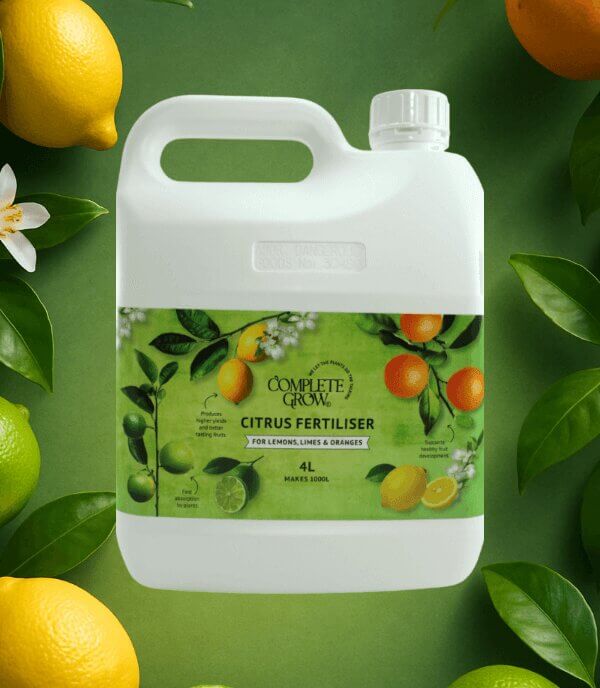
A stabilising approach is to use a citrus fertiliser that is designed specifically for citrus plants and formulated around a fruiting-friendly balance such as NPK 6-2-12. This supports steady canopy health while prioritising potassium for flower strength, fruit retention, and overall stress resilience.

During heavy flowering and fruiting, leaf curl may also appear when calcium and magnesium demand rises. Calcium supports leaf and fruit structure, while magnesium supports chlorophyll and photosynthesis. If the tree shows curl alongside pale leaves or reduced vigour, supplementation may help.

A targeted option during high-demand periods is a Cal-Mag fertiliser , especially for container-grown trees or sandy soils where nutrients leach quickly.

Sap-sucking pests and leaf distortion

If curled leaves are distorted, sticky, or clustered at new growth tips, pests may be involved. Sap-sucking insects can trigger curling by damaging tender tissue and disrupting moisture balance. Even when pests are present, the underlying driver is often stress, so correcting watering and nutrition still matters.

Best results come from fixing the root zone first: stabilise watering, ensure drainage, then support growth with citrus-appropriate nutrition. Leaf curl commonly improves over the following 2โ€“4 weeks once conditions normalise.
169665307_286512866187810_497351613029123909_n (1)
328461772_675760234248121_938500687557736209_n (1)

Recovery, Prevention and Long-Term Leaf Health

Once the cause is corrected, curled mandarin leaves may not fully flatten. Citrus leaves often hold their stress shape, but new growth should emerge normal and healthy if conditions have stabilised. The goal is to stop the cycle of stress so the tree can rebuild consistent growth and hold fruit more reliably.

What recovery looks like

  • New leaves emerge flatter, thicker, and deeper green
  • Reduced leaf drop and improved canopy density
  • More stable flowering and improved fruit hold during the season

Prevention strategy for recurring leaf curl

  • Keep watering deep and consistent, avoiding extreme dry-outs in pots.
  • Protect container trees from hot wind and reflective heat in summer.
  • Maintain free-draining soil and refresh potting mix when it breaks down.
  • Use citrus-appropriate nutrition to avoid nitrogen-heavy growth spikes.

Frequently Asked Questions

Can a mandarin tree recover from curled leaves?
Yes. Leaf curl is commonly a stress response. Once watering, drainage, and nutrition are stabilised, new growth usually returns to normal.

Why are my mandarin leaves curling down?
Downward curl often points to root-zone stress, especially prolonged wet soil or poor drainage. Check soil moisture and drainage first.

Why are mandarin leaves curling and turning yellow?
This combination commonly indicates reduced nutrient uptake from root stress or a deficiency during flowering/fruiting. Fix drainage and support with citrus-appropriate nutrition.

Will curled leaves flatten again?
Sometimes, but not always. Older leaves may keep their curled shape. The best indicator is whether new leaves grow normally after conditions improve.

Recommended Products

Sale!

Cal-Mag Hydroponic Nutrients Fertiliser

Price range: $36.00 through $46.70
Sale!

The Grow Blog: News, Tips, & Stories

Cart (0 items)

No products in the cart.