
Free Shipping Over $70

Free Shipping Limited Time Only

When to Fertilise Citrus Trees

Transform Your Garden into a Personal Paradise!

Add Your Heading Text Here

When to Fertilise Citrus Trees in Australia (Seasonal Schedule)

In Australia, the best time to fertilise citrus trees is from early spring through summer, then taper in early autumn and avoid feeding through winter in most regions.

Citrus trees feed most effectively when soil temperatures are rising and roots are actively taking up nutrients. That typically begins in late winter to early spring as new growth appears, peaks during flowering and fruit development in spring and summer, and slows as temperatures cool. Timing matters because feeding too early wastes nutrients, while feeding too late can push soft growth when the tree should be hardening off.

Quick answer:
Start feeding citrus in spring, maintain regular feeding through summer, reduce in early autumn, and avoid fertilising in winter (except in warm subtropical zones where trees remain active).

Season What the Citrus Tree Is Doing Fertilising Action
Spring New leaf growth begins, flower buds form Start fertilising as new growth appears
Summer Flowering, fruit set and fruit development Feed regularly to support fruit growth
Early Autumn Fruit finishing, growth slowing Reduce feeding and taper applications
Winter Low activity, minimal nutrient uptake Avoid fertilising in most regions
347075667_787743609648699_9180909863294951471_n (1)
599896006_18147037987435378_5827633165707470273_n (1)

Seasonal Feeding Guide (Australia)

Spring (Late August to October): Start Strong

Spring is the most important time to begin fertilising citrus. As soil warms, trees move from low activity into active growth, pushing new leaves and preparing flower buds. Nutrient uptake is efficient during this period, so the first feeds tend to produce the most noticeable improvement in leaf colour, canopy density, and overall tree momentum.

For most regions, begin feeding between late August and early October, using the tree itself as your cue: when you see fresh, light-green new growth, roots are active. In cooler climates, this may shift later; in warmer coastal areas, it may start earlier.

Avoid heavy feeding while the soil is still cold. Citrus canโ€™t absorb nutrients well in cold conditions, so fertiliser is more likely to leach away or sit in the root zone without benefit.

Summer (November to February): Flowering, Fruit Set & Fruit Fill

Summer is when citrus trees demand the most nutrition. Flowering, fruit set, and fruit enlargement all draw heavily on the treeโ€™s energy and nutrient reserves. If feeding is inconsistent during this period, you often see weak fruit retention, smaller fruit, slower fruit fill, or fruit drop during heat or dry spells.

Potassium becomes especially important through flowering and fruit development because it supports fruit set, fruit fill, sweetness, firmness, and overall resilience. Nitrogen is still needed to maintain foliage health, but excessive nitrogen during this phase can shift the tree back toward leaf growth rather than fruit performance.

In subtropical zones (coastal Queensland and northern NSW), citrus may stay active for long periods, so smaller, more frequent feeding generally performs better than occasional heavy dosing. This is particularly true in sandy or free-draining soils where nutrients wash through quickly.

Autumn (March to May): Taper and Rebuild Reserves

In early autumn, citrus growth slows and nutrient uptake begins to decline. A lighter feed around March can help replenish nutrient reserves after harvest and support general tree health, but the goal is maintenance, not rapid new growth.

As temperatures drop, reduce feeding frequency. In cooler regions, stop fertilising earlier. In warmer regions where the tree remains active, continue at reduced rates rather than maintaining peak-summer feeding.

Winter (June to August): Usually Pause Feeding

In most of Australia, winter is a low-uptake period for citrus. Feeding during winter is often ineffective and can contribute to nutrient loss, especially in cold or waterlogged soils. The main exception is warm subtropical microclimates where trees remain semi-active; even then, feeding should be lighter and less frequent than in summer.

169665307_286512866187810_497351613029123909_n (1)
472995378_18386068000098654_7202639447045940426_n (1)

Simple Citrus Fertilising Schedule + What to Use

If you want a simple approach that works across most Australian backyards, follow this seasonal rhythm. It aligns feeding to the periods where citrus trees actually absorb nutrients and use them for flowering and fruit development.

Simple schedule:
Spring: begin feeding as new growth starts
Summer: maintain regular feeding through flowering and fruit development
Early autumn: reduce feeding as growth slows
Winter: pause feeding in most regions

Citrus trees generally respond best to steady, consistent nutrition rather than occasional heavy applications. This is especially true for potted citrus, sandy soils, and gardens exposed to heavy rainfall or frequent irrigation, where nutrients can leach quickly.

Through flowering and fruit development, potassium demand is high. A potassium-rich citrus fertiliser supports better fruit set and fruit fill while maintaining healthy foliage. For this reason, many productive citrus programs favour an NPK balance where potassium is higher than nitrogen.


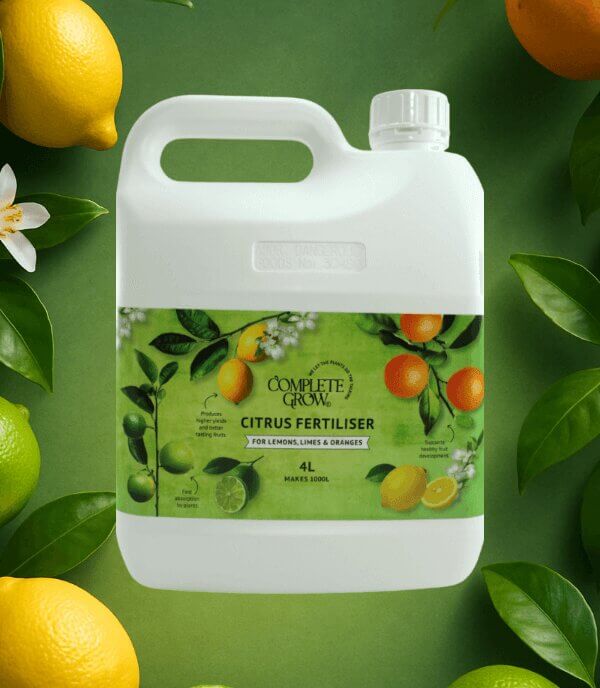
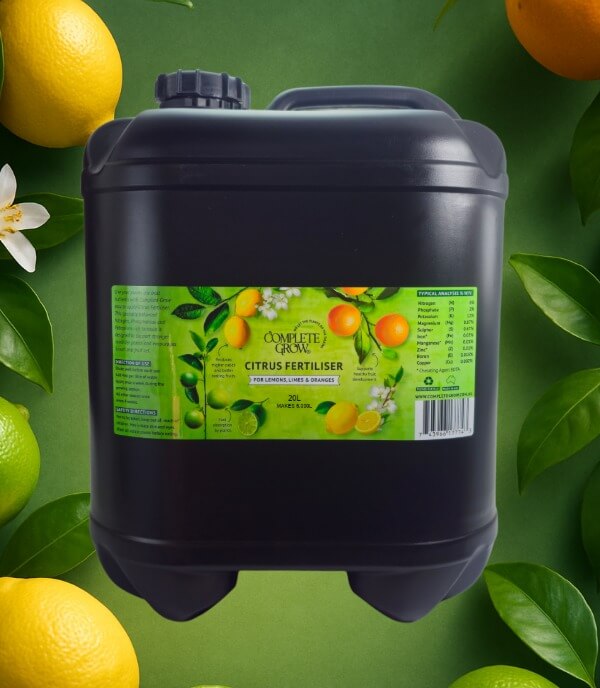
CompleteGrow Citrus Fertiliser โ€“ NPK 6-2-12 + Trace Elements
is designed around this citrus fruiting logic. It provides steady nitrogen for canopy health, modest phosphorus for balance, and higher potassium for flowering and fruit development, with magnesium, sulphur and chelated trace elements to support reliable uptake in both pots and in-ground soil.

For best results, apply to moist soil, water in well after feeding, and keep watering consistent during warm months. In pots, ensure strong drainage and periodically flush the potting mix to prevent salt buildup.

Recommended Products

Sale!

The Grow Blog: News, Tips, & Stories

Cart (0 items)

No products in the cart.