
Ranunculus Fertiliser
Transform Your Garden into a Personal Paradise!
Best Fertiliser for Ranunculus in Australia
Use a balanced, water-soluble fertiliser throughout the cool-season growth cycle. For a simple, reliable plan: feed a 20-20-20 + micronutrients liquid at half strength as shoots appear, then at full strength every 10–14 days through active growth and bloom. Reduce after flowering so corms can recharge before dormancy.
- Ideal NPK: Balanced (e.g., 20-20-20) to support roots, foliage, and flowers equally.
- Timing: Start when sprouts are 2–3 cm tall; continue until flowers finish.
- pH target: Slightly acidic to neutral soil, pH 6.0–6.8.
- Containers vs beds: Containers leach nutrients faster—feed a bit more often.
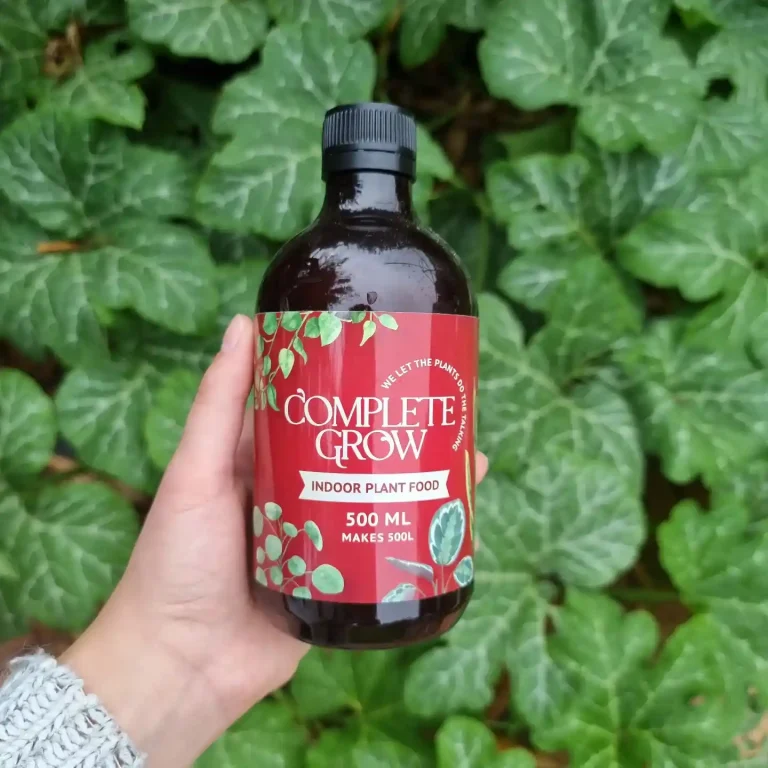
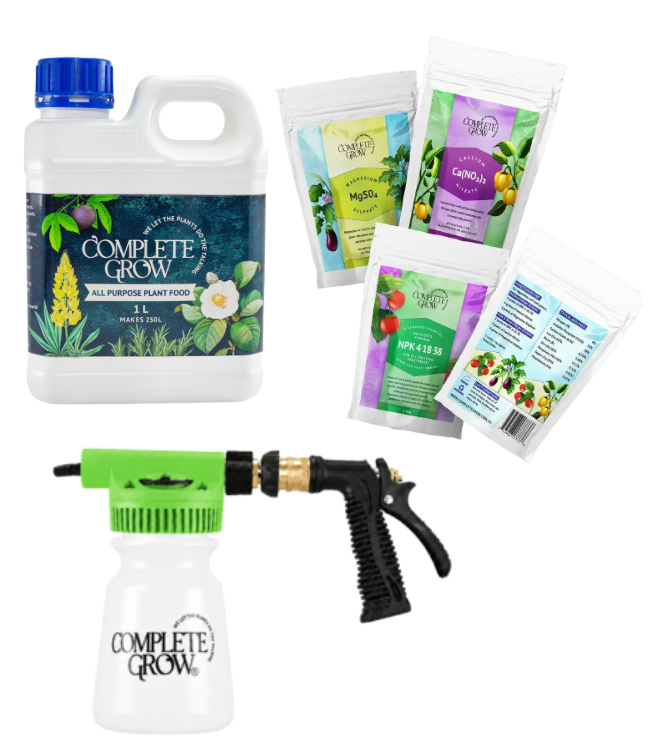
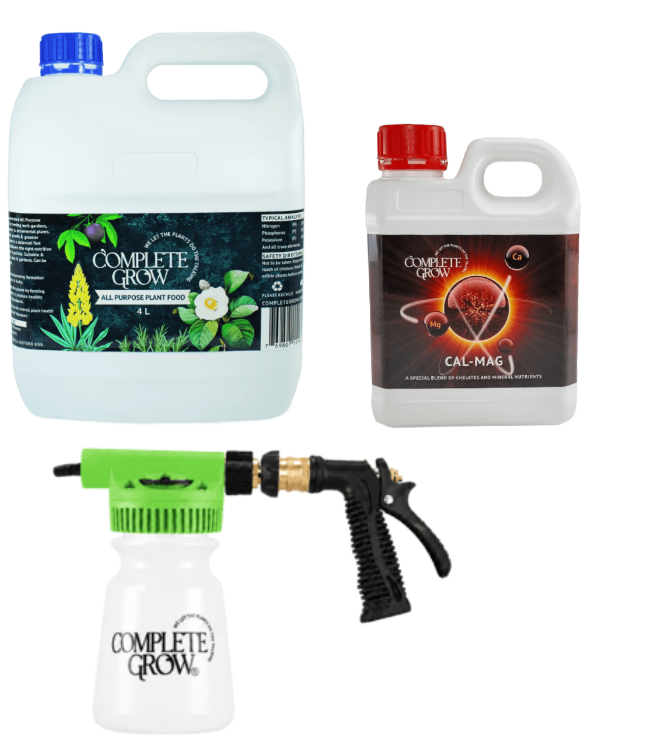
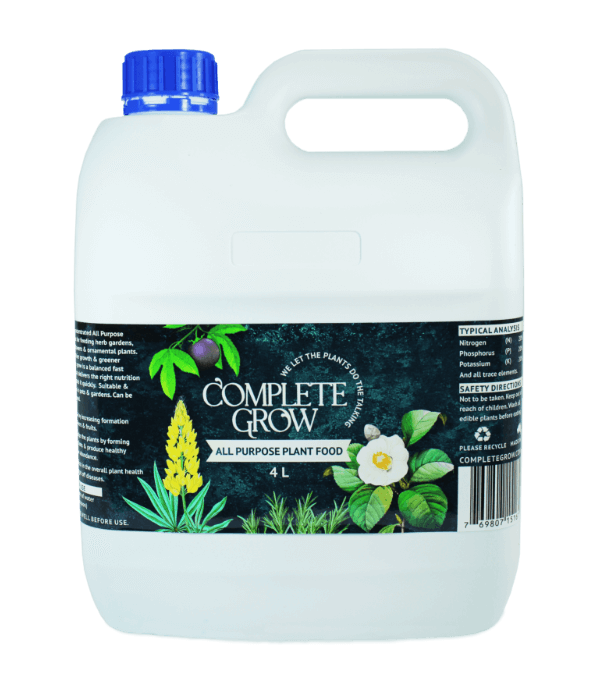
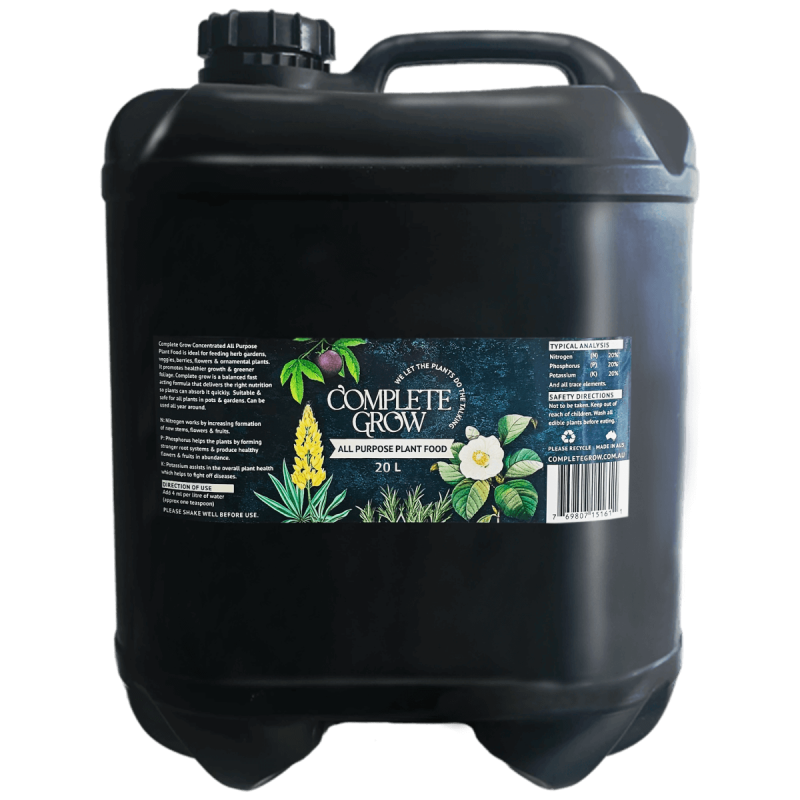
Recommended: CompleteGrow All Purpose Liquid (NPK 20-20-20 + Micros)
- Best overall for ranunculus: Balanced NPK fuels roots, stems, and flower buds equally.
- Micronutrient support: Prevents yellowing (iron, magnesium) and weak stems (boron, manganese).
- Fast uptake: Water-soluble for quick response in cool soils; ideal for pots and beds.
- Simple plan: One product all season—no confusing swaps or extra bottles.
Why this works: ranunculus are heavy feeders with a short, intense growth window. A balanced liquid keeps nutrients available exactly when plants need them, without forcing leafy growth at the expense of blooms.
How to Feed Ranunculus with CompleteGrow
Dilution & application
- Half strength (establishment): 5 mL fertiliser per 1 L water.
- Full strength (active growth & bloom): 10 mL per 1 L water.
- Garden beds: Apply 1–2 L of solution per m² (aim to wet the root zone, not the leaves).
- Containers: For a 30 cm pot, apply 1–1.5 L of solution until slight runoff.
Australia timing guide (adjust a few weeks by local climate)
- Sprout stage (2–3 weeks after planting): Half strength weekly, starting when shoots are 2–3 cm tall.
- Active growth (late winter): Full strength every 10–14 days. If growth is very lush with fewer buds, drop to ¾ strength for two feeds.
- Bloom (spring): Continue full strength every 10–14 days. Water early and feed soil (avoid petals).
- Post-bloom recharge (3–4 weeks): Half strength every 2–3 weeks, then stop as leaves yellow and die back.
Quality control & troubleshooting
- Pale new leaves (iron deficiency): Add one half-strength feed the following week; ensure pH 6.0–6.8 for micronutrient availability.
- Leafy but few flowers (too much nitrogen): Skip one feed, then resume at ½–¾ strength; keep plants in full sun.
- Salt build-up in pots: Every 4–6 weeks, flush containers with plain water until it drains freely; resume normal feeding next watering.
- Hot spells (>28°C): Feed at half strength and water early morning to reduce stress.
- Mix order: Fill can with water → add CompleteGrow → stir → apply. Don’t mix in the same can with lime or highly alkaline additives.
- Foliar option (optional): 2–3 mL/L as a fine morning mist on leaves only (never flowers), when a quick pick-up is needed.
Soil & pH tips
- Target pH 6.0–6.8 for best nutrient uptake. In alkaline soils, rely on the liquid feed rather than adding strong lime.
- Improve heavy clay with coarse compost and sharp sand for drainage; ranunculus dislike waterlogging.
- Mulch lightly (kept off crowns) to stabilise moisture during bud set and flowering.
Fertiliser & Dormancy FAQ
What’s the best fertiliser formulation for ranunculus?
A balanced liquid like CompleteGrow All Purpose Liquid (20-20-20 + micros). It evenly supports roots (P), foliage (N), and blooms (K), with trace elements to prevent yellowing and weak stems.
How often should I feed in pots versus garden beds?
Pots: every 7–10 days (nutrients leach faster). Beds: every 10–14 days. Use half strength for seedlings and during heat, full strength for peak growth and bloom.
Should I keep fertilising after flowers finish?
Yes—for 3–4 weeks at half strength. This recharges the corms. Stop feeding once foliage naturally yellows and the plant enters dormancy.
Can I use slow-release granules instead of liquid?
You can, but liquid feeding is more precise in cool seasons and containers. If you do apply slow-release at planting, still use CompleteGrow liquid during peak growth for consistent results.
How do I avoid “all leaves, no flowers”?
Ensure full sun, don’t over-nitrogen, and follow the balanced schedule. If plants are too leafy, skip one feed, then resume at ½–¾ strength and keep watering consistent at bud time.
Do corms need fertiliser in storage?
No. Lift, dry, and store in a cool, dry place. Resume fertiliser after replanting and once sprouts appear the next season.
Explore More Ranunculus Guides
- Ranunculus Fertiliser Schedule (Australia) — exact timing before, during & after bloom.
- How to Store Ranunculus Corms (Australia) — lift, cure, pack and store at 10–15 °C.
- Can You Leave Ranunculus in the Ground in Australia? — drainage, frost and mulch rules.
- Fertilising Ranunculus in Pots vs Beds (Australia) — rates, frequency, salt-flush tips.
- When to Plant Ranunculus in Australia — regional months, presprout timing.
- How to Plant Ranunculus Corms (Australia) — claws down, 5–7 cm depth, spacing.
- How to Save Ranunculus Corms — triage, dry-cure, revive for next season.
- Why Are My Ranunculus Leaves Yellow? — diagnose watering, pH, nutrition fast.
- Are Ranunculus Hard to Grow? — easy-mode plan for beginners.
Recommended Products
- Quick View
- Select options This product has multiple variants. The options may be chosen on the product page
🌟40% OFF🌟 All Purpose Plant Liquid Fertiliser – Formulated from NPK 20-20-20 & Micro Nutrients
- Quick View
- Select options This product has multiple variants. The options may be chosen on the product page