
Passionfruit
Transform Your Garden into a Personal Paradise!
Passionfruit Vines: How to Grow, Feed & Harvest Successfully
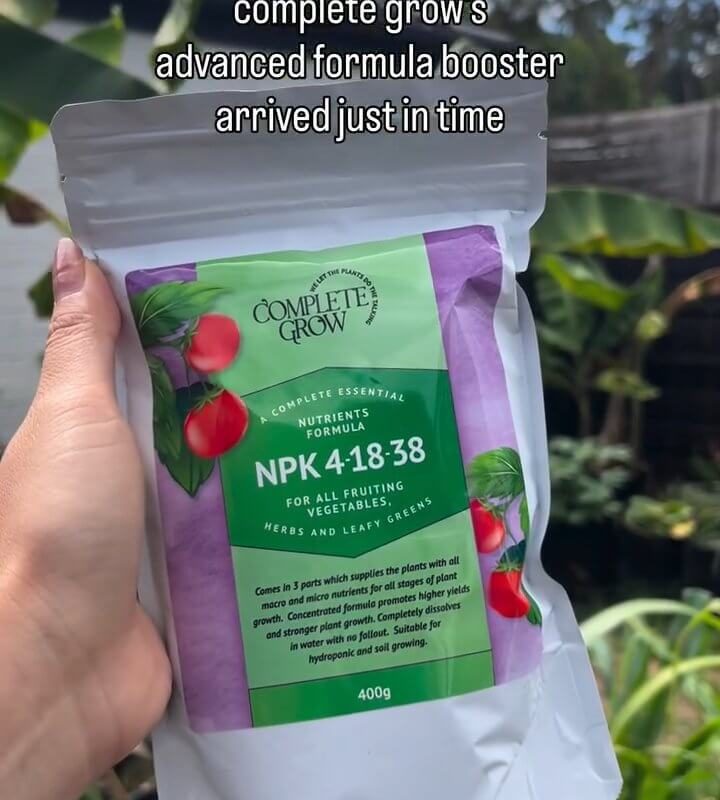
The best fertiliser for passionfruit is a high-potassium NPK 4-18-38 with calcium and magnesium (Cal-Mag). Start feeding it when the vine begins to flower and repeat every 2–3 weeks through late summer for better fruit set, sweeter fruit and less fruit drop.
Passionfruit vines are vigorous, fast-growing climbers that thrive with regular feeding and good sun exposure. With the right care and fertiliser routine, you can enjoy months of fragrant flowers and sweet, tropical fruit. This guide covers everything you need to know about planting, training, and feeding passionfruit using premium Complete Grow nutrients.Where and When to Plant Passionfruit
- Sunlight: Plant in full sun with protection from strong winds. North-facing fences or pergolas are ideal.
- Soil: Prefers free-draining, slightly acidic soil enriched with compost. Avoid waterlogged areas.
- Climate: Grows well in temperate to subtropical zones. In cooler regions, protect roots from frost and cold snaps.
Supporting & Training the Vine
Passionfruit vines grow fast and need a strong structure to climb—like a trellis, fence, or heavy-duty mesh. Train the main stem vertically, then encourage lateral growth for flowering. Prune lightly in spring to remove dead stems and encourage new shoots.Watering Tips
Deep water 1–2 times weekly during dry periods, especially when vines are flowering or fruiting. Avoid shallow, frequent watering—this encourages surface roots and weak growth. Add mulch to retain moisture, improve soil, and suppress weeds.
Feeding Passionfruit: What to Use and When
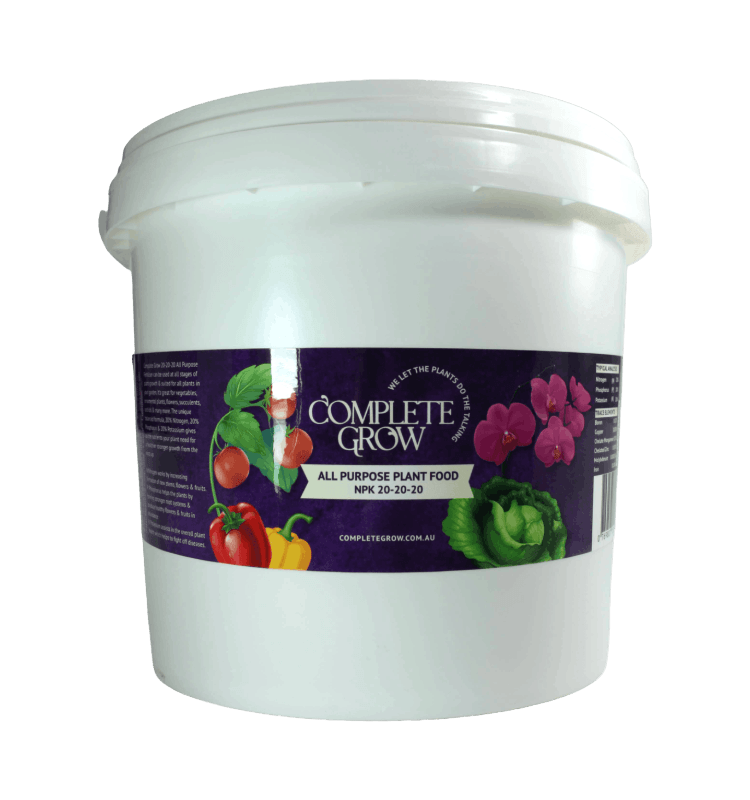
Passionfruit vines are heavy feeders and need regular nutrients throughout the growing season to support strong foliage, flowering, and fruit development.- NPK 20-20-20 – Use in early growth and during leaf development. This balanced blend encourages vigorous vine growth and root expansion. Apply every 2 weeks from spring to early summer.
- NPK 4-18-38 + Cal-Mag – Begin using when flowering starts. This high-potassium, high-calcium formula supports fruit set, sweetness, and disease resistance. Feed every 2–3 weeks through late summer.
How Much Fertiliser to Mix for Passionfruit
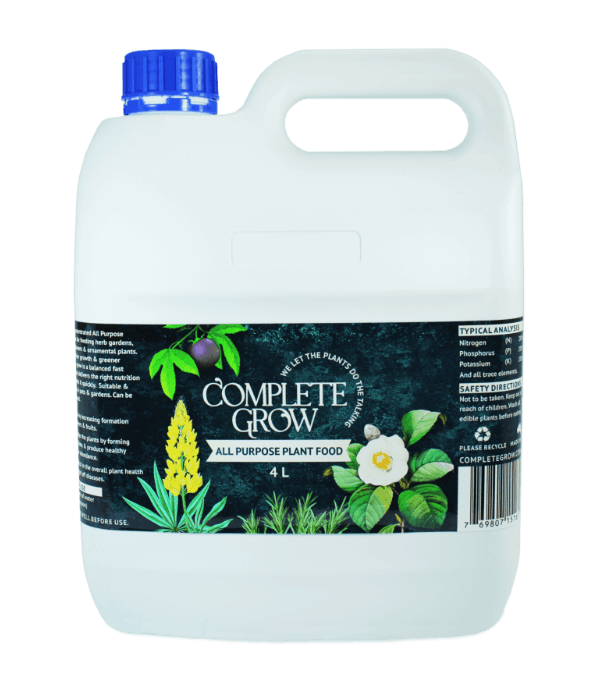
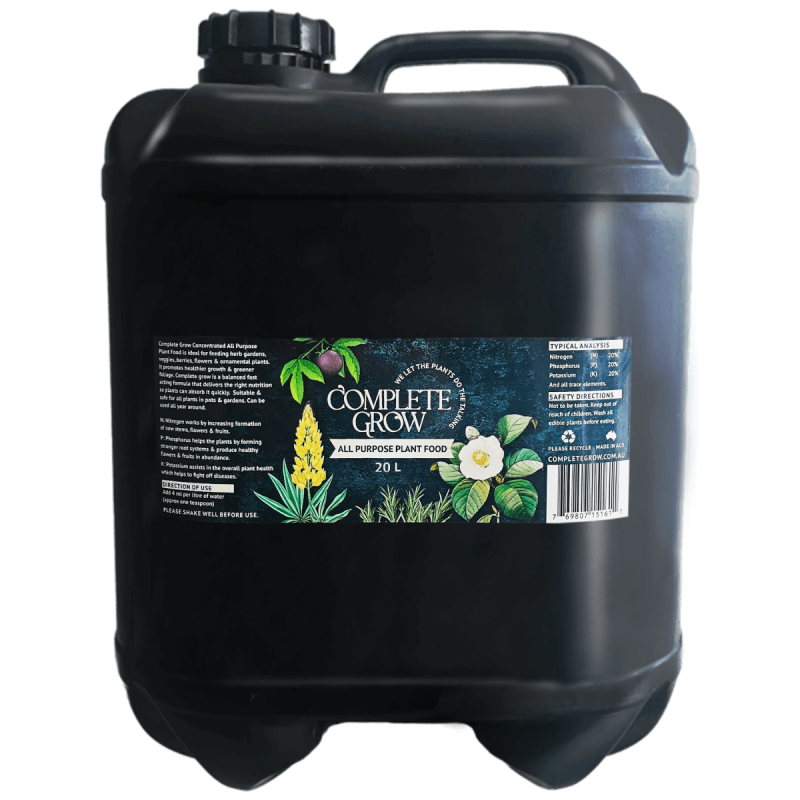
NPK 20-20-20 liquid: 4 mL per litre of water (40 mL in a 10 L watering can). For potted vines, use half strength: 2 mL per litre (20 mL per 10 L).
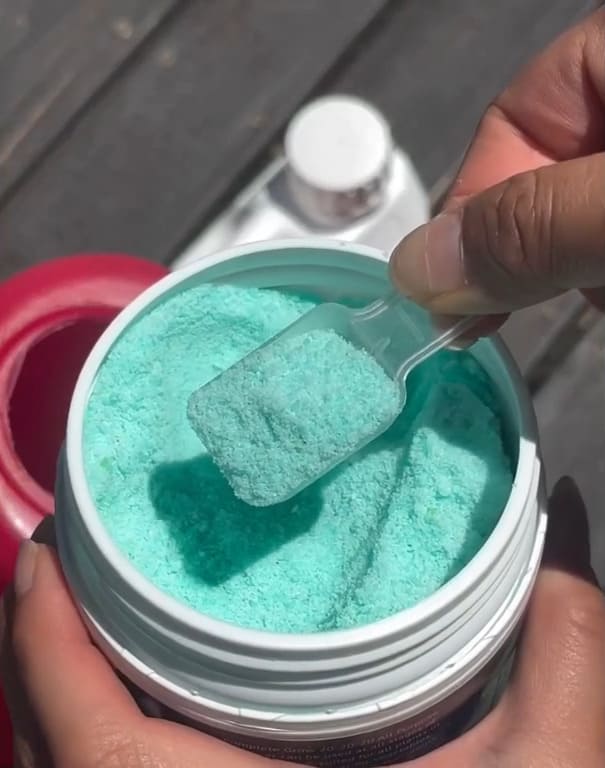
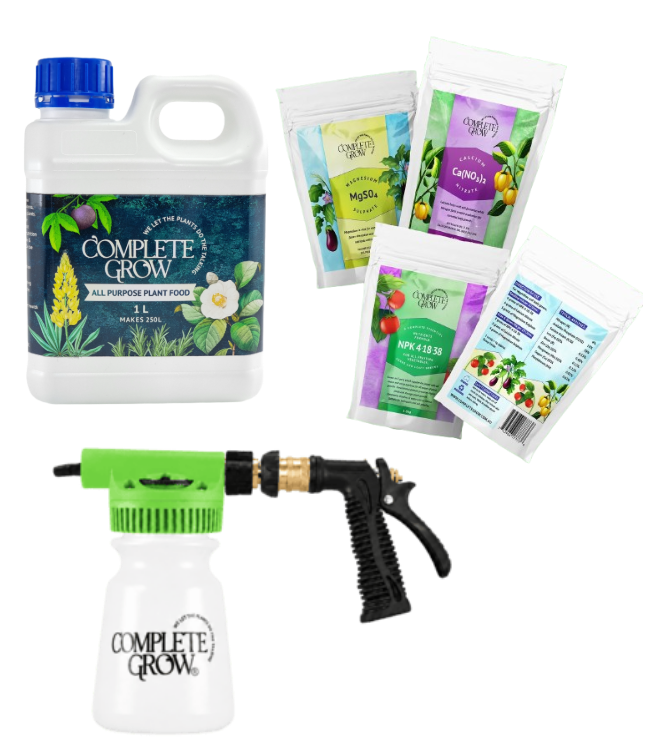
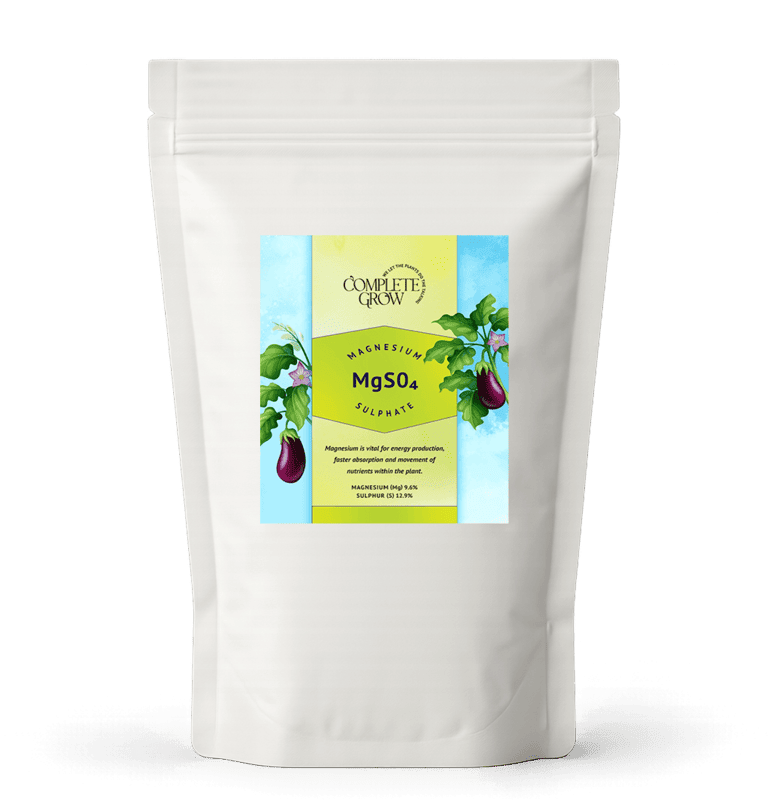
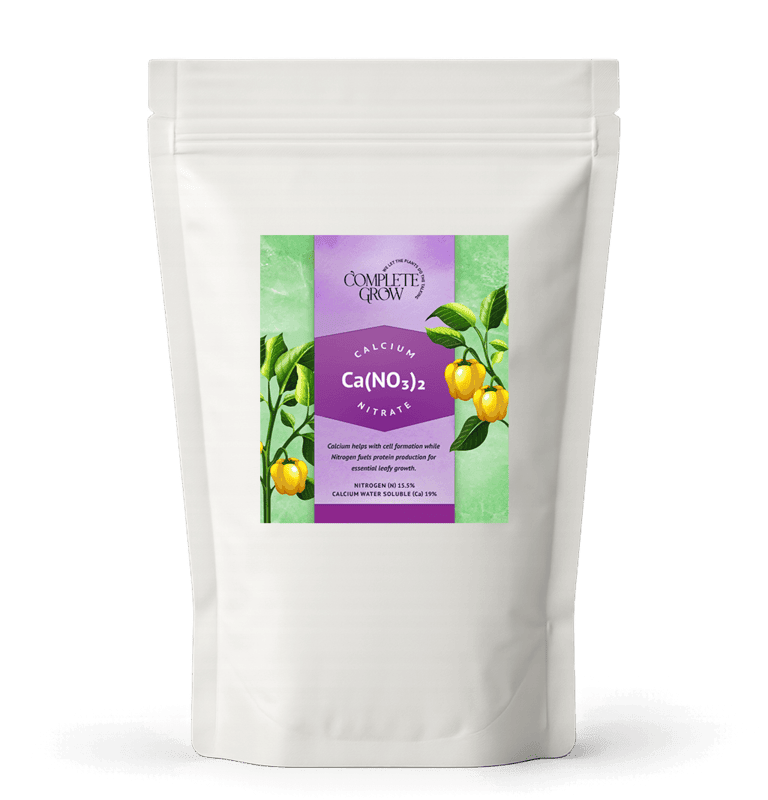
NPK 4-18-38 + Calcium & Magnesium: per 10 L of water, use 8 g of the NPK 4-18-38, 8 g of Calcium Nitrate and 4 g of Magnesium Sulphate (one scoop is about 6 g). For potted vines, use the lighter rate of 6 g, 6 g and 3 g.
Important: mix and apply the three parts separately, and rinse the can between them. Calcium reacts with phosphate and sulphate at high concentration and drops out of the solution, so it would never reach your vine.
CompleteGrow’s view: switch feeds at the first flowers, not after
Passionfruit flowers and fruits on the current season’s new growth, so spring feeding is about building vine, and that’s where the nitrogen in 20-20-20 earns its place. Once the first flowers open, the job changes. Keep pushing nitrogen and you get a lush wall of leaves with fruit that drops early. Switching to the 4-18-38 + Cal-Mag at the first flowers shifts the vine’s energy into fruit set, fruit fill and sweetness. The calcium helps hold fruit on the vine and firms up the skin.
CompleteGrow’s view: little and often beats one big feed
Passionfruit is a hungry vine, but its feeder roots are shallow and spread wide. A liquid feed every couple of weeks, watered evenly over the root zone, gives it a steady supply it can actually use. A big handful of granules dumped at the base can burn the stem and roots, and it releases on its own schedule, not the vine’s. And never feed a thirsty vine: water deeply first, then feed.
Common Passionfruit Growing Issues
- No fruit: Usually due to poor pollination or lack of potassium. Switch to NPK 4-18-38 + Cal-Mag once flowering begins.
- Yellowing leaves: Could signal nitrogen or magnesium deficiency—feed with NPK 20-20-20 during vegetative growth.
- Root rot: Caused by overwatering or poor drainage. Improve soil structure and reduce watering frequency.
CompleteGrow’s view: flowers but no fruit? Check these before you feed more
More fertiliser rarely fixes a vine that flowers and doesn’t fruit. Work through these first:
- Pollination: passionfruit relies on bees. If you’re not seeing any, hand-pollinate with a soft brush in the middle of the day, moving pollen between open flowers.
- Too much nitrogen: lawn feed spreading into the root zone, or staying on 20-20-20 after flowering starts, gives leaves instead of fruit.
- Suckers on grafted vines: shoots coming from below the graft are the rootstock, not your fruiting variety. Remove them, or they take over.
- Water stress while flowering: a dry spell at flowering causes flower and fruit drop. Keep watering deeply.
The Complete Grow Approach for Passionfruit Vines
Complete Grow’s two premium liquid fertilisers give your passionfruit vine everything it needs—from lush green growth to heavy fruiting.- NPK 20-20-20 – A balanced formula to power leafy growth and vine strength in the early season.
- NPK 4-18-38 + Cal-Mag – Boosts flowering, fruit quality and reduces fruit drop and yellowing.
Passionfruit Fertiliser FAQs
What is the best fertiliser for passionfruit?
A balanced NPK 20-20-20 in spring and early summer for vine growth, then a high-potassium NPK 4-18-38 with calcium and magnesium once the vine starts flowering, for fruit set and sweetness.
How much fertiliser do I mix for a passionfruit vine?
Complete Grow 20-20-20 liquid at 4 mL per litre, or 2 mL per litre for potted vines. For the 4-18-38 kit, use 8 g NPK, 8 g Calcium Nitrate and 4 g Magnesium Sulphate per 10 L of water, each mixed and applied separately.
How often should I fertilise passionfruit?
Every 2 weeks with 20-20-20 from spring to early summer, then every 2–3 weeks with 4-18-38 + Cal-Mag from flowering through late summer. Feed potted vines at half strength, monthly.
Why is my passionfruit flowering but not fruiting?
Usually poor pollination, too much nitrogen, or water stress at flowering. Hand-pollinate if bees are scarce, switch to a high-potassium feed like 4-18-38 + Cal-Mag, and keep the vine well watered while it flowers.
Can I use lawn fertiliser on passionfruit?
No. Lawn fertiliser is high in nitrogen, which gives passionfruit lots of leafy growth but few flowers and fruit. Keep lawn feed away from the vine’s root zone.
Should I fertilise passionfruit in winter?
Not in cooler areas. Growth stops, so stop feeding and start again in spring as new growth appears. In the tropical north, where vines keep growing, feed lightly through winter.
Recommended Products
- Quick View
- Select options This product has multiple variants. The options may be chosen on the product page
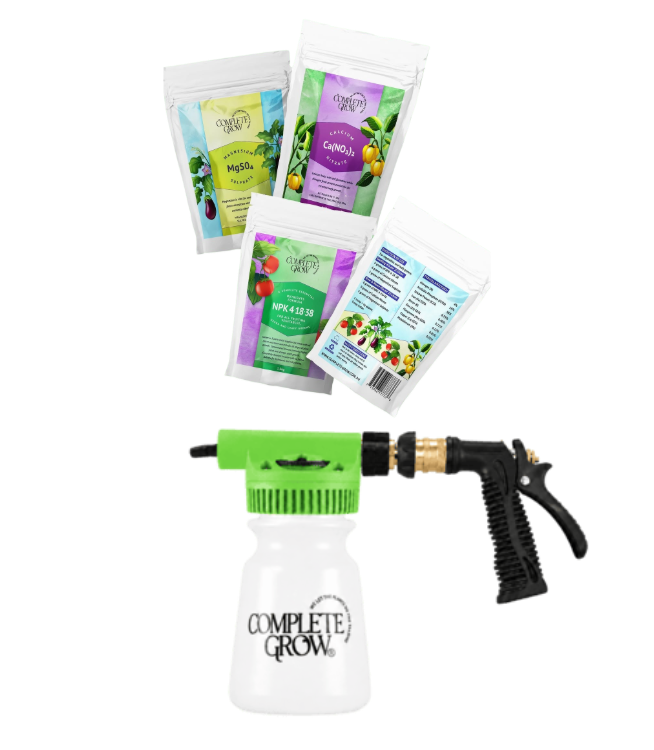
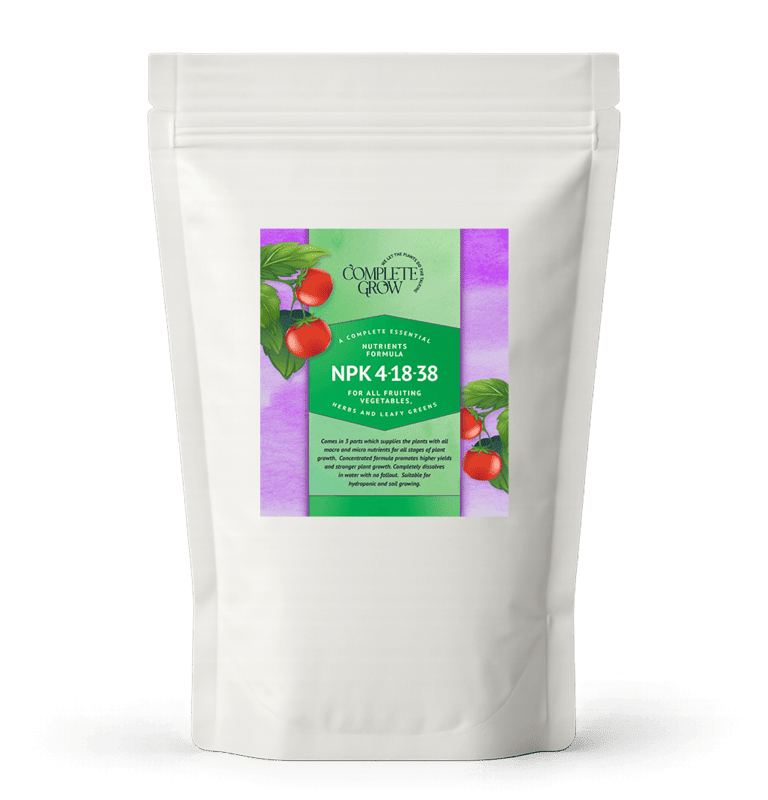
Advanced Formula – Boost Flowering & Fruiting – NPK 4-18-38 + Calcium & Magnesium
- Quick View
- Select options This product has multiple variants. The options may be chosen on the product page
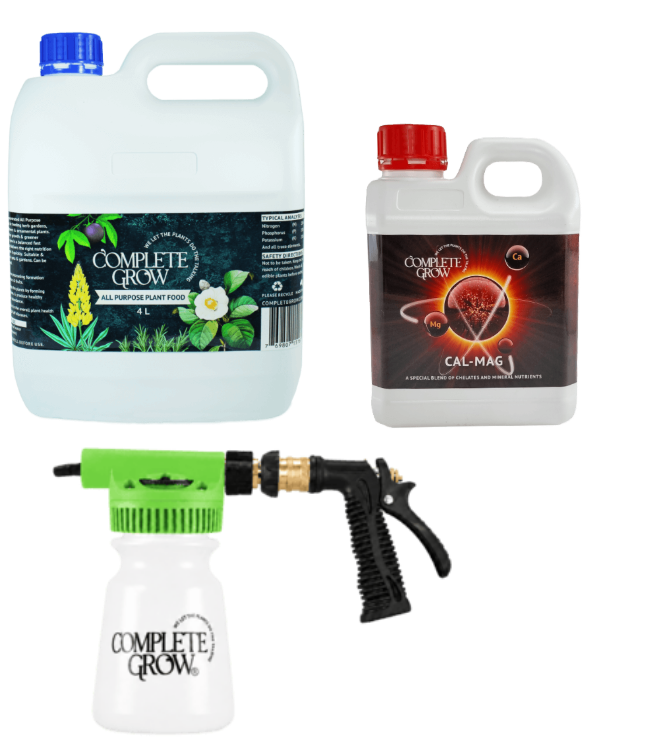
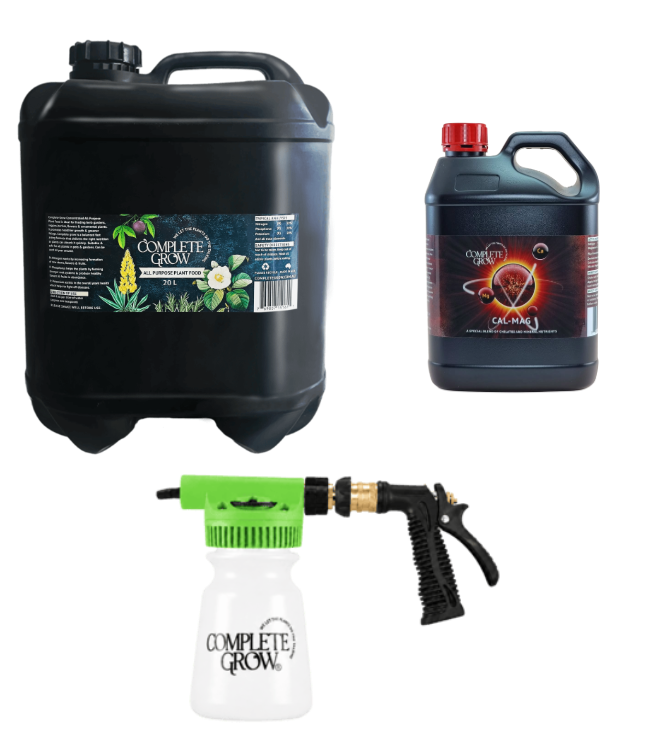
All Purpose Plant Liquid Fertiliser – Formulated from NPK 20-20-20 & Micro Nutrients
- Quick View
- Select options This product has multiple variants. The options may be chosen on the product page
NPK 20-20-20 Powder Soluble Nutrient Plant Fertilizer & Micro Nutrients
The Grow Blog
Seasonal tips from our growers, written for real Aussie gardens.