
Free shipping over $0
Free Shipping Limited Time

🎃Pumpkin Fertilizer

Transform Your Garden into a Personal Paradise!

What Is the Best Fertilizer for Pumpkins?

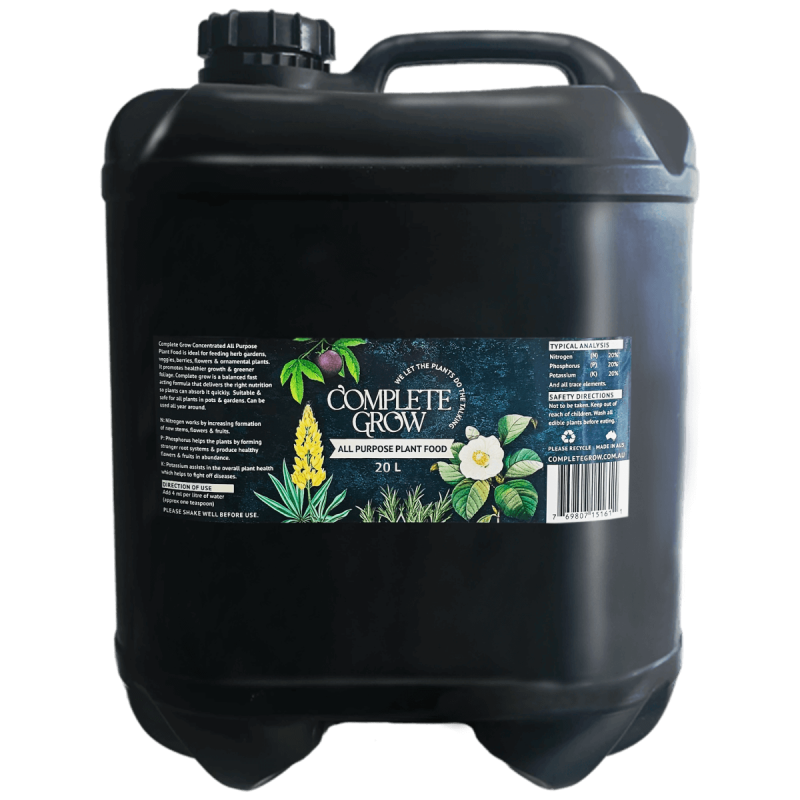
The best fertiliser for pumpkins is a balanced NPK 20-20-20 liquid. Feed it weekly at 3 mL per litre once the first true leaves appear, then at 4 mL per litre every 7–10 days while fruit sets and bulks, for strong vines, reliable fruit set and bigger, sweeter pumpkins.

Pumpkins are hungry crops that need the right fertiliser at the right time. Early growth demands nitrogen for strong vines and leaves, but once flowers appear, the balance shifts to phosphorus and potassium to fuel fruit set and ripening. The most reliable option is CompleteGrow All Purpose Liquid NPK 20-20-20, which delivers a perfect balance of nutrients plus essential micros for every stage of pumpkin growth.

At a Glance: Pumpkin Feeding

  • Best fertiliser: CompleteGrow NPK 20-20-20 (balanced, with micros)
  • Seedling to vine stage: 3–4 ml/L weekly for fast leaf growth
  • Flowering & fruit set: Continue 3–4 ml/L, avoid excess nitrogen
  • Fruit bulking: Potassium becomes critical for size, colour & sweetness
  • Soil: Rich, free-draining, pH 6.0–6.8, with added compost before planting
  • Water: Deep, even watering is vital; never let soil fully dry

Quick Fix: Lots of vine but no fruit? Cut back nitrogen-heavy feeds and stick with 20-20-20 for balanced nutrients.

Why Balanced NPK Works Best

Pumpkins need different nutrients at different times. Too much nitrogen (like lawn fertiliser or fresh manure) leads to endless vines and leaves but very few fruits. A balanced fertiliser such as CompleteGrow 20-20-20 ensures plants get:
  • Nitrogen (N): For vigorous vine and leaf growth in early weeks.
  • Phosphorus (P): Boosts root health and flower set for reliable fruiting.
  • Potassium (K): Essential for swelling fruit, rind colour, and sugar content.
  • Micronutrients: Boron, magnesium, and calcium prevent hollow fruit, tip burn, and weak stems.
471777404_964443492286851_2110699688437728751_n (1)
473324351_1305981563934282_7357700101820635269_n (1)

Feeding Schedule (Ground & Pots)

  • Week 0–2 (seedling): Plain water until true leaves form.
  • Week 2–6 (vine expansion): Apply 3 ml/L CompleteGrow 20-20-20 weekly to encourage fast foliage.
  • Pre-flowering (week 6+): Continue weekly feeding, but ensure vines have space to run and avoid doubling nitrogen.
  • Fruit set & bulking: Increase to 4 ml/L every 7–10 days to power large, even fruit development.
  • Container-grown pumpkins: Stick with lighter, weekly feeds — nutrients leach faster than in soil.

Stage 1: Seedling to Early Vine Growth

Start feeding when the first true leaves appear. At this stage, pumpkins need nitrogen to establish a strong canopy and phosphorus for root anchoring.
  • NPK ratio: 20-20-20 balanced fertiliser
  • Application: 3 ml per litre of water, applied weekly around the root zone
  • Why: Nitrogen drives chlorophyll production and rapid leaf expansion; phosphorus ensures deep rooting.

Stage 2: Flowering & Pollination

When vines begin to flower, nutrient demand shifts. Too much nitrogen at this stage delays flowering and reduces fruit set.
  • NPK ratio: Still balanced (20-20-20), but reduce total nitrogen loading by avoiding other high-N feeds
  • Application: 3–4 ml per litre, every 7–10 days
  • Why: Potassium begins to play a larger role here, supporting flower formation and energy transfer during pollination.

Stage 3: Fruit Bulking & Ripening

Once pumpkins are set, potassium becomes the dominant requirement. It strengthens rinds, develops sugars, and ensures even bulking. Calcium and magnesium also become critical here.
  • NPK ratio: Balanced 20-20-20 remains effective, as its high K content fuels bulking
  • Application: 4 ml per litre, every 7 days during fruit swell
  • Micronutrients:
    • Boron: Improves pollination and prevents hollow fruit
    • Calcium: Prevents blossom-end rot and strengthens fruit walls
    • Magnesium: Keeps leaves dark green for photosynthesis
Tip: Foliar sprays of magnesium and calcium during bulking can improve sugar loading and extend storage life.

Advanced Feeding Strategies

  • Split dosing: Frequent small doses are better than heavy irregular applications — pumpkins respond best to steady availability.
  • Soil vs foliar: Soil drenches build reserves, while foliar feeding corrects rapid deficiencies (e.g., magnesium for yellowing leaves).
  • pH balance: Keep soil at pH 6.0–6.8 to maximise nutrient uptake; at pH >7, phosphorus locks up.
  • Mulch synergy: Organic mulch helps stabilise soil temperature and nutrient release, reducing feeding stress.
528875004_18108687634533215_6131141578762533508_n (1)
540695333_1178957717600875_5999564089427829999_n (1)

Common Pumpkin Fertiliser Problems

  • Lots of leaves, no fruit: Over-fertilising with nitrogen. Switch to balanced 20-20-20 immediately.
  • Fruit sets but stays small: Potassium deficiency; ensure consistent feeding with CompleteGrow.
  • Yellowing between veins: Magnesium shortfall; 20-20-20 covers this with included micros.
  • Blossom end rot: Calcium deficiency or irregular watering — stick with balanced feed and steady moisture.

Tips for Bigger, Sweeter Pumpkins

  • Plant in full sun with rich, well-drained soil improved with compost before sowing.
  • Mulch vines to conserve moisture and reduce weed competition.
  • Pinch off excessive side shoots to focus energy on fewer, larger pumpkins.
  • Pollination is key — encourage bees with companion flowers nearby.
  • Stay consistent with CompleteGrow 20-20-20 for steady growth and reliable yields.

FAQs

  • Can I use manure for pumpkins? Only well-rotted compost before planting. During growth, switch to balanced liquid feed.
  • How often should I fertilise pumpkins? Weekly with CompleteGrow at 3–4 ml/L from true leaves until harvest.
  • Do pumpkins need different fertiliser when fruiting? No — just maintain balanced NPK; potassium naturally supports fruit bulking.
  • Do pumpkins need extra micronutrients? Yes — boron, calcium, and magnesium are crucial in mid to late season. Balanced formulas cover these needs.
  • What happens if I overfeed nitrogen? You’ll get massive leafy vines but very few pumpkins. Stick to balanced formulations.
  • What’s the fastest way to improve pumpkin growth? Deep watering + weekly CompleteGrow feeding + pruning excess vines.

Recommended Products

Sale!
Cart (0 items)

No products in the cart.