Orange Tree
Transform Your Garden into a Personal Paradise!
Add Your Heading Text Here
How to Grow an Orange Tree
Orange trees are evergreen fruit trees that thrive in warm, sunny conditions and reward consistent care with fragrant flowers and sweet fruit.
Growing an orange tree successfully comes down to three fundamentals: sunlight, drainage, and correct nutrition.
Quick answer: To grow an orange tree well, plant it in full sun, use free-draining soil, water deeply but infrequently, and feed regularly with a citrus-specific fertiliser during the growing season.
Orange trees grow best in Australiaโs temperate and subtropical regions, but they also perform very well in pots, making them suitable for courtyards, balconies, and smaller gardens.
- Sun: 6โ8+ hours of direct sunlight daily
- Soil: Free-draining, slightly acidic
- Water: Deep watering, allow topsoil to dry slightly
- Feeding: Spring through early autumn
Most problems with orange trees, including poor growth and lack of fruit, are caused by incorrect watering or feeding rather than pests or disease.


How to Grow an Orange Tree Successfully
Growing an orange tree successfully comes down to setting it up correctly in the early stages and then maintaining steady care. Orange trees are long-lived plants, and small mistakes made during planting, watering, or feeding can limit growth and fruiting for years.
Planting location and soil
Orange trees need full sun to flower and produce fruit. Choose a position that receives at least six to eight hours of direct sunlight per day. Shelter from strong winds helps prevent flower drop and fruit scarring.
Soil drainage is critical. Orange trees do not tolerate waterlogged roots. In heavier soils, planting on a slight mound improves drainage and root oxygen levels. For pots, use a free-draining citrus or fruit tree potting mix and ensure containers have adequate drainage holes.
Watering orange trees
Water deeply to encourage roots to grow downward rather than staying near the surface. Allow the top layer of soil to dry slightly between watering. Overwatering is a common cause of yellowing leaves, slow growth, and poor fruit development.
Potted orange trees dry out faster than those in the ground and may need watering several times per week during hot weather. In-ground trees require less frequent but deeper watering.
Fertilising orange trees
Orange trees are heavy feeders and rely on consistent nutrition to support leafy growth, flowering, and fruit development. Nitrogen is important early in the season to build a healthy canopy, but excessive nitrogen can reduce flowering and delay fruiting. Potassium plays a key role in flower retention, fruit set, fruit size, and sweetness.
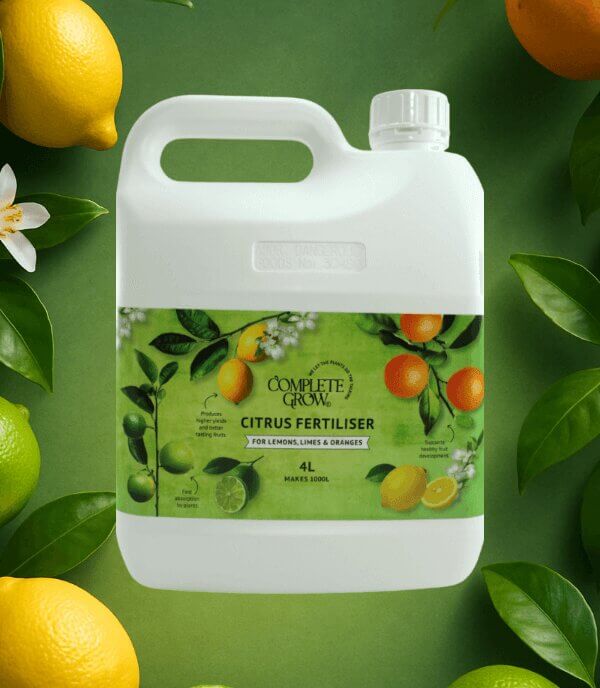
For best results, feed orange trees regularly during active growth from spring through early autumn using a citrus fertiliser formulated to provide balanced nitrogen, higher potassium, and essential trace elements. This helps prevent common issues such as strong leaf growth with poor fruiting.
Smaller, regular feeds are generally more effective than large, infrequent applications, especially for trees grown in pots or sandy soils where nutrients can leach quickly.
Growing an orange tree from seed
Orange trees can be grown from seed, but this method requires patience. Seed-grown trees often take many years to flower and may not produce fruit that matches the original orange. To grow from seed, clean the seed thoroughly, plant it in moist seed-raising mix, keep it warm, and maintain even moisture.
For most gardeners, grafted orange trees are a better option. They establish faster, fruit earlier, and produce more reliable crops with predictable fruit quality.


How Long Orange Trees Take to Grow and Produce Fruit
How long an orange tree takes to grow depends on whether it is seed-grown or grafted. This is one of the most common questions gardeners ask.
- Seed-grown trees: 5โ10 years before reliable fruiting, sometimes longer
- Grafted trees: 2โ4 years before fruiting
- Full maturity: Around 7โ10 years
Orange trees typically flower in spring. Fruit develops slowly and may take many months to mature, often ripening in winter depending on the variety.
Feeding orange trees for healthy growth
Oranges are heavy feeders and require consistent nutrition during active growth. Nitrogen supports leaf growth early in the season, while potassium is essential for flowering, fruit set, and fruit quality. Trace elements and magnesium are also important for healthy green leaves.
Using a purpose-built citrus fertiliser helps maintain the correct nutrient balance throughout the growing season and prevents common problems such as excessive leaf growth with poor fruiting.
FAQ: Growing Orange Trees
Can you grow an orange tree in a pot?
Yes. Orange trees grow very well in pots provided they receive enough sunlight, regular watering, and consistent feeding.
Why is my orange tree growing but not producing fruit?
This is usually caused by excess nitrogen, lack of potassium, insufficient sunlight, or incorrect feeding timing.
Can you grow an orange tree from a supermarket orange?
Yes, but fruit quality and fruiting time are unpredictable. Grafted trees are far more reliable.
Do orange trees need full sun?
Yes. Full sun is essential for flowering and fruit development.
Orange Tree Guides Hub
How to Grow an Orange Tree
A complete orange tree care guide covering sunlight, soil, watering, planting, growing from seed, and what to expect as your tree matures.
Best Fertilizer for Orange Trees
Learn how often to fertilise orange trees, the best time to feed, and how correct NPK balance improves flowering, fruit set, and fruit quality.
Orange Tree Leaves Curling or Dropping: Causes & Fixes
A practical troubleshooting guide for curled leaves and sudden leaf drop, including watering stress, nutrition issues, heat, and root health.
Orange Tree Leaves Turning Yellow: Causes & How to Fix It
Understand why orange tree leaves go yellow, including nutrient deficiencies, watering problems, and fruiting stress, plus a clear fix plan.
Orange Tree Flowers but No Fruit: Causes & Fixes
Find out why orange trees flower but fail to set fruit, including nitrogen and potassium timing, water stress during bloom, and tree age.
Orange Tree in a Pot: Best Pots, Soil, Care & Feeding
Step-by-step guidance for growing oranges in containers, including best pot choice, best soil, watering rhythm, repotting, and feeding for fruiting.
Pruning Orange Trees: When to Prune and How to Do It
Learn when to prune orange trees, what branches to remove, and how to shape the canopy for better airflow, healthier growth, and fruiting.
Recommended Products
- Quick View
- Select options This product has multiple variants. The options may be chosen on the product page
Cal-Mag Hydroponic Nutrients Fertiliser
- Quick View
- Select options This product has multiple variants. The options may be chosen on the product page