
bermuda grass
Transform Your Garden into a Personal Paradise!
Add Your Heading Text Here
Bermuda Grass Care: Complete, Easy-to-Read Guide
Bermuda grass (incl. Tifway 419 and TifTuf) thrives on heat, sun, and consistent, smart maintenance. Use this guide to nail sunlight and soil requirements, fertilising targets, watering, mowing heights, a seasonal calendar, hybrid tips, troubleshooting, and a quick FAQ.Table of Contents
- Core Requirements (Sun, Soil, Water, Mow)
- Fertilising Targets & Application
- Watering: Deep, Infrequent Strategy
- Mowing, Aeration & Thatch Control
- Seasonal Calendar (Spring โ Winter)
- Tifway 419 / Hybrid Notes
- Troubleshooting (Yellowing, Thatch, Weeds)
- FAQ
Core Requirements (Sun, Soil, Water, Mow)
Sunlight: Aim for 6โ8+ hours of direct sun. Below ~5 hours, density drops; raise mower height slightly and reduce nitrogen.
Soil & pH: Well-drained loam/sandy loam, target pH 6.0โ7.0. Do a spring soil test; adjust pH (lime up, sulfur down) and correct P/K/Ca/Mg to data, not guesswork.
Watering concept: Fewer, deeper soaks to train roots (details below). Avoid daily sprinkles.
Mowing concept: Bermuda prefers short and frequent. Home lawns: 25โ50 mm (1โ2″), sharp blades, follow the one-third rule.
| Target | Recommended Range | Notes |
|---|---|---|
| Sunlight | 6โ8+ hrs/day | Raise height slightly in shade |
| Soil pH | 6.0โ7.0 | Annual soil test; amend to data |
| Mow Height | 25โ50 mm (1โ2″) | Frequent cuts; sharp blades |


Fertilising Targets & Application
N drives colour & recovery; P builds roots; K improves stress tolerance. In season, most Bermuda lawns respond to 0.5โ1.0 lb N per 1,000 ftยฒ/month (โ 0.25โ0.5 kg N per 100 mยฒ/month), tuned to traffic, growth rate, and soil test results.
Forms: Slow-release granular smooths peaks and lowers burn risk (4โ8 week feed window). Liquids enable spoon-feeding and fast green-up. Early spring use balanced or P/K-supported feeds; peak summer go N-forward; in autumn taper N and keep K supportive.
- Slow-release granular: Forgiving, even feeding for busy schedules or large areas.
- Liquid foliar/soil: Quick response for colour tuning between granular apps.
- Weed + feed: Useful, but time pre-emergents carefully around seeding/renovation.
Application tips: Calibrate spreader/sprayer; apply evenly (cross-hatch granular); water-in per label; avoid heat-of-day sprays; never exceed label N/month.
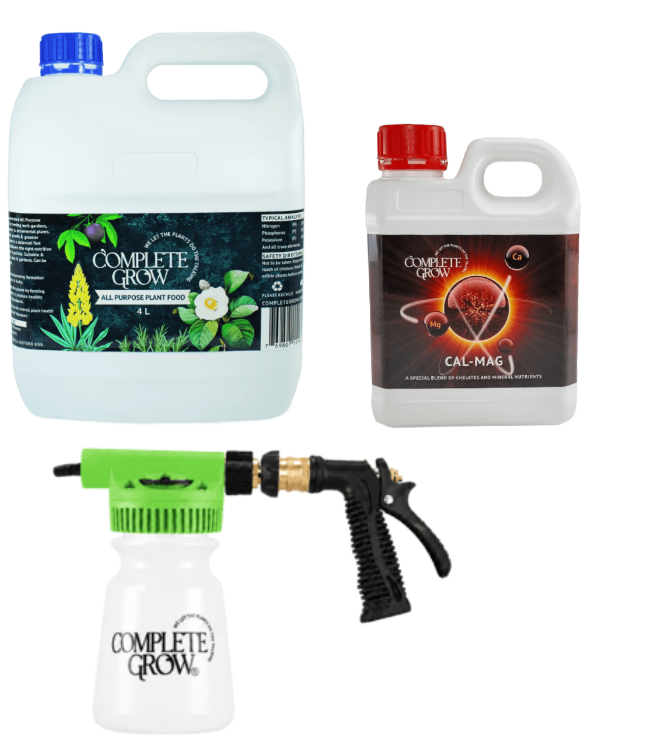
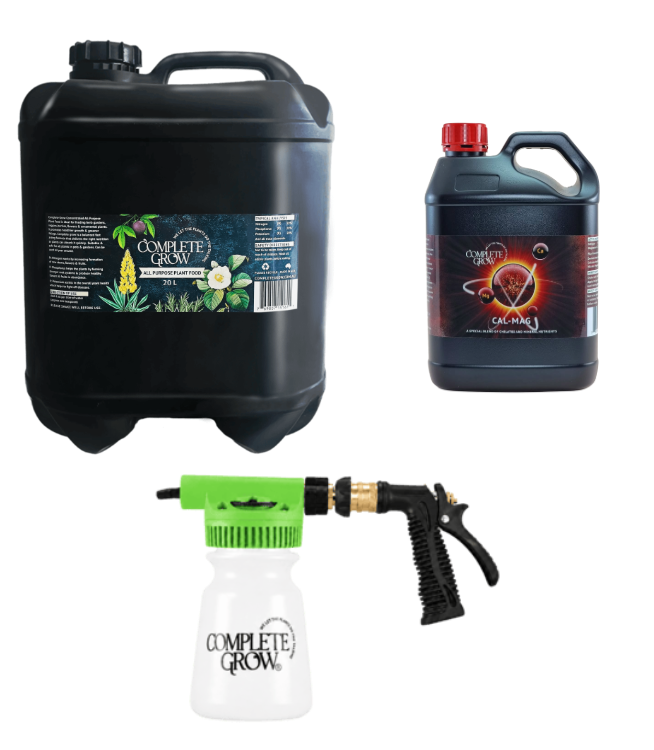
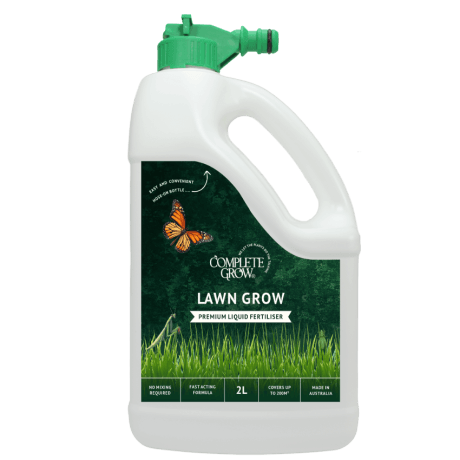
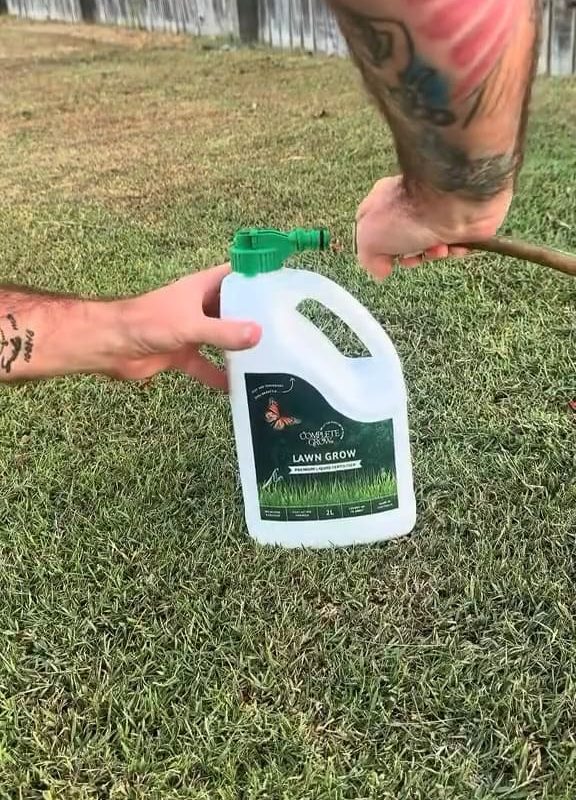
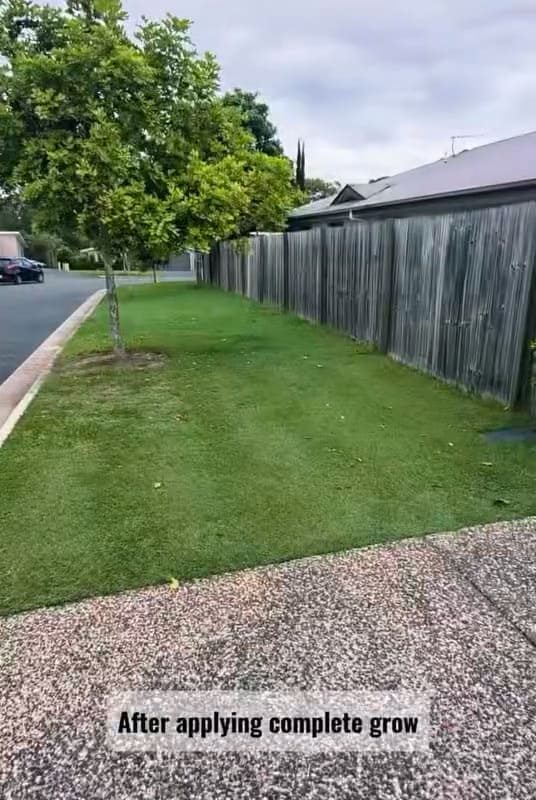
Recommended hose-on for simple, consistent results: CompleteGrow Lawn Grow โ Hose-On Liquid Lawn Fertiliser for fast green-up and even coverage on Bermuda.
Watering: Deep, Infrequent Strategy
During active growth, supply about 25โ38 mm (1โ1.5″) per week total (rain + irrigation) in 1โ2 sessions. In heatwaves or on sand, split into 2โ3 lighter cycles. Use catch cups or a rain gauge to measure your systemโs output.
- Morning irrigation reduces disease vs. evening.
- Wetting agents help hydrophobic sands/thatched areas take up water.
- New sod/seed: Keep the top 25โ30 mm moist until rooted, then transition to deep/infrequent.
Mowing, Aeration & Thatch Control
Mowing: Home lawns: 25โ50 mm (1โ2″). Reel-mown show lawns can go lower on level surfaces. Follow the one-third rule; increase frequency in peak growth. Mulch clippings lightly to recycle nutrients if growth isnโt excessive.
Aeration: Core-aerate compacted areas late spring/early summer when Bermuda is vigorous. Improves infiltration and oxygen at the roots. Topdress low spots with sand/soil mix as needed.
Thatch: If thatch exceeds ~12 mm (ยฝ”), verticut/scarify during the growing season. Correct N rates, proper mowing, and periodic aeration prevent re-build.


Seasonal Calendar (Spring โ Winter)
| Season | Do This | Why It Matters |
|---|---|---|
| Spring | Soil test & pH fix; balanced or P/K-supported feed; start mowing cadence; spot-treat weeds; begin deep watering. | Builds density and prepares for summer stress. |
| Summer | N-forward feeding (granular or liquid spoon-feeds); tight mowing; deep watering; core-aerate if compacted. | Maximises colour, recovery, and traffic resistance. |
| Autumn | Taper N; maintain K; light topdress/levelling; verticut if thatch > 12 mm; pre-winter weed cleanup. | Strengthens roots and reduces winter issues. |
| Winter | Pause N; minimal irrigation if dry; keep blades sharp; plan spring actions. | Protects dormant turf; readies you for spring. |
Tifway 419 / Hybrid Notes
Hybrids like Tifway 419 and TifTuf push density and recovery when fed and mown correctly. Expect faster response to N (both colour and growth), so monitor surge growth and thatch. Reel mowing delivers best finish on level surfaces; otherwise keep rotary blades extremely sharp. Hybrids tolerate heat and traffic well when watering is deep/infrequent and soil compaction is managed with periodic aeration.
Troubleshooting (Yellowing, Thatch, Weeds)
- Yellowing: Often N deficiency, dull mower blades, or iron shortage. Apply N appropriately; sharpen blades; consider a light Fe supplement for cosmetic greening.
- Thatch > 12 mm: Reduce N surges; verticut during active growth; core-aerate; topdress lightly.
- Weeds: Tight mowing cadence + dense turf is your best defence. Use pre-emergents at labelled timing; spot-treat escapes.
- Dry spots: Hydrophobic soil/thatch โ add wetting agent; alter irrigation cycles for better soak.
FAQ
How often should I fertilise Bermuda?
Every 4โ6 weeks in springโsummer at rates suited to growth and traffic. Taper in autumn; pause N in winter dormancy.
Ideal mowing height?
25โ50 mm (1โ2″) for home lawns. More frequent, lighter cuts beat infrequent heavy cuts.
How much water per week?
25โ38 mm (1โ1.5″) total (rain + irrigation) in 1โ2 sessions; adjust for heat/sand with shorter, additional cycles.
Best simple product to start?
A reliable hose-on like CompleteGrow Lawn Grow โ quick to apply, consistent, great for Bermuda colour and density.
Bermuda Lawn Guides Hub
Best Fertilizer for Bermuda Grass
NPK ratios, granular vs liquid, and a seasonal plan for dense, green Bermuda.
Bermuda Grass Care
Sun, soil, watering, mowing heights, and an easy seasonal calendar.
Bermuda Grass Lawn Problems
Diagnose yellowing, thatch, compaction, weeds, pests, and disease with fast fixes.
Bermuda Grass Turning Yellow
Causes (N, iron/pH, drought, scalping) plus step-by-step recovery and prevention.
Bermuda Grass Turning Brown
Dormancy vs real problems, brown patch ID, irrigation, mowing, and quick fixes.