
Avocado
Transform Your Garden into a Personal Paradise!
Best Fertiliser for Avocado Trees | Feeding Guide
The best fertiliser for avocado trees is a balanced, water-soluble NPK 20-20-20 with zinc and boron, mixed at 4 mL per litre (2 mL in pots) and fed every 2–4 weeks from early spring to autumn, then paused in winter. Add a calcium and magnesium supplement such as liquid Cal-Mag from flowering through the first 8 weeks after fruit set, when the young fruit takes up most of its calcium.
Avocado Fertiliser at a Glance
Watch: How to Fertilise an Avocado Tree
What an Avocado Crop Takes From Your Soil
Every avocado you pick carries nutrients away with it. Based on New Zealand avocado industry figures, each 100 kg of fruit removes roughly these amounts, and the pattern explains how to feed the tree.
Plus about 2.7 g of boron and 0.6 g of zinc. Calculated from NZ Avocado’s nutrient removal figures (per 10 tonnes of fruit at 32% dry matter).
Why Avocado Trees Need Fertiliser
Avocados are heavy feeders with shallow roots that have very few root hairs, so they are poor at finding nutrients on their own. Regular, measured feeding replaces what each flush of growth and each crop uses. Without it, trees show pale or yellowing leaves, weak flowering and small, poor-quality fruit.
CompleteGrow’s view: one balanced feed, no flowering switch
Avocado roots sit mostly in the top layer of soil, and phosphorus barely moves through soil, so roots can only use the nutrients dissolved right where they are. A water-soluble NPK 20-20-20 puts small, measured amounts of all three exactly there, with the zinc and boron avocados need.
Tomatoes and chillies benefit from switching to a high-phosphorus, high-potassium feed when they flower. Avocados are different. A crop removes about ten times more potassium than phosphorus, and Australian growers have seen heavy phosphorus applications tie up zinc, the trace element avocados already run short of.
That is why we recommend one balanced feed for the whole season, with Cal-Mag added through flowering and fruit set. It is simpler, and it puts the extra effort where avocados respond: calcium, steady water and healthy roots.
CompleteGrow case study · 2026
1,400 Hass trees in the Northern Rivers: 22% more fruit per tree
+22%
fruit per tree, compared with trees kept on the old fertiliser
1,400
commercial Hass trees, grown in the ground
No clogging
through the existing irrigation system after the switch
The problem. A commercial Hass grower in the Northern Rivers of NSW was getting fruit drop and light crops on a generic, organic-based fertiliser fed through his irrigation. The product kept clogging the system, and it ended up costing him a $5,000 pump.
What changed. He moved the trees onto CompleteGrow NPK 20-20-20, a fully water-soluble balanced feed with zinc and boron, delivered through the same irrigation lines. Part of the orchard stayed on the old fertiliser, so the two programs could be compared side by side on the same farm.
The result. Trees on NPK 20-20-20 carried 22% more fruit per tree than the trees left on the generic feed, giving a heavier crop overall. The feed has run through his irrigation pipes without a single blockage.
What home growers can take from it. Avocados are heavy feeders, and they respond to a steady supply of nutrients their roots can absorb straight away. If you feed through drippers or an irrigation system, choose a fertiliser that dissolves completely; partly soluble products can block lines and damage pumps.
Results from one commercial orchard, measured against the grower’s own previous fertiliser. Yields vary with site, season, water and tree health.
How Avocado Trees Grow in Australia
Avocados are evergreen trees for warm, frost-free climates such as coastal NSW, Queensland and parts of WA. Mature trees can handle brief frosts down to about −4°C, but flower buds, flowers and fruit cannot. Each part of the year changes what the tree needs from you:
Notice that the fertiliser barely changes through the year. Timing, water and calcium make the difference. In coastal Queensland north of about Yeppoon, Hass often flowers poorly, so choose a variety suited to your area.
Which CompleteGrow Fertilisers to Use
Two products cover a home avocado tree: one balanced base feed for the growing season, and a calcium and magnesium supplement for the weeks the fruit needs it most.
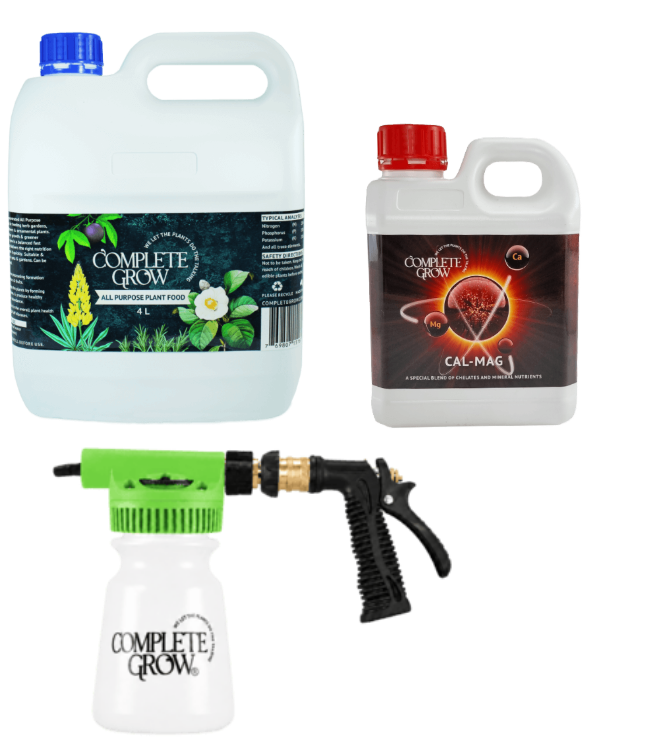
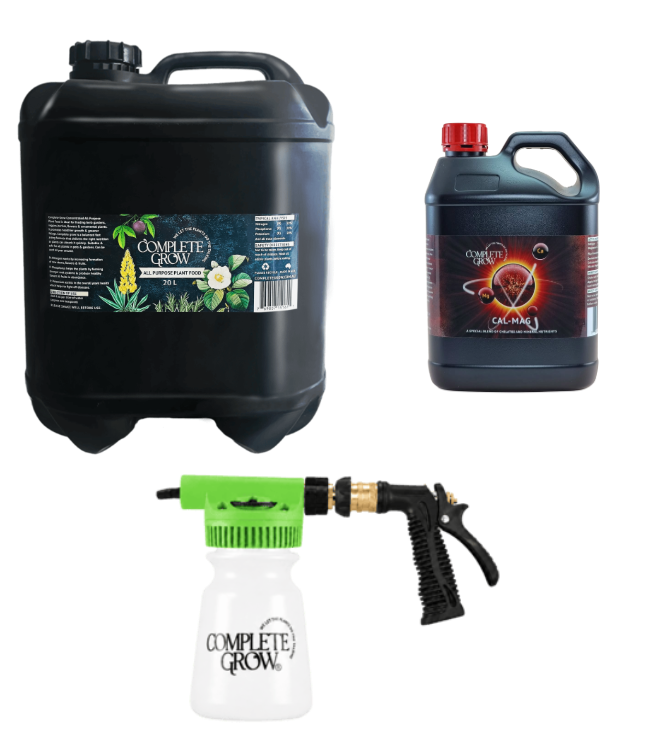
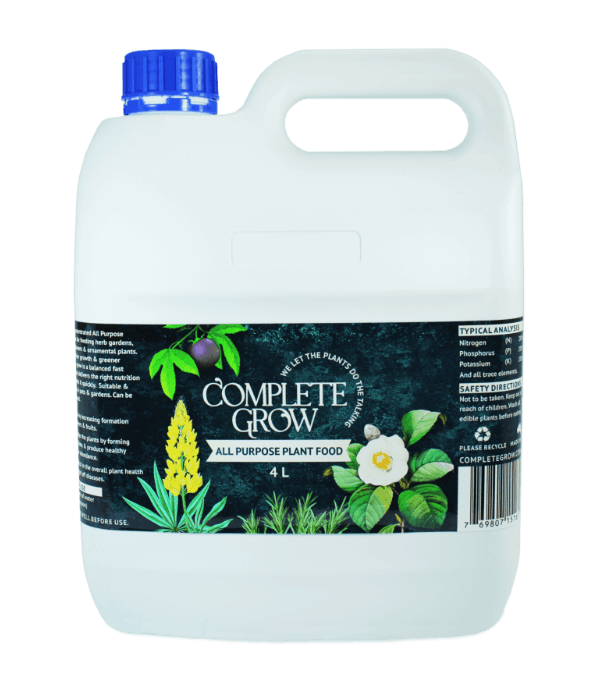
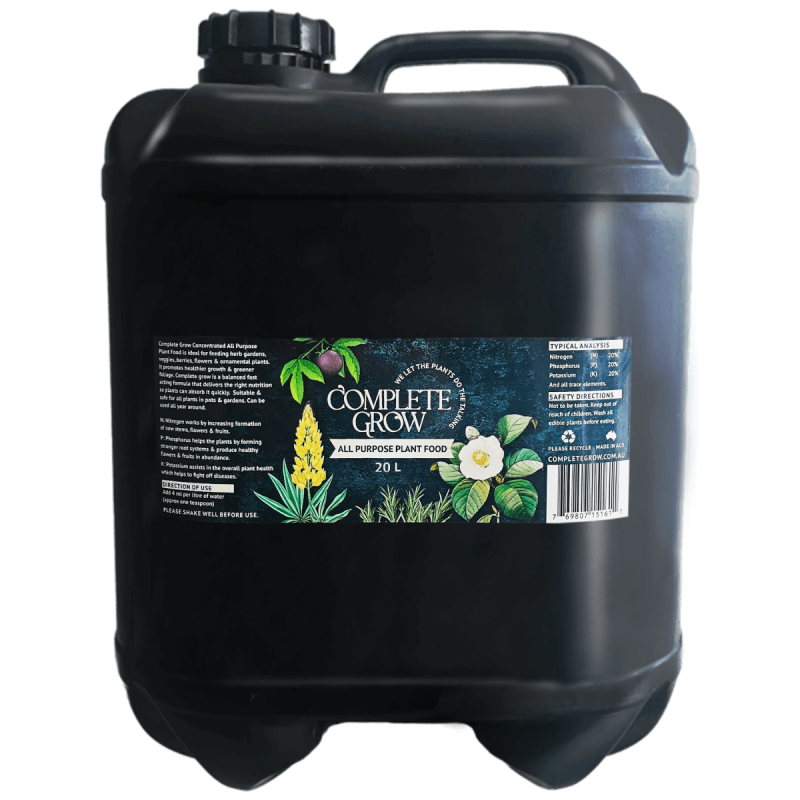
CompleteGrow All Purpose NPK 20-20-20 Liquid Fertiliser
The base feed for young and mature trees, spring to autumn. Includes zinc and boron, plus iron, manganese, copper and molybdenum.
At 4 mL per litre: 1 L makes 250 L of feed, 4 L makes 1,000 L and 20 L makes 5,000 L.
CompleteGrow Cal-Mag (supplement)
NPK 20-20-20 contains no calcium or magnesium. Cal-Mag supplies both (4% calcium, 2% magnesium). Use 0.5–1 mL per litre from flowering through the first 8 weeks after fruit set, and whenever older leaves show magnesium yellowing.
Most useful in pots, sandy soil and high-rainfall areas. Dilute and apply separately; never mix the two concentrates.
Avocado feeding facts
- Most feeder roots sit in the top layer of soil, under the mulch. Feed and water around the drip line, not against the trunk.
- Avocado roots have very few root hairs, which makes them slow to take up nutrients. A water-soluble feed reaches them faster than granules.
- Feed the soil, not the leaves. Queensland Government guidance generally does not recommend foliar nutrient sprays for avocados. The one exception is a boron spray at flowering when a leaf test shows boron below 30 ppm.
- Calcium only reaches the fruit through healthy roots and steady water flow. Dry spells in the first 6–8 weeks after fruit set reduce fruit size and calcium uptake.
- Avocados are sensitive to salt. Brown leaf tips often mean salt build-up, so water deeply and flush pots monthly.
- Poor drainage leads to root rot. Never feed a waterlogged tree; fix the drainage first.
Avocado Feeding Calendar (Australia)
The feed stays the same all year; what changes is how often you use it and when Cal-Mag goes on. Dates shift by region and variety, so go by what your tree is doing.
| When | What the tree is doing | What to do |
|---|---|---|
| Early spring (Sep–Oct) | Flower buds open; the spring flush starts | Restart NPK 20-20-20 every 2–4 weeks. Keep the soil evenly moist. |
| Flowering to fruit set | Flowers open, then pea-sized fruit sets | Feed at the 2-week end of the range and start Cal-Mag on a separate day. |
| First 8 weeks after fruit set | The calcium window: young fruit takes up most of its calcium now | Keep Cal-Mag going and water steady. Avoid heavy nitrogen, which pushes new shoots that compete with the young fruit. |
| Summer | Fruit sizing; the summer flush grows | Feed every 2–4 weeks. This flush carries next season’s flowers. |
| Autumn (Mar–May) | Growth slows; the summer flush hardens | Stretch to every 4 weeks, then stop. Best time for a leaf test. |
| Winter (Jun–Aug) | Cool weather sets up next season’s flowering | Pause in-ground trees. Feed potted trees in warm spots lightly, only if they are still growing. |
Young Trees (1–3 years)
- Do not fertilise at planting. Feeding too soon can burn the young tree’s new feeder roots, so wait until it shows fresh growth.
- Start at 2 mL per litre, then move to 4 mL per litre once the tree is established.
- Feed every 2–4 weeks from spring to autumn, and water before and after each feed.
Mature Trees (4+ years)
- Feed 4 mL per litre every 2–4 weeks from spring to autumn, following the calendar above.
- Bigger trees need more mix, not a stronger one: use the same 4 mL per litre, but apply enough to wet the soil out to the drip line.
Why every 2–4 weeks? A liquid feed is taken up or washed below the roots within a few weeks. Small, regular doses suit avocados’ shallow, salt-sensitive roots far better than a few large ones, and they keep food available through flowering, fruit set and the summer flush.
Tip: Over-fertilising, especially with nitrogen, causes leafy growth at the expense of fruit. Apply moderate, regular feeds instead of large doses.
How Much NPK 20-20-20 to Mix
Mix 4 mL per litre for trees in the ground and 2 mL per litre for potted or newly planted trees. For common containers, that works out to:
2 mL in pots
18 mL in pots
20 mL in pots
5–10 mL in a 10 L bucket, applied on its own
Always water the soil first if it is dry, then apply the mix around the drip line.
Read the Leaves: Avocado Nutrient Problems
Avocados show most feeding problems in their leaves and fruit. Match the symptom before adding more fertiliser.
Confirm It With a Leaf Test
If a problem keeps coming back, a leaf test tells you exactly what the tree is short of, so you stop guessing. Most agricultural labs offer one. How to take a good sample:
- Sample in autumn, once the summer flush has hardened off (generally April–May in Queensland).
- Pick the most recently hardened leaves from branches that are not carrying fruit.
- Keep different varieties and trees of different ages in separate samples.
- Take a soil sample at the same time, so the two results can be read together.
| Nutrient | Healthy avocado leaf range |
|---|---|
| Nitrogen | 2.2–2.6% |
| Phosphorus | 0.08–0.25% |
| Potassium | 0.75–2.0% |
| Calcium | 1.0–3.0% |
| Magnesium | 0.25–0.8% |
| Zinc | 40–80 ppm |
| Boron | 40–60 ppm |
| Iron | 50–200 ppm |
Australian leaf guidelines as listed in Avocados Australia’s plant nutrition review (2018). Sampling method from the Queensland Government.
If a nutrient reads low but the soil pH or drainage is off, fix that first. A tree cannot use nutrients its roots cannot absorb.
How to Apply Fertiliser to an Avocado Tree
- In the ground: Water first if the soil is dry. Pour the 4 mL per litre mix over moist soil beneath the canopy, out to the drip line, not against the trunk, then water it in.
- In pots: Use 2 mL per litre every 2–3 weeks. Once a month, run clean water through the pot until it drains freely to wash out built-up salts.
- Newly planted trees: No fertiliser or manure at planting. Start feeding once the tree shows new growth.
- Never feed a stressed tree: If the soil is dry, waterlogged, or the tree is wilting in a heatwave, fix that first and feed once it has recovered.
Before adding more fertiliser
Check the Root Zone First
Yellow leaves, brown tips and slow growth do not always mean an avocado tree needs more food. Drainage, salt, soil pH and damaged feeder roots can all stop a well-fed tree from using the nutrients already in the soil. Work through this check before increasing the dose.
A four-step avocado health check
Go through these in order. Feeding a stressed root system can make the problem worse.
1
Check moisture and drainage
Avocados need deep, free-draining soil: at least 1.5 m, or 2 m in high-rainfall areas. If the soil stays wet or the tree wilts while the root zone is damp, stop feeding. Scrape back the mulch: healthy feeder roots are pale, while roots with Phytophthora root rot are black, decayed and few.
2
Check for salt
Brown leaf tips and margins usually mean salt, not hunger. It can come from overfeeding, from bore or recycled water, or from root rot, because infected roots can no longer keep salt out. Flush pots with clean water and skip the next feed.
3
Check the soil pH
A pH of about 5.5–6.5 suits avocados. They grow up to about 7.5, but iron becomes hard to absorb, and high pH also favours root rot. Test before adding more fertiliser.
4
Confirm the nutrient problem
If symptoms persist once water, drainage and pH are right, take an autumn leaf test and compare it with the healthy ranges. It is far more reliable than adding nitrogen, magnesium or trace elements by guesswork.
On bore, tank or recycled water?
Queensland Government guidance says avocado irrigation water should ideally stay under 0.6 dS/m salinity (about 384 ppm total soluble salts) and 80 mg/L chloride. Water slightly above that can be managed with extra irrigation to leach salts and more tolerant rootstocks such as Velvick. If leaf-edge burn continues despite correct feeding, test the water; more fertiliser will not fix it.
If it is root rot
- Stop fertilising and fix the drainage first; mounding the soil helps water run away from the roots.
- Spread gypsum under the canopy to help suppress root rot spore formation (use lime instead only if the pH needs raising).
- Build organic matter with mulch, kept clear of the trunk.
- Restart feeding at 2 mL per litre only once new feeder roots and new growth appear. Calcium uptake depends on healthy root tips, so roots come first.
The CompleteGrow approach
The B.A.S.E. Method for Avocado Feeding
One reliable base feed, changed only when the tree gives you a clear reason. This avoids stage-by-stage product switching and stops you treating a water, root or pH problem with more fertiliser.
B
Begin with balance
One balanced NPK feed with zinc and boron as the base, spring to autumn.
A
Apply to active roots
Diluted feed on moist soil under the canopy and out to the drip line, never at the trunk or on the leaves.
S
Solve uptake first
Drainage, water salts and pH before a stronger dose.
E
Evidence before extras
Cal-Mag in the calcium window; anything else only when symptoms or a leaf test call for it.
The root-zone rule: as an avocado tree gets larger, use more correctly diluted mix to cover its wider root zone. Never make the concentrate stronger.
What Should You Do Next?
Find what you are seeing, then take the next step.
| What you see | Best next step |
|---|---|
| Healthy tree with active new growth | Continue the normal spring-to-autumn schedule, every 2–4 weeks. |
| Flowering, or fruit just set | Add Cal-Mag on a separate day, keep the soil evenly moist and don’t push extra nitrogen for the next 8 weeks. |
| Plenty of flowers, little fruit | Check the weather first: fruit sets only after about 3 days in a row above 10°C at flowering. More fertiliser won’t fix it; steady water and bees will help. |
| Dry soil or a heat-stressed tree | Water first. Feed only after the root ball is evenly moist and the tree has recovered. |
| Wet soil, wilting or black feeder roots | Stop fertilising. Improve drainage, spread gypsum under the canopy and restart at 2 mL per litre once new roots and growth appear. |
| Brown tips after frequent feeding | Skip the next feed, flush the root zone with clean water and check both the rate and your water source. |
| Small, narrow leaves at the shoot tips | Likely zinc. Keep feeding through the soil, check the pH and avoid extra phosphorus. |
| Yellowing that persists despite correct feeding | Test the soil pH first, then take an autumn leaf test instead of increasing the dose. |
| Recently planted avocado tree | No fertiliser at planting. Let the tree settle and show new growth, then begin at 2 mL per litre. |
Clear answers for Australian gardeners
Avocado Fertiliser FAQs
What is the best fertiliser for avocado trees in Australia?
A balanced, water-soluble fertiliser with nitrogen, phosphorus, potassium and the trace elements avocados lack most, zinc and boron. CompleteGrow All Purpose NPK 20-20-20 supplies these in one formula. Add Cal-Mag through flowering and fruit set, because NPK 20-20-20 contains no calcium or magnesium.
How often should I fertilise an avocado tree?
Every 2–4 weeks while the tree is actively growing, from spring to autumn. Use the shorter interval through flowering, fruit set and strong growth, and the longer interval as growth slows. Pause in winter for in-ground trees.
How much NPK 20-20-20 should I use on an avocado tree?
4 mL per litre of water for established trees in the ground, and 2 mL per litre for potted and newly established trees. A larger tree needs more of the diluted mix spread across its root zone, not a stronger concentration.
When does an avocado tree need calcium most?
During flowering and the first eight weeks or so after fruit set. That is when the young fruit takes up most of its calcium; after that, uptake into the fruit slows sharply. Fruit with more calcium stays firm longer and develops fewer rots and flesh disorders after picking. Apply Cal-Mag in that window, keep watering steady, and avoid heavy nitrogen, which pushes new shoots that compete with the fruit.
Should I switch to a flowering fertiliser when my avocado flowers?
No. A healthy home-garden tree can stay on the same balanced feed through flowering and fruit set. Avocados need far less phosphorus than potassium, and heavy phosphorus can tie up zinc. Avoid extra boron too unless a leaf test shows a shortage, because the gap between too little and too much is narrow.
Should I spray fertiliser on avocado leaves?
Generally not. Queensland Government guidance does not recommend foliar nutrient sprays for avocados; feed through the soil instead. The exception is a boron spray at flowering when a leaf test shows boron below 30 ppm.
When should I do a leaf test on my avocado tree?
In autumn, once the summer flush has hardened off (generally April–May in Queensland). Pick the most recently hardened leaves from branches without fruit, keep different varieties separate, and send a soil sample at the same time.
Where should fertiliser be applied around an avocado tree?
On moist soil beneath the canopy and out to the drip line, where the feeder roots are. Spread it across the root zone rather than pouring it beside the trunk, and water it in afterwards.
Can I mix Cal-Mag and NPK 20-20-20 together?
Do not mix the concentrates. Dilute and apply NPK 20-20-20 and Cal-Mag separately, on different days. Use Cal-Mag at 0.5–1 mL per litre.
Why are my avocado leaves yellow even after fertilising?
The pattern matters. Yellow older leaves suggest the tree needs routine feeding, while yellow new leaves with green veins point to iron being locked up in alkaline soil. Pale, wilting leaves that drop easily can be root rot, because damaged roots cannot absorb nutrients. Check drainage and pH before applying more fertiliser.
Why do avocado leaves get brown tips?
Usually salt build-up from fertiliser or irrigation water. Root rot causes the same symptom, because infected roots can no longer keep salt out. Flush pots with clean water, check the feeding rate and drainage, and test bore or recycled water for salinity and chloride.
Are coffee grounds or Epsom salts good for avocado trees?
Neither is a complete avocado fertiliser. Epsom salts supply magnesium but no nitrogen, phosphorus, potassium or calcium, so use them only when a magnesium shortage has been identified. Coffee grounds vary in composition and should not replace a measured feeding program.
Does more fertiliser mean more avocados?
No. Too much nitrogen makes the tree leafy and lowers fruit quality. Cropping depends on balanced feeding plus healthy roots, steady moisture, pollinating insects and the weather at flowering: fruit sets only after about 3 days in a row that stay above 10°C.
Ready to Feed Your Avocado?
Start with the correct dilution, apply it to moist soil around the drip line, add Cal-Mag at fruit set, and let the tree, not the size of the bottle, guide the next feed.
References: Queensland Government: fertilising avocados, growing avocados and Phytophthora root rot; Hort Innovation AV19004: pre-harvest nutrition and avocado fruit quality; Avocados Australia plant nutrition review (2018); NZ Avocado: nutrient removal with harvest.
Recommended Products
- Quick View
- Select options This product has multiple variants. The options may be chosen on the product page
All Purpose Plant Liquid Fertiliser – Formulated from NPK 20-20-20 & Micro Nutrients
- Quick View
- Select options This product has multiple variants. The options may be chosen on the product page
- Quick View
- Select options This product has multiple variants. The options may be chosen on the product page
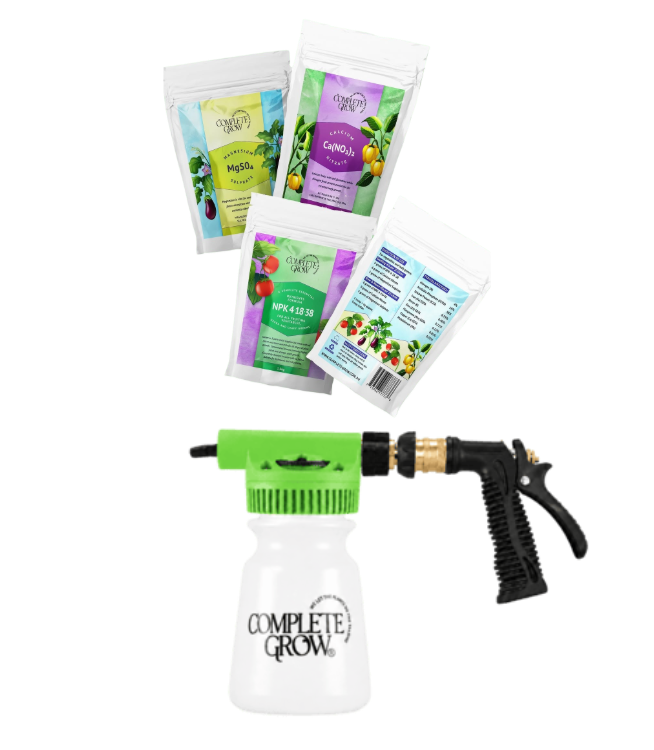
NPK 20-20-20 Powder Soluble Nutrient Plant Fertilizer & Micro Nutrients
The Grow Blog
Seasonal tips from our growers, written for real Aussie gardens.