
Avocado
Transform Your Garden into a Personal Paradise!
Best Fertiliser for Avocado Trees | Feeding Guide
The best fertiliser for avocado trees is a balanced NPK 20-20-20 formula with zinc and boron from early spring to autumn for leaf growth, flowering and fruit set, with a calcium and magnesium supplement (like liquid Cal-Mag) added during flowering and fruit development. Feed every 2–4 weeks while the tree is actively growing, and pause in winter.
Avocado Fertiliser at a Glance
Watch: How to Fertilise an Avocado Tree
Avocado trees require balanced nutrition to maintain healthy growth and consistent fruit production. While water and pruning are important, fertilisation is the key factor that influences yield, leaf health, and fruit quality. Choosing the best fertiliser ensures your avocado tree develops strong roots and branches while producing reliable harvests.
When it comes to producing healthy, fruit-bearing avocado trees in Australia, the key is choosing a good fertilizer for avocado tree growth. Whether you’re growing a Hass, Bacon, or Wurtz avocado, these trees need precise nutrition to support their roots, leaves, flowers, and eventually, delicious fruit. Avocado trees have unique nutritional demands that change throughout the year—making consistent feeding essential.
Why Avocado Trees Need Fertiliser
Avocado trees are heavy feeders with shallow root systems that benefit from consistent nutrition. Fertiliser replenishes soil nutrients that are quickly depleted as the tree grows. Without regular feeding, trees may suffer from yellowing leaves, poor fruit set, and reduced growth.
Tip: Fertilising young avocado trees encourages strong growth, while mature trees need balanced feeding to support fruiting cycles.
Avocado roots sit mostly in the top layer of soil and have very few root hairs, so they are poor at finding nutrients. That is often used as a reason to cut back phosphorus. We see it the other way around.
Phosphorus barely moves through soil. It stays close to where it is applied, so a shallow root system can only use the phosphorus that is dissolved right where the roots are. A balanced, water-soluble NPK 20-20-20 delivers it in a form those roots can take up straight away, alongside the nitrogen and potassium the tree needs for leaves and fruit.
That is why we recommend one balanced feed for the whole season, instead of switching products when the tree flowers. It is simpler, and it avoids the gaps and overlaps that come from mixing fertilisers.
How Avocado Trees Grow in Australia
Avocados are evergreen trees that thrive in warm, frost-free climates. In Australia, they grow well in regions like coastal NSW, QLD, and parts of WA. A mature avocado tree can grow up to 10 metres high, and its growth cycle involves distinct stages:
Each of these phases requires different nutrients. A good fertilizer for avocado tree performance must support nitrogen needs early in the season while offering balanced phosphorus and potassium to support flowering and fruit development.
What’s the Best Fertiliser for Avocado Trees?
Avocados are subtropical evergreens that thrive with regular feeding — especially during flowering and fruiting. The best fertiliser for avocado trees provides a steady supply of key macronutrients along with essential trace elements to prevent leaf yellowing, weak growth, and poor fruit development. Avocados benefit most from a balanced NPK fertiliser with moderate nitrogen for leaf development, potassium for fruit quality, and balanced phosphorus to support root health and flowering.Recommended Fertilisers from Complete Grow:
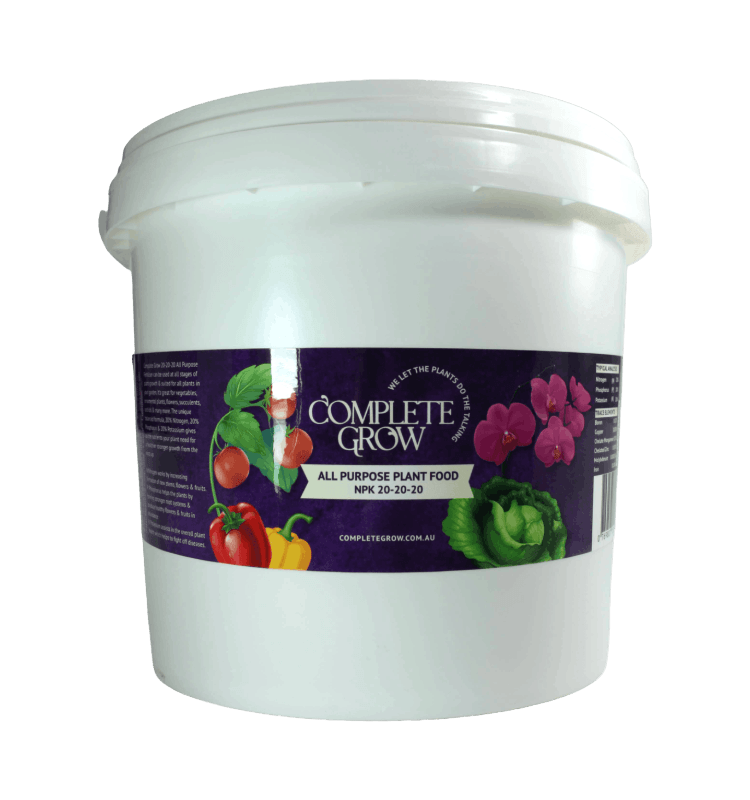
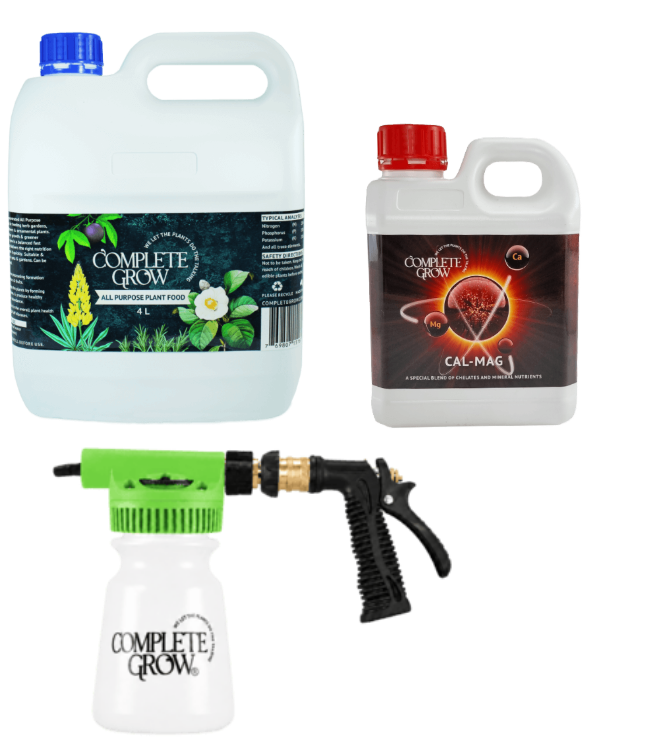
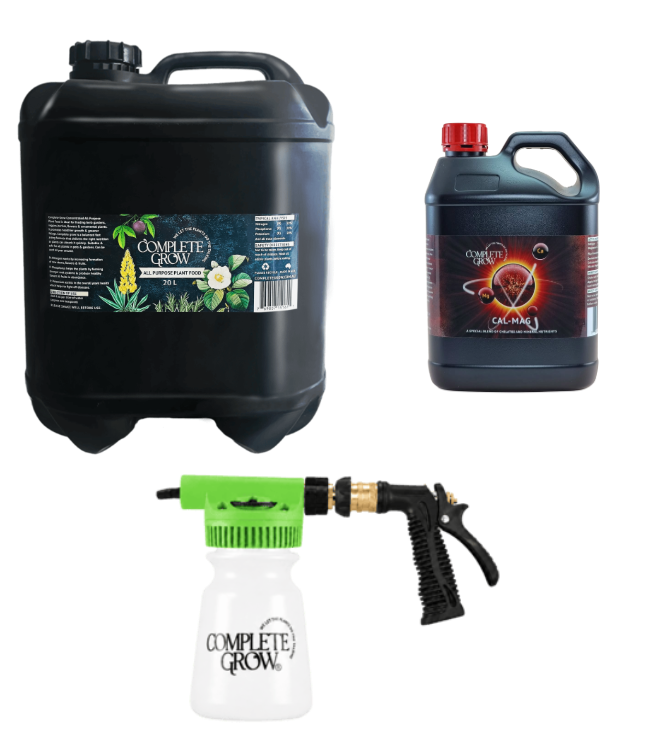
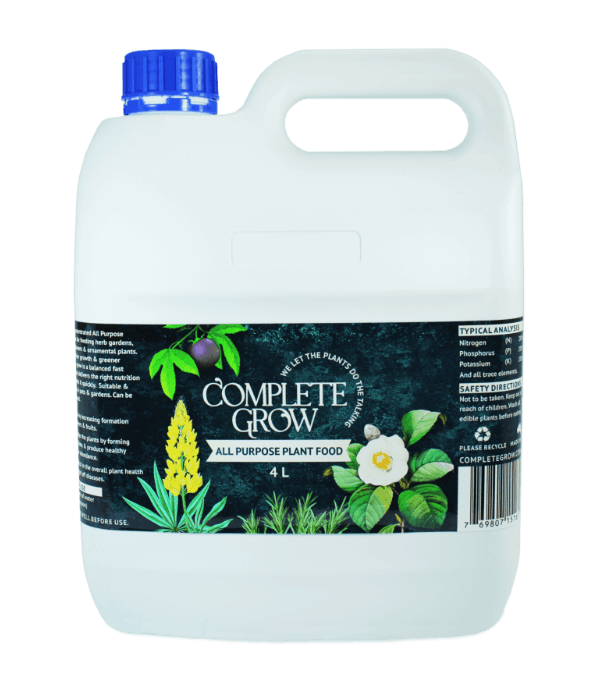
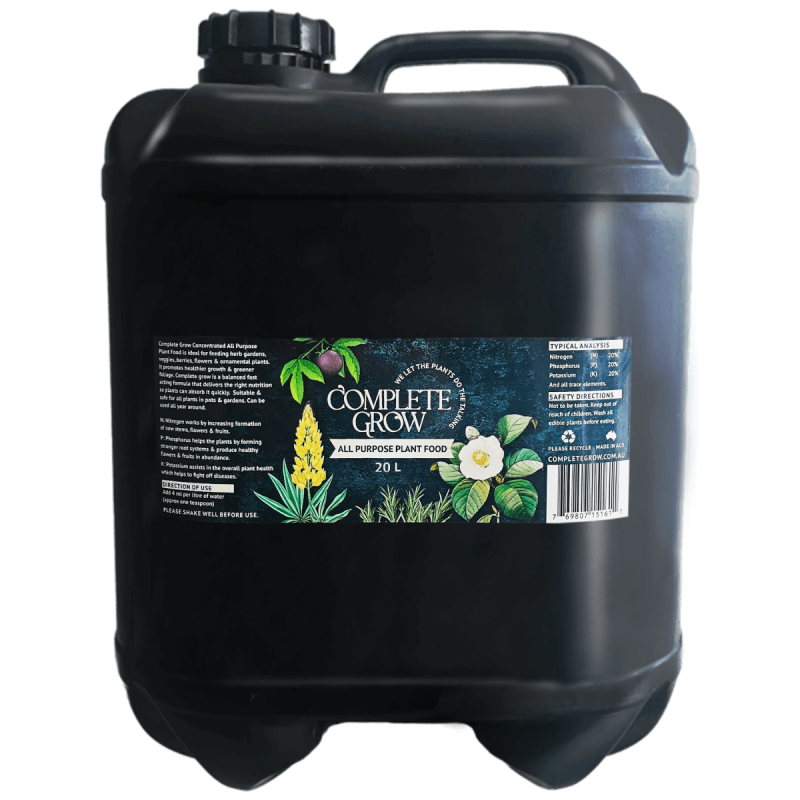
- NPK 20-20-20 Liquid Fertiliser: Ideal for overall growth and productivity in both young and mature avocado trees.
- Cal-Mag Nutrients Fertiliser (supplement): Corrects calcium or magnesium deficiencies, common in potted or sandy soils. NPK 20-20-20 contains no calcium or magnesium, so add Cal-Mag at 0.5–1 mL per litre to prevent the shortages avocados often show, especially in pots, sandy soil and high-rainfall areas. Dilute and apply it separately; never mix the two concentrates.
Avocado feeding facts
- Most feeder roots sit in the top layer of soil, under the mulch. Feed and water around the drip line, not against the trunk.
- Avocado roots have very few root hairs, which makes them slow to take up nutrients. A water-soluble feed reaches them faster than granules.
- Zinc and boron are the trace elements avocados most often run short of. CompleteGrow NPK 20-20-20 includes both, plus iron, manganese, copper and molybdenum.
- Avocados are sensitive to salt. Brown leaf tips often mean salt build-up, so water deeply and flush pots monthly.
- Poor drainage leads to root rot. Never feed a waterlogged tree; fix the drainage first.
Seasonal Feeding Schedule
Fertilising avocado trees at the right time ensures steady growth and abundant harvests. Their nutritional needs change throughout the year, especially between active growth and fruiting phases.Young Trees (1–3 years)
- Apply NPK 20-20-20 every 2–4 weeks from spring to autumn to encourage foliage and branch growth. Start newly planted trees at 2 mL per litre.
- Use liquid feeds for faster absorption and to avoid nutrient loss in shallow root zones.
- Always water thoroughly before and after fertilising to protect roots.
Mature Trees (4+ years)
- Spring: Feed balanced NPK 20-20-20 every 2–4 weeks to support flowering and fruit set.
- Summer: Keep feeding every 2–4 weeks for fruit development and the summer flush, which carries next spring’s flowers.
- Autumn: Stretch feeds out to every 4 weeks as growth slows, then stop.
- Winter: Pause feeding in-ground trees.
- Bigger trees need more mix, not a stronger one: use the same 4 mL per litre, but apply enough to wet the soil out to the drip line.
Tip: Over-fertilising can cause excessive leaf growth at the expense of fruit production. Apply moderate, regular feeds instead of large doses.For convenience and reliability, many growers use CompleteGrow 20L All Purpose NPK Liquid Plant Food. Its balanced formulation supports both young and mature trees, ensuring strong roots, healthy foliage, and productive harvests.
How Much NPK 20-20-20 to Mix
Mix 4 mL per litre for trees in the ground and 2 mL per litre for potted or newly planted trees. For common containers, that works out to:Read the Leaves: Avocado Nutrient Problems
Avocados show most feeding problems in their leaves and fruit. Match the symptom before adding more fertiliser.When & How to Fertilise Avocado Trees
Proper timing and method are just as important as the fertiliser you choose. Over-fertilising or applying at the wrong time can reduce fruit production and cause root damage. Here’s how to feed your avocado tree for best results.Avocado Tree Feeding Calendar (Australia)
- Early Spring (Sept–Oct): Begin feeding to support new shoot growth and root activity.
- Late Spring to Early Summer: Feed at the shorter end of the 2–4 week range as flowers open and fruit sets. Keep using the same balanced NPK 20-20-20 through flowering and fruit set.
- Autumn: Keep feeding while the tree is still growing, stretching to every 4 weeks, then stop as growth slows. Avoid high nitrogen blends at this stage.
- Winter: Pause fertilising for in-ground trees. For potted trees kept in warm areas, feed lightly only if still actively growing.
How to Apply Fertiliser
- In the Ground: Feed every 2–4 weeks from spring to autumn at 4 mL per litre. Apply it around the drip line, not near the trunk, and water in deeply after application.
- In Pots: Use liquid fertiliser every 2–3 weeks at half strength (2 mL per litre). Flush monthly with water to avoid salt build-up.
Check the Root Zone First
Yellow leaves, brown tips and slow growth do not always mean an avocado tree needs more food. Drainage, salt, soil pH and damaged feeder roots can all prevent a well-fed tree from using the nutrients already present. Use this four-step check before increasing the dose.
A four-step avocado health check
Work through these checks in order. Feeding a stressed root system can make the problem worse.
If the soil stays wet or the tree wilts while the root zone is damp, stop feeding and correct the drainage first. Avocados are highly susceptible to Phytophthora root rot in poorly aerated soil.
Brown leaf tips and margins can indicate salt stress rather than hunger. Flush pots thoroughly with clean water and review how often fertiliser is being applied before the next feed.
A pH of about 5.5–6.5 suits avocado trees. In alkaline soil, iron and other trace elements can become difficult to absorb even when they are present, so test before adding more fertiliser.
If symptoms persist after water, drainage and pH are corrected, use soil and leaf analysis. This is more reliable than repeatedly adding nitrogen, magnesium or trace elements by guesswork.
Commercial Queensland guidance describes avocado irrigation water as ideally no higher than 0.6 dS/m salinity and 80 mg/L chloride. If leaf-edge burn continues despite correct feeding, testing the irrigation water can reveal a problem that more fertiliser will not fix.
The B.A.S.E. Method for Avocado Feeding
CompleteGrow uses a simple rule for home avocado nutrition: establish one reliable base feed, then change the program only when the tree gives you a clear reason. This avoids stage-by-stage product switching and reduces the risk of treating a water, root or pH problem with more fertiliser.
Use one balanced NPK feed with trace elements as the seasonal nutritional foundation.
Spread the diluted feed over moist soil beneath the canopy and around the drip line—not at the trunk.
Check drainage, irrigation-water salts and soil pH before assuming a pale or struggling tree needs a stronger dose.
Add Cal-Mag or another correction only when the growing conditions, symptoms or a test support it.
The CompleteGrow root-zone rule: as an avocado tree gets larger, increase the amount of correctly diluted solution used to cover its wider root zone—never make the concentrate stronger.
What Should You Do Next?
This quick decision table turns the feeding guide into a practical next step.
| What you see | Best next step |
|---|---|
| Healthy tree with active new growth | Continue the normal spring-to-autumn feeding schedule every 2–4 weeks. |
| Dry soil or a heat-stressed tree | Water first. Feed only after the root ball is evenly moist and the tree has recovered. |
| Wet soil, wilting or black feeder roots | Stop fertilising. Improve drainage and investigate root rot before resuming a feeding program. |
| Brown tips after frequent feeding | Skip the next feed, flush the root zone with clean water and check the product rate. |
| Persistent yellowing despite correct feeding | Test soil pH first, then consider soil and leaf analysis instead of increasing the dose. |
| Recently planted avocado tree | Let the tree settle and show active growth, then begin at the lower rate of 2 mL per litre. |
Avocado Fertiliser FAQs
These answers cover the questions gardeners most often ask after choosing an avocado fertiliser.
What is CompleteGrow’s B.A.S.E. method for avocado trees?
B.A.S.E. means Begin with balance, Apply to active roots, Solve uptake problems first and use Evidence before extras. It keeps one balanced feed at the centre of the program while making drainage, water quality, pH and visible symptoms the deciding factors before any supplement is added. As the tree grows, increase the volume of correctly diluted solution across the wider root zone—not the fertiliser concentration.
What is the best fertiliser for avocado trees in Australia?
For general home-garden care, use a balanced, water-soluble fertiliser containing nitrogen, phosphorus, potassium and trace elements such as zinc, boron and iron. CompleteGrow NPK 20-20-20 supplies these nutrients in one formula. Mature productive trees with persistent problems are best managed using soil and leaf test results rather than by continually increasing the rate.
How often should I fertilise an avocado tree?
Feed every 2–4 weeks while the tree is actively growing from spring to autumn. Use the shorter interval during strong growth and the longer interval as growth slows. Pause during winter for in-ground trees; feed a warm, protected potted tree only if it is still producing active growth.
How much NPK 20-20-20 should I use?
Use 4 mL per litre of water for established trees in the ground. Use 2 mL per litre for potted and newly established trees. A larger tree needs a greater volume of diluted solution spread across its root zone—not a stronger concentration.
Where should fertiliser be applied around an avocado tree?
Apply diluted fertiliser to moist soil beneath the canopy and around the drip line, where active feeder roots are concentrated. Spread it across the root zone rather than pouring it beside the trunk, and water it in after application.
Should I change fertiliser when my avocado tree flowers?
A healthy home-garden tree can remain on the same balanced feed through flowering and fruit set. Avoid adding extra boron without evidence of a deficiency because the difference between too little and too much boron is narrow. Consistent watering is also important during flowering and early fruit development.
Can I mix Cal-Mag and NPK 20-20-20 together?
Do not mix the concentrates together. Dilute and apply NPK 20-20-20 and Cal-Mag separately. When Cal-Mag is needed, use it at 0.5–1 mL per litre according to the product directions.
Why are my avocado leaves yellow even after fertilising?
The leaf pattern matters. Yellow older leaves can indicate inadequate routine nutrition, while yellow new leaves with greener veins often point to iron being unavailable in alkaline soil. Waterlogged or damaged roots can also cause yellowing because the tree cannot absorb nutrients properly. Check drainage and pH before applying more fertiliser.
Why do avocado leaves develop brown tips?
Brown tips commonly indicate salt accumulation from fertiliser or irrigation water, but root damage can produce a similar symptom. Flush pots with clean water, check the feeding rate and make sure the soil drains freely. If bore or recycled water is used, consider having its salinity and chloride levels tested.
Are coffee grounds or Epsom salts good for avocado trees?
Neither is a complete avocado fertiliser. Epsom salts supply magnesium but no nitrogen, phosphorus, potassium or calcium, so use them only when a magnesium shortage has been identified. Coffee grounds vary in composition and should not replace a measured feeding program. Correct the diagnosed problem instead of adding household remedies by guesswork.
Does giving an avocado tree more fertiliser produce more fruit?
No. Excess nitrogen can produce vigorous leafy growth without improving fruit production and may reduce fruit quality. Reliable cropping depends on balanced nutrition together with healthy roots, suitable soil moisture, flowering conditions and pollination.
Ready to Feed Your Avocado?
Start with the correct dilution, apply it to moist soil around the drip line and let the condition of the tree—not the size of the bottle—guide the next feed.
Technical references: Queensland Government—fertilising avocados, Queensland Government—growing avocados, and Queensland Government—Phytophthora root rot.
Recommended Products
- Quick View
- Select options This product has multiple variants. The options may be chosen on the product page
All Purpose Plant Liquid Fertiliser – Formulated from NPK 20-20-20 & Micro Nutrients
- Quick View
- Select options This product has multiple variants. The options may be chosen on the product page
- Quick View
- Select options This product has multiple variants. The options may be chosen on the product page
NPK 20-20-20 Powder Soluble Nutrient Plant Fertilizer & Micro Nutrients
The Grow Blog
Seasonal tips from our growers, written for real Aussie gardens.