Fertilizer for Orange Trees
Transform Your Garden into a Personal Paradise!
Add Your Heading Text Here
Best Fertilizer for Orange Trees
Quick answer: Fertilise orange trees every 2โ4 weeks during active growth (spring to early autumn). For best fruiting, use a citrus fertiliser that balances nitrogen for healthy leaves with higher potassium for flowering and fruit development.
- How often to fertilise: every 2โ4 weeks in the growing season
- Best time to fertilise: spring through early autumn
- Reduce feeding: late autumn
- Avoid feeding: winter unless correcting deficiencies
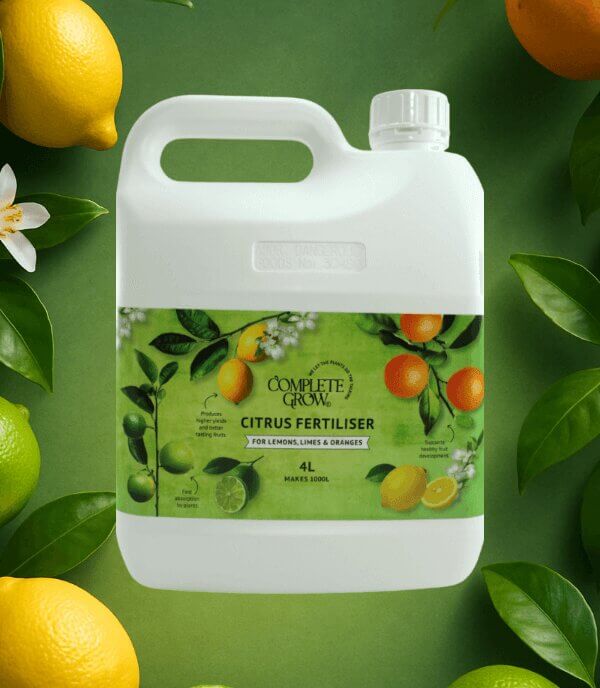
- Recommended fertiliser for orange trees: Use a purpose-built citrus fertiliser formulated for fruiting citrus (including oranges) to support strong flowering, fruit set, and sweeter, better-sized fruit.
- Supplement during heavy fruiting: When trees carry a heavy crop, magnesium demand increases and calcium supports strong plant structure and nutrient movement. If you see leaf yellowing between veins or the tree looks โdrainedโ mid-season, a Cal-Mag fertiliser can help maintain leaf performance and support fruit development.
- Common mistake: Overdoing nitrogen leads to lush leaves with fewer flowers and more fruit drop. Keep feeding steady and fruit-focused.


How to Fertilize Orange Trees for Strong Growth and Fruit
Fertilising orange trees correctly is one of the biggest factors in whether a tree simply grows leaves or produces consistent, high-quality fruit. Orange trees are heavy feeders, but they are sensitive to nutrient balance, especially the relationship between nitrogen and potassium.Why NPK balance matters for orange trees (and why NPK 6-2-12 works)
Orange trees need nitrogen, phosphorus, and potassium in the right proportions, not just in high amounts. Nitrogen (N) builds the leaf canopy that powers photosynthesis, but too much nitrogen pushes soft leafy growth and can reduce flowering. Potassium (K) is the key nutrient for fruiting because it supports flower retention, fruit set, fruit size, sweetness, and rind strength. Phosphorus (P) supports roots and early energy, but citrus generally need it in lower amounts than nitrogen and potassium.
That is why a fruiting-focused citrus blend like NPK 6-2-12 works so well for orange trees. The nitrogen level supports steady healthy growth without overstimulating foliage, the lower phosphorus avoids unnecessary loading, and the higher potassium strongly supports flowering and fruit development when the tree needs it most.
For orange trees that look healthy but donโt crop well, this nitrogen-to-potassium shift is often the turning point. It helps the tree stop behaving like a leafy ornamental and start behaving like a productive fruit tree.
Why a citrus-specific fertiliser works better
Using a purpose-built citrus fertiliser ensures orange trees receive controlled nitrogen for steady growth, combined with elevated potassium and essential trace elements to support flowering and fruit development. This balance helps prevent the most common orange tree problems, including strong leaf growth with little fruit, poor fruit set, and premature fruit drop. Trace elements such as magnesium and iron further support healthy green leaves and efficient photosynthesis throughout the season.How often to fertilize orange trees
For liquid fertilisers, smaller and more regular applications are more effective than heavy, infrequent feeding. Most orange trees perform best when fertilised every two to four weeks during active growth, from spring through early autumn. Pot-grown orange trees usually require more frequent feeding than in-ground trees, as nutrients leach quickly from potting mixes. In-ground trees benefit from deeper watering and slightly less frequent feeding, but still require consistent nutrition during the growing season.

How Long Orange Trees Take to Grow and Produce Fruit
How long an orange tree takes to grow depends on whether it is seed-grown or grafted. This is one of the most common questions gardeners ask.
- Seed-grown trees: 5โ10 years before reliable fruiting, sometimes longer
- Grafted trees: 2โ4 years before fruiting
- Full maturity: Around 7โ10 years
Orange trees typically flower in spring. Fruit develops slowly and may take many months to mature, often ripening in winter depending on the variety.
Feeding orange trees for healthy growth
Oranges are heavy feeders and require consistent nutrition during active growth. Nitrogen supports leaf growth early in the season, while potassium is essential for flowering, fruit set, and fruit quality. Trace elements and magnesium are also important for healthy green leaves.
Using a purpose-built citrus fertiliser helps maintain the correct nutrient balance throughout the growing season and prevents common problems such as excessive leaf growth with poor fruiting.
FAQ: Growing Orange Trees
Can you grow an orange tree in a pot?
Yes. Orange trees grow very well in pots provided they receive enough sunlight, regular watering, and consistent feeding.
Why is my orange tree growing but not producing fruit?
This is usually caused by excess nitrogen, lack of potassium, insufficient sunlight, or incorrect feeding timing.
Can you grow an orange tree from a supermarket orange?
Yes, but fruit quality and fruiting time are unpredictable. Grafted trees are far more reliable.
Do orange trees need full sun?
Yes. Full sun is essential for flowering and fruit development.
Orange Tree Guides Hub
How to Grow an Orange Tree
A complete orange tree care guide covering sunlight, soil, watering, planting, growing from seed, and what to expect as your tree matures.
Best Fertilizer for Orange Trees
Learn how often to fertilise orange trees, the best time to feed, and how correct NPK balance improves flowering, fruit set, and fruit quality.
Orange Tree Leaves Curling or Dropping: Causes & Fixes
A practical troubleshooting guide for curled leaves and sudden leaf drop, including watering stress, nutrition issues, heat, and root health.
Orange Tree Leaves Turning Yellow: Causes & How to Fix It
Understand why orange tree leaves go yellow, including nutrient deficiencies, watering problems, and fruiting stress, plus a clear fix plan.
Orange Tree Flowers but No Fruit: Causes & Fixes
Find out why orange trees flower but fail to set fruit, including nitrogen and potassium timing, water stress during bloom, and tree age.
Orange Tree in a Pot: Best Pots, Soil, Care & Feeding
Step-by-step guidance for growing oranges in containers, including best pot choice, best soil, watering rhythm, repotting, and feeding for fruiting.
Pruning Orange Trees: When to Prune and How to Do It
Learn when to prune orange trees, what branches to remove, and how to shape the canopy for better airflow, healthier growth, and fruiting.
Recommended Products
- Quick View
- Select options This product has multiple variants. The options may be chosen on the product page
Cal-Mag Hydroponic Nutrients Fertiliser
- Quick View
- Select options This product has multiple variants. The options may be chosen on the product page