

Free shipping over $0
Free Shipping Limited Time

The CompleteGrow grower’s guide

Fertilisers 101: everything you need to know.

Skip to the full guide

Fertiliser in 30 seconds

This plant is hungry. Feed it.

Every fertiliser is built on three nutrients: N, P and K. Tap each one and watch what it does.

N · Nitrogen

N is for leaves.

Nitrogen builds big, deep green leaves. When it runs short, leaves turn pale and yellow, starting from the bottom.

P · Phosphorus

P is for roots and flowers.

Phosphorus builds strong roots underground and sets the flower buds that become fruit.

K · Potassium

K is for fruit.

Potassium fills out flowers and fruit, and toughens the whole plant against heat, drought and disease.

Two down, one to go

Leaves and roots, sorted. Now add K.

Potassium is the last piece. It turns those flowers into fruit and toughens the whole plant.

Two down, one to go

Leaves and fruit. Now add P.

Phosphorus builds the roots underground and sets the flowers that the fruit grows from.

Two down, one to go

Roots and fruit. Now add N.

Nitrogen grows the leaves that feed everything else. Without it, the plant stays pale and small.

That’s the basics

Three nutrients. Three jobs.

That’s what the three numbers on every label mean. 20-20-20 is an equal share of N, P and K. Now let’s find the right mix for your plants.

Tap a nutrient to feed the plant

The basics

What are fertilisers?

Fertilisers are substances that supply essential nutrients to plants, helping them grow faster, stronger, and healthier. These nutrients—like nitrogen, phosphorus, and potassium—aren’t always present in sufficient amounts in natural soil, especially after repeated planting or in poor-quality soils. Fertilisers help replenish these elements to support ongoing plant health and growth.

Example: A fertiliser labeled 20-20-20 contains 20% of each nutrient — ideal for balanced, all-round plant feeding.

The Big Three

In label order: N-P-K
  • Nitrogen1st number Promotes leafy green growth
  • Phosphorus2nd number Supports strong roots, flowers, and fruit
  • Potassium3rd number Improves plant health, drought resistance, and disease tolerance

Why soil needs topping up

Even good soil runs low. Here’s how it happens.

  1. Fresh soil

    Good soil starts out stocked with nitrogen, phosphorus and potassium, ready for roots to drink up.

    Soil N·P·KFull
  2. Plants use it up

    Every crop pulls nutrients out of the soil, and rain washes more away. Leaves pale and growth stalls.

    Soil N·P·KFullLow
  3. A feed tops it up

    Fertiliser puts back what’s gone, in the right balance, so the next crop grows just as strong.

    Soil N·P·KLowTopped up
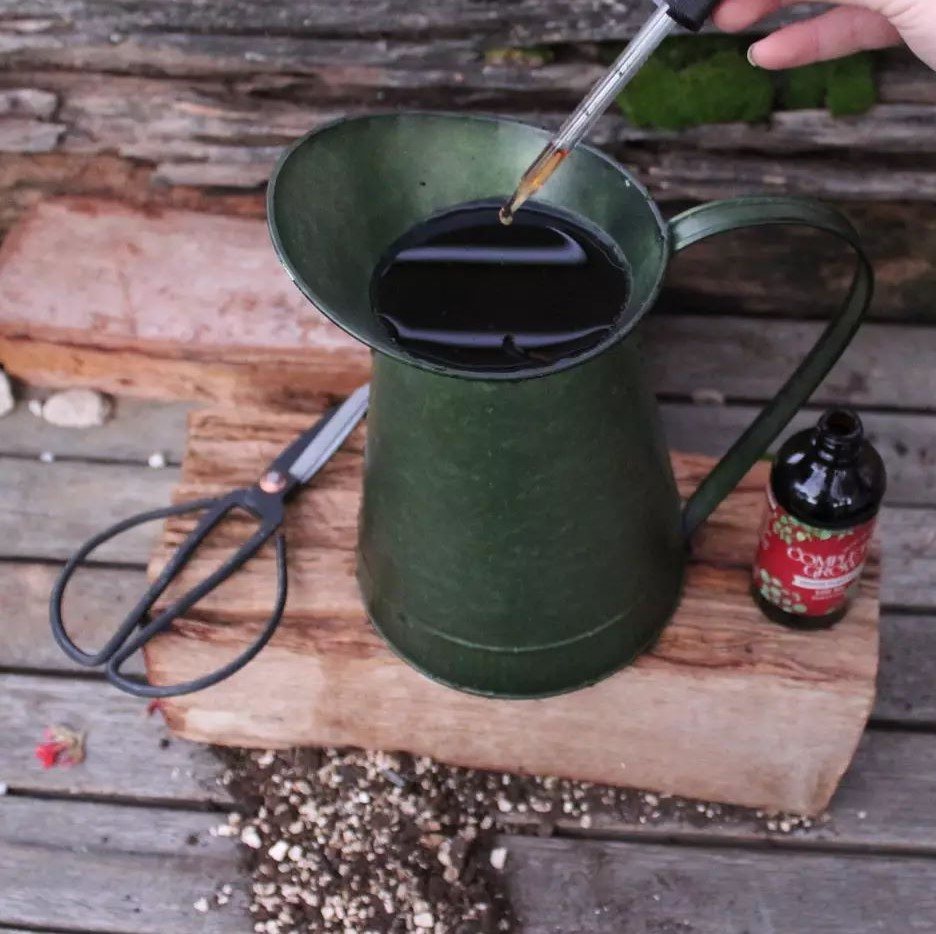
Measuring CompleteGrow Indoor Plant Food concentrate into a green watering can with a dropper
Indoor Plant Food going into the watering can: 1 mL per litre of water.

Topping up, in practice

Measure, mix and pour.

This is what topping up looks like. Measure the concentrate into your watering can, fill it with water and pour it evenly around the roots. The nutrients arrive already dissolved, so roots can take them up straight away.

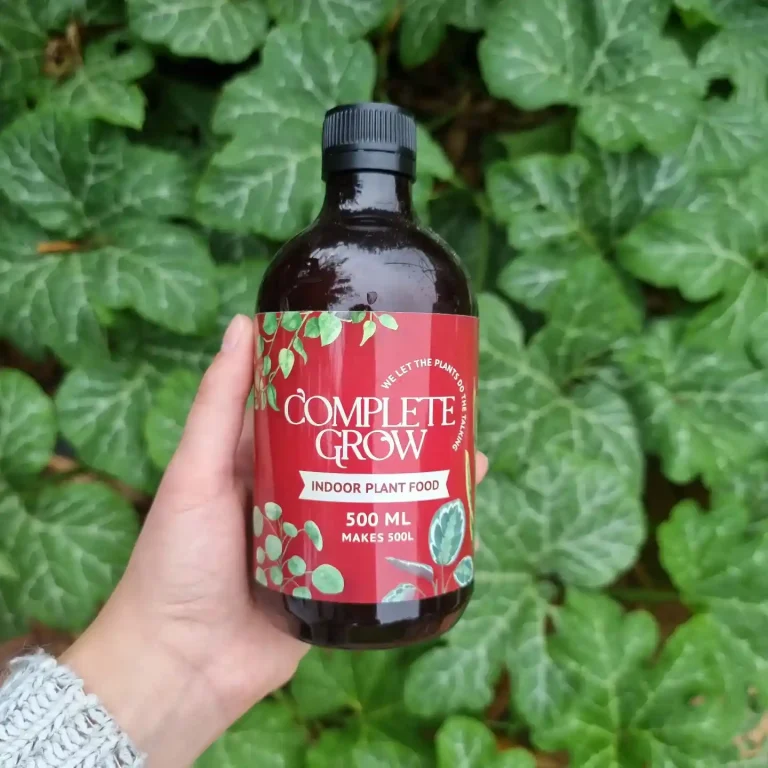
  • Indoor Plant Food1 mL per litreWeekly, fortnightly in winter
  • All Purpose4 mL per litre2 mL for seedlings and foliar sprays
  • Golden ruleWater firstNever feed bone-dry soil
From our trials

Tested on real plants, side by side.

Thousands of happy gardeners
Featured trial · Tomatoes

Advanced Formula vs a store-bought feed

A clear difference within 2–3 weeks.
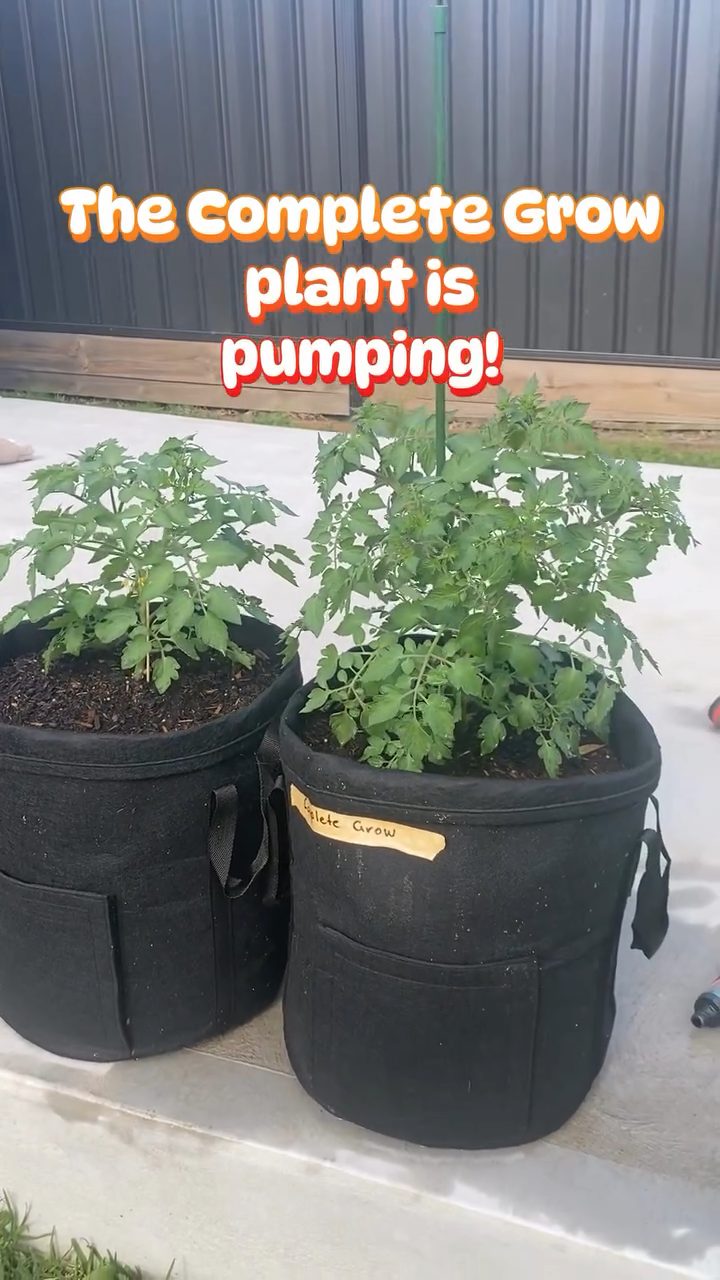
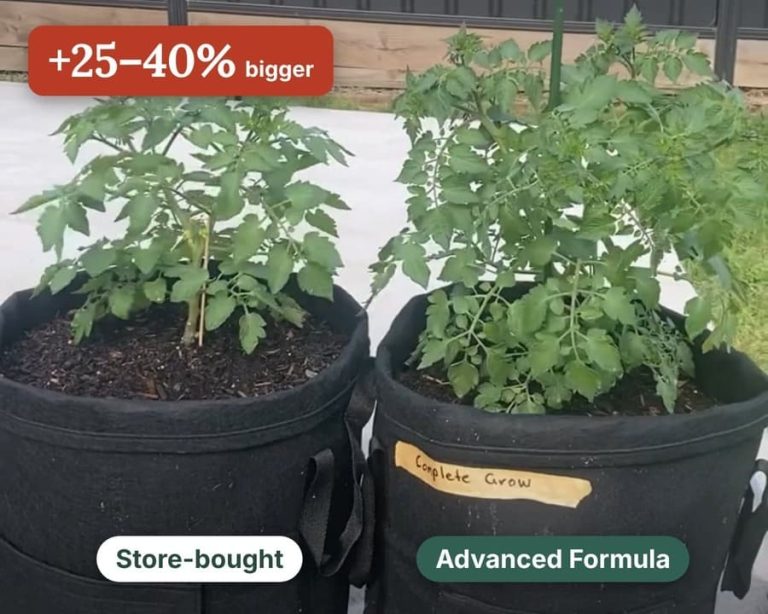
Rhys Wilson grew two tomatoes in matching fabric grow bags, side by side in the same sun. One got a store-bought fertiliser. The other got our Advanced Formula 4–18–38.

Early in the trial Two tomato plants in matching black fabric grow bags. The plant on the right, labelled Complete Grow and fed Advanced Formula 4-18-38, is noticeably bigger and bushier than the plant on the left fed a store-bought fertiliser.
Recovered & fruiting The tomato plant fed Advanced Formula 4-18-38 after its stem snapped, recovered and covered in yellow flowers and trusses of green tomatoes.
25–40%bigger plant, judged by eyebigger, by eye
More fruitlonger fruit trusseslonger trusses
Bounced backafter a snapped stemafter a snap

Trial and photos by Rhys Wilson, @thegrowersguide_. One pair of plants in one backyard.

Lawn

Same lawn, before and after

Before and after a CompleteGrow lawn feed.

Before Lawn before feeding with CompleteGrow.
After The same lawn after feeding with CompleteGrow.
Raised bed

Seven days after feeding

Capsicum, chilli, tomato, eggplant and basil in the same bed, one week apart.

Before Raised garden bed of capsicum, chilli, tomato, eggplant and basil before feeding.
7 days later The same raised bed seven days after feeding, with taller, bushier plants and the tomato in flower.

Beyond NPK

Why micronutrients matter.

Plants need smaller amounts of eight more elements. Run short of any one and it shows on the leaves, even when NPK levels are good. Here’s what each does, how to spot a shortage, and where to find it.

Secondary nutrients

needed in larger amounts

Calcium

Builds strong cell walls and firm fruit.

Short on it: black, sunken patches on fruit (blossom-end rot) and tip burn.

Found in
  • Cal-Mag
  • Advanced Formula
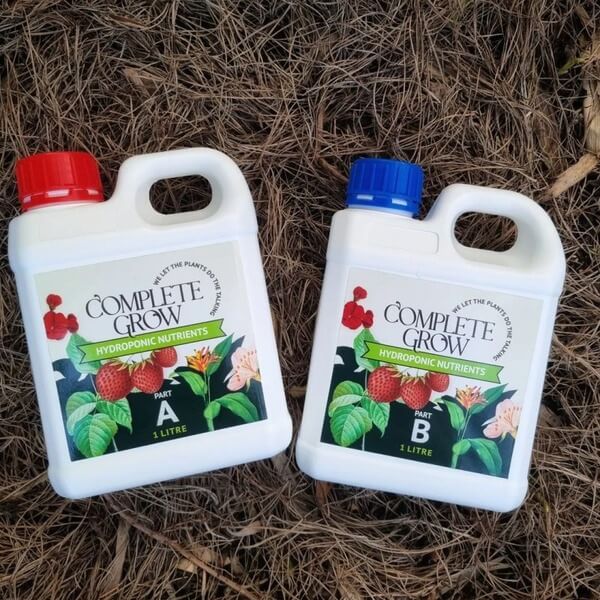
  • Hydro A & B

Magnesium

Sits at the centre of every chlorophyll molecule.

Short on it: yellowing between the veins of older leaves.

Found in
  • Cal-Mag
  • Advanced Formula
  • Citrus

Trace elements

needed in tiny amounts

Iron

Needed to make chlorophyll in new growth.

Short on it: pale new leaves with sharp green veins.

Found in
  • All Purpose
  • Lawn Grow
  • Citrus

Zinc

Drives growth hormones and leaf size.

Short on it: small, crinkled new leaves bunched together.

Found in
  • All Purpose
  • Indoor
  • Citrus

Manganese

Powers the enzymes of photosynthesis.

Short on it: pale, mottled patches between the veins.

Found in
  • All Purpose
  • Indoor
  • Lawn Grow

Copper

Supports respiration and plant immunity.

Short on it: drooping, pale new growth.

Found in
  • All Purpose
  • Indoor
  • Hydro A & B

Boron

Helps flowering, pollination and fruit set.

Short on it: brown growing tips and poor fruit set.

Found in
  • All Purpose
  • Citrus
  • Advanced Formula

Molybdenum

Lets plants use the nitrogen they take up.

Short on it: pale leaves with curled, cupped edges.

Found in
  • All Purpose
  • Advanced Formula
  • Hydro A & B

Chelated micronutrients

What Are Chelated Micronutrients?

Chelated micronutrients are trace elements like iron, zinc, and manganese, bound to organic molecules to improve absorption.

This “wrapping” keeps them stable in the soil, especially where pH is inconsistent or extreme. Without chelation, these nutrients often become locked out — meaning plants can’t absorb them even when they’re present.

By using chelated forms, CompleteGrow fertilisers ensure:

  • Better nutrient uptake
  • Less waste and runoff
  • Stronger, more consistent plant growth

Every bottle of CompleteGrow liquid fertiliser already includes chelated iron, zinc, and manganese — no guesswork required.
PLANT ROOTVSFeFeFeFeLocked outFeFeFeFeAbsorbedWITHOUT CHELATIONBare iron rusts and locks upWITH CHELATIONThe claw carries it to the root

Liquid, powder, granules or organic

Types of Fertilisers & When to Use Them

Every type feeds on a different timeline. Liquids and powders work within days, controlled-release granules feed steadily for months, and organic matter builds the soil. The best gardens use more than one.

01 We make this

Liquid concentrate

Within days

Nutrients already dissolved. Measure, add to water, and plants can use them within days.

  • Works fast5/5
  • Feeds for longer1/5
  • Low effort3/5
  • Dose control5/5

Best for: quick boosts, pots, foliar sprays and stage-by-stage feeding.

See our liquid range
02 We make this

Water-soluble powder

Within days

Dry crystals that dissolve fully in water. Light to ship and easy to store.

  • Works fast5/5
  • Feeds for longer1/5
  • Low effort3/5
  • Dose control5/5

Best for: large gardens, fertigation and drip lines.

See the 20-20-20 Powder
03 Coming soon

Controlled-release granules

Steady for months

Coated granules that release nutrients steadily for months, with soil warmth and moisture setting the pace.

  • Works fast2/5
  • Feeds for longer5/5
  • Low effort5/5
  • Dose control3/5

Best for: set-and-forget feeding in pots, garden beds and new plantings.

Get notified at launch
04

Organic: manure & compost

Slow, builds soil

Nutrients held in organic matter, released slowly as soil life breaks it down.

  • Works fast1/5
  • Feeds for longer3/5
  • Low effort2/5
  • Dose control1/5

Best for: building soil structure before planting.

Ratings are our general guide.

Our formulas

A formula for every garden.

11 formulas, each built for a job: a balanced NPK 20-20-20 all-rounder, then bloom, citrus, indoor plant, orchid, cactus, lawn and hydroponic fertilisers.

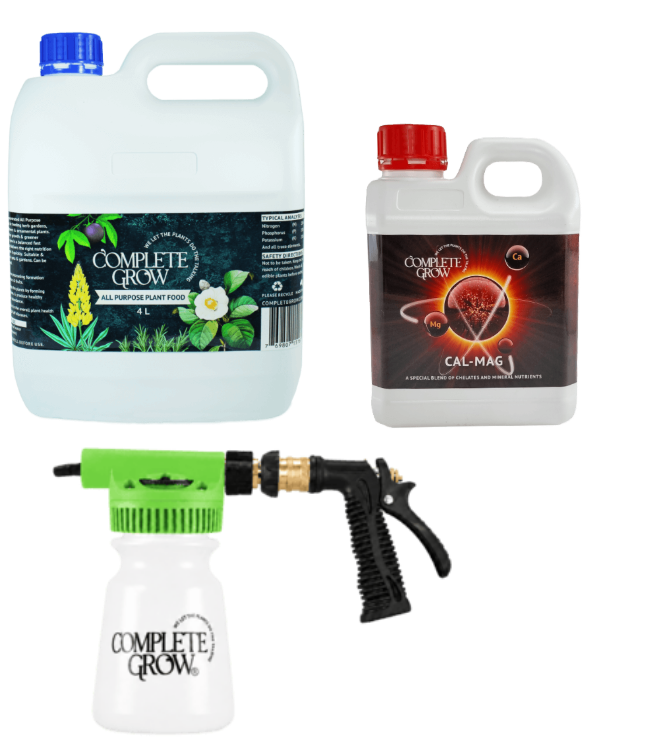
Cal-Mag Nutrients

NPK 4-0-0 + 4% Ca, 2% Mg & chelated iron

  • Tomatoes
  • Hydro
  • Coco
  • Mix0.5–1 mL per L
  • Makes1 L → up to 1,000 L
  • FeedWith your base feed

5.0(7 reviews)

From $36.00

Shop

How we compare

Why growers switch to CompleteGrow.

Side by side with the two most common alternatives: a typical store-brand plant food and organic manure.

What matters
The gold standard CompleteGrow All Purpose Plant Liquid Fertiliser

CompleteGrow

Premium plant nutrition
Common alternative

Typical store brands

Standard plant food
Common alternative

Organic manure

Natural soil feed
How fast plants can use it
Yes: Within days
Partly: Varies
No: Weeks to months
Trace elements
Yes: Chelated Fe, Zn & Mn included
No: Often missing
Partly: Natural but unmeasured
Strength
Yes: 1 L makes 250 L
No: Often pre-diluted
No: Large volumes needed
Where it works
Yes: Soil, pots, foliar & hydro
Partly: Mostly soil & pots
No: Soil only
Matches growth stage
Yes: 11 targeted formulas
Partly: Usually one general blend
No: No
Mixing & handling
Yes: Dissolves clean, low odour
Partly: Can leave residue
No: Bulky, strong odour
Batch consistency
Yes: Same analysis every batch
Partly: Varies by brand
No: Varies batch to batch
Rescuing stressed plants
Yes: Fast deficiency correction
Partly: Basic support only
No: Too slow to rescue
Upfront price
Yes: From $24.60, 5¢ per litre of feed
Yes: Often cheaper upfront
Yes: Cheap per bag

We compare against common product types, not named brands. Manure and compost still earn a place in the garden for soil structure.

Feeding calendar

When to apply:
seasonal fertiliser guide.

Match your feeding to the plant’s cycle. Set for Australian seasons, starting with spring when most gardens wake up.

Right now in Australia

It’s spring. Time for a balanced wake-up feed.

Shop All Purpose →
SpringWake up & grow
  • Sep, about 4 feeds
  • Oct, about 4 feeds
  • Nov, about 4 feeds
SummerFlower & fruit
  • Dec, about 4 feeds
  • Jan, about 4 feeds
  • Feb, about 4 feeds
AutumnFirm up & slow
  • Mar, about 2 feeds
  • Apr, about 2 feeds
  • May, about 2 feeds
WinterRest & protect
  • Jun, about 1 feed
  • Jul, about 1 feed
  • Aug, about 1 feed

Each dot is one feed in that month

Spring

Sep – Nov
You are here
Feed weekly
Balanced NPK

Wake-up feed for leafy growth

New shoots, fresh leaves and the first buds.

What to grow
CoolMelbourne
Tomatoes after frost, beans, zucchini
TemperateSydney
Tomatoes, capsicum, basil
SubtropicalBrisbane
Sweet corn, cucumber, pumpkin
TropicalDarwin
Sweet potato, snake beans, okra

Summer

Dec – Feb
You are here
Feed weekly, early or late in the day
Bloom & fruit

Push flowers and fruit

Peak flowering and fruiting, and hot days.

What to grow
CoolMelbourne
Beans, lettuce, carrots
TemperateSydney
Beans, cucumber, Asian greens
SubtropicalBrisbane
Snake beans, okra, sweet potato
TropicalDarwin
Sweet potato, kang kong, Ceylon spinach

Autumn

Mar – May
You are here
Feed every 2 weeks
Tissue strength

Structure and resilience

Growth slows and plants firm up for winter.

What to grow
CoolMelbourne
Garlic, broad beans, onions
TemperateSydney
Broccoli, peas, garlic
SubtropicalBrisbane
Tomatoes, lettuce, strawberries
TropicalDarwin
Tomatoes, lettuce, capsicum

Winter

Jun – Aug
You are here
Feed every 2–4 weeks
Gentle feed

Minimal feeding

Outdoor plants rest. Indoor plants tick along.

What to grow
CoolMelbourne
Peas, onions, bare-root fruit trees
TemperateSydney
Peas, spinach, potatoes
SubtropicalBrisbane
Peas, carrots, lettuce
TropicalDarwin
Tomatoes, beans, cucumber

Coming soon: controlled-release granules. Apply once in spring and they feed steadily for months, with a liquid boost on top whenever plants need it.

Get notified

How to Calculate How Much Fertiliser You Need

  1. Step 1: Measure Your Space

    10m² garden bed? 15 pots? Just get a rough idea of the total area.

  2. Step 2: Use the Label Rate

    Apply 4ml per 1L per m² — that’s our standard All Purpose mix, but always check your product label for specific instructions.

  3. Step 3: Multiply Accordingly

    Just multiply:

    Example —10m² area×4ml=40ml concentrate

    Mix into 10L of water and apply evenly.

Tip: Water in well after feeding for best absorption.

Or let our calculator do the work for you

CompleteGrow Mixing Calculator

Formula

Apply with

Rate

L

Add

36 mLof All Purpose concentrate

to 9 L of water

Feed weekly in active growth, fortnightly in winter.

A 1 L bottle makes 27 of these mixes.

Shop All Purpose
The CompleteGrow perspective

What most fertiliser guides don’t tell you.

Our team works where chemical science meets horticultural science. Chemistry decides whether a nutrient stays dissolved and available. Horticulture decides what the plant needs, and when. These are six questions growers ask us, answered with what we’ve learned from formulating and trialling our own fertilisers.

Chemical scienceSolubility, pH,
chelation
Horticultural scienceGrowth stage,
uptake, yield
01

Why can leaves stay yellow even after you fertilise?

Because the label tells you what’s in the bottle, not what the plant gets.

A nutrient only feeds a plant while it stays dissolved where roots can reach it. Once soil climbs above pH 7, plain iron, manganese and zinc react and lock up, so a fertiliser can look complete on paper and still leave leaves yellow.

Line chart: plain iron availability drops sharply above soil pH 7, while chelated iron stays available up to pH 8. Chelated iron Plain iron alkaline → available locked up 5.566.5 77.58 Soil pH
Plain iron becomes less available as soil pH rises above 7. Chelated iron stays available across a wider pH range.
In our range

Our trace elements are chelated, so they stay available across a wider pH range.

02

Can you mix calcium and phosphate fertilisers together?

Not as concentrates. Calcium and phosphate can’t share a bottle.

Concentrated calcium reacts with phosphate and sulphate and drops out as an insoluble white sludge (calcium sulphate is plaster). Once that happens, neither nutrient feeds the plant and the sludge blocks drippers.

Illustration: parts A and B poured together form white sediment; added to water one at a time they stay dissolved. A B Concentrates mixed instead A then B Each part into water
Mixed as concentrates, calcium and phosphate or sulphate settle out as white sediment. Added to water one part at a time, they stay dissolved.
In our range

Hydro A & B and the Advanced Formula come in separate parts. Add each part to the water on its own and stir before adding the next.

03

Do Australian native plants need phosphorus fertiliser?

Very little. Australian soils are low in phosphorus, and our natives like it that way.

Our ancient, weathered soils are among the most phosphorus-poor in the world. Grevilleas, banksias, hakeas and waratahs evolved for it, and a high-phosphorus feed can make them sick.

Scale of phosphorus need from low to high. Australian soils and native plants sit at the low end; tomatoes, roses and citrus sit at the high end. PHOSPHORUS NEED Australian soils low high Natives grevilleas, banksias, hakeas, waratahs Exotics tomatoes, roses, citrus
Natives sit at the low end of the scale, matched to the soils they evolved in. Flowering and fruiting exotics sit at the other end.
Our advice

Keep high-phosphorus bloom feeds for exotics like tomatoes, roses and citrus. Feed natives sparingly with a low-phosphorus fertiliser.

04

Should you keep feeding nitrogen once plants flower?

No. After flowering, extra nitrogen works against you.

Nitrogen drives leaves. Keep pushing it once flowers appear and the plant keeps building leaves instead of fruit. Potassium is what fills out flowers and fruit.

Line chart across growth stages: nitrogen is high during leafy growth and drops once flowers appear, while potassium rises through flowering and fruiting. Nitrogen · leaves Potassium · flowers, fruit first flowers Leafy growthFloweringFruiting
Once flowers appear, shift the feed from nitrogen, which builds leaves, to potassium, which fills flowers and fruit.
In our range

The Advanced Formula is NPK 4–18–38: low nitrogen, high phosphorus and very high potassium for flowering and fruiting.

05

Do indoor plants need phosphorus fertiliser?

Far less than garden plants do.

Leafy indoor plants make foliage, not fruit, and a pot never gets rain to flush it. Extra phosphorus and salts build up in the mix, tie up iron and zinc, and brown the leaf tips.

Illustration comparing a garden bed, where rain flushes salts down and away, with an indoor pot, where salts build up as a white crust and leaf tips turn brown. Garden bed rain flushes salts away Indoor pot brown tips no rain, so salts build up
Rain washes surplus salts down and out of garden soil. In a pot they stay, building up in the mix until leaf tips brown.
In our range

Indoor Plant Food is NPK 16–4–14 at just 1 mL per litre, with chelated trace elements, for steady leaves without the build-up.

06

Does your water change how fertiliser works?

Yes. Your water is part of the recipe.

Rainwater and filtered water carry almost no calcium or magnesium, and coco coir holds on to what little there is. Hard, alkaline tap water does the opposite and ties up iron.

Three glasses of water: rainwater and filtered water hold almost no calcium or magnesium and need Cal-Mag added; hard tap water holds plenty, is alkaline, and needs chelated trace elements. calcium & magnesium RainwaterFilteredHard tap almost nonealmost noneplenty, alkaline Add Cal-Mag Chelated traces
Soft water needs calcium and magnesium added back, and so does coco. Hard, alkaline water already carries plenty and locks up plain iron.
In our range

Cal-Mag tops up calcium and magnesium for rainwater, filtered water and coco growers, and our chelated trace elements cope with hard water.

Cal-Mag →

Glossary

Fertiliser terms, explained.

The words you’ll see on plant fertiliser labels, in this guide and in grower forums, in plain English. Ready to choose one? Browse our NPK fertiliser range or shop all fertilisers.

#
The three numbers on a fertiliser label: the percentage by weight of nitrogen (N), phosphorus (P) and potassium (K). A 20-20-20 all-purpose fertiliser holds 20% of each. Shop NPK fertiliser

The first number is nitrogen (N), the second is phosphorus, listed as phosphate (P₂O₅), and the third is potassium, listed as potash (K₂O). They’re percentages by weight, so 1 kg of a 20-20-20 contains 200 g of each.

The ratio tells you what a fertiliser is for. The size of the numbers tells you how concentrated it is. A 10-10-10 has the same balance as a 20-20-20 but half the strength, so you need twice as much product for the same feed.

  • Balanced (e.g. 20-20-20): leafy, all-round growth from seedling stage.
  • High P and K (e.g. 4-18-38): flowering and fruiting, see Advanced Formula.
  • High N (e.g. 7-1-1.5): lawns and leafy greens, see Lawn Grow.
#
The nutrients plants use in the largest amounts: nitrogen, phosphorus and potassium, followed by calcium, magnesium and sulphur. NPK ratios for fruit trees

Plants need six nutrients in large amounts. The primary macronutrients are the N-P-K on every label. The secondary macronutrients are calcium, magnesium and sulphur, which are needed in smaller but still significant amounts.

  • Nitrogen: leaves and stems. Shortage shows as pale, yellowing older leaves.
  • Phosphorus: roots, energy and flowering.
  • Potassium: fruit size, flavour, colour and water control.
  • Calcium: cell walls. Shortage causes blossom end rot and distorted new growth.
  • Magnesium: the centre of every chlorophyll molecule. Shortage shows as yellowing between the veins of older leaves.
  • Sulphur: proteins and flavour compounds.
#
Micronutrients plants need in tiny amounts, such as iron, manganese, zinc, copper, boron and molybdenum. A shortage still stunts growth. All Purpose with 6 trace elements

Iron, manganese, zinc, copper, boron and molybdenum are needed in parts per million, yet each one runs an essential job: iron and manganese for chlorophyll, zinc for growth hormones, boron for pollen and fruit set, molybdenum for using nitrogen.

A shortage often looks like a disease. Iron deficiency, for example, turns new leaves yellow while the veins stay green. Too much is just as harmful, so stick to label rates rather than adding extra.

All Purpose NPK 20-20-20 carries six trace elements, and Advanced Formula 4-18-38 adds 0.40% boron with chelated iron, manganese, zinc and copper.

#
A nutrient held by an organic molecule that keeps it dissolved and available to roots across a wider pH range. Fertilisers with chelated trace elements

Metals like iron, zinc, manganese and copper react with other minerals in soil and water, especially in alkaline conditions, and turn into forms roots can’t absorb. A chelate (from the Greek for “claw”) wraps the metal so it stays dissolved until the root takes it up.

Different chelates hold on across different pH ranges. EDTA is the most common and works well in slightly acidic to neutral conditions, while DTPA and EDDHA hold iron at progressively higher pH.

This is why a fertiliser can look complete on paper and still leave plants yellow: unchelated trace elements can lock up before roots ever reach them.

#
How acidic or alkaline soil is. Most plants feed best between pH 6 and 7. Above 7, iron, manganese and zinc start to lock up. Spotting a magnesium deficiency

pH runs from 0 to 14, with 7 neutral. Each step is ten times stronger than the last, so pH 8 is ten times more alkaline than pH 7.

Between pH 6 and 7, nearly every nutrient is available. Above 7, iron, manganese, zinc and phosphorus start to lock up. Below about 5.5, calcium, magnesium and molybdenum become harder to get. Acid lovers such as blueberries, azaleas and camellias are the exception and prefer pH 4.5–5.5.

A cheap soil pH kit is worth having. Garden lime or dolomite raises pH; sulphur lowers it, slowly. In hydroponics, aim for a nutrient solution of pH 5.5–6.5.

Yellowing between the veins can mean pH lockout rather than a missing nutrient. See magnesium deficiency in tomatoes.

#
A liquid fertiliser or powder that dissolves fully in water, so roots can take it up straight away. NPK 20-20-20 soluble powder

Water-soluble fertilisers come as liquid concentrates or soluble powders. Once mixed, every nutrient is already in a form roots can absorb, so plants respond within days.

Granules, manures and compost have to be broken down by moisture, warmth and soil life first, which can take weeks and slows right down in cold weather.

The trade-off: soluble feeds aren’t stored in the soil for long, so they’re applied little and often, usually weekly or fortnightly. That makes them the natural choice for pots, hydroponics, fertigation and foliar feeding, where you want control over exactly what the plant gets.

#
Coated granules that release nutrients steadily over weeks or months from a single application. Release slows in cool or dry soil. Why mineral fertiliser works

Controlled-release (or slow-release) fertilisers are granules coated in resin or polymer. Water seeps through the coating and nutrients leak out over 3 to 9 months, depending on the product.

Release speeds up in heat and slows in cold or dry soil, so plants can be underfed in early spring, exactly when they start growing.

They suit low-maintenance pots and garden beds. The catch is you can’t change the feed when a plant moves from leaves to flowers. Many growers combine them with a liquid feed for the stages that matter. More on mineral fertilisers and how they work.

#
Spraying diluted fertiliser onto the leaves, which absorb part of the nutrients directly. Use a gentle rate and spray in the cool of the day. Work out a foliar rate

Leaves absorb nutrients through their pores (stomata) and the waxy surface. It’s a fast top-up, especially for trace elements like iron and magnesium, but leaves can only take in small amounts, so it supports root feeding rather than replacing it.

  • Use a gentle rate. All Purpose is 2 mL per litre for foliar sprays.
  • Spray early morning or late afternoon, never in hot, direct sun.
  • Wet the undersides of leaves, where most pores are.
  • Test a few leaves first on sensitive plants.
#
Feeding through an irrigation or drip system, with the fertiliser dissolved in the water. It needs a feed that dissolves clean so drippers don’t block. Fertiliser for fertigation

A venturi injector or dosing pump draws fertiliser from a stock tank into the irrigation water, so every dripper delivers a measured feed. It’s how most commercial growers feed, and it’s easy to set up at home on drip lines.

The fertiliser must dissolve completely. Undissolved particles and organic material block drippers and filters. Keep calcium in a separate stock tank from phosphate and sulphate, or they’ll react and drop out as sludge.

A Northern Rivers avocado grower switched to NPK 20-20-20 through his irrigation after an organic feed clogged his system, and saw no further blockages.

#
Growing plants without soil, with every nutrient supplied in the water through hydroponic nutrients. Growing hydroponic vegetables at home

Common systems include NFT channels, deep water culture (DWC), drip-to-waste and coco coir bags. With no soil to fall back on, the nutrient solution has to supply all thirteen mineral nutrients, including calcium and magnesium.

That’s why hydroponic nutrients come in two parts: calcium sits in one, phosphate and sulphate in the other, so they can’t react in the bottle. Add Part A to the water, stir, then add Part B.

Check EC and pH every time you top up the reservoir. Hydro A & B at 3 mL + 3 mL per litre reads about EC 1.5–2.0, with pH already in the 5.5–6.5 range in Sydney tap water. Start here: growing hydroponic vegetables at home.

#
A measure of how much dissolved fertiliser is in water. Hydroponic and commercial growers use it to set feed strength. Hydro A & B nutrients

Dissolved fertiliser salts conduct electricity, so a cheap EC meter tells you how strong a nutrient solution is. EC is usually shown in mS/cm.

Some meters show ppm instead, using either a 500 or 700 conversion scale, so the same solution can read differently on two meters. EC avoids that confusion.

  • Seedlings and cuttings: low, roughly EC 0.5–1.0.
  • Leafy greens and herbs: moderate.
  • Fruiting crops like tomatoes: higher.

Always measure your plain water first. Hard tap water can already read 0.3 or more before any fertiliser goes in.

#
A calcium and magnesium supplement, used with rainwater, filtered water, coco coir and hydroponics. Shop Cal-Mag

Rainwater, tank water and reverse-osmosis water contain almost no calcium or magnesium. Coco coir also holds onto both, so plants in coco can run short even when you feed.

Calcium builds cell walls and prevents blossom end rot. Magnesium keeps leaves green. CompleteGrow Cal-Mag is NPK 4-0-0 with 4% calcium, 2% magnesium and chelated iron, used at 0.5–1 mL per litre alongside your base feed.

Two-part Hydro A & B already contains calcium and magnesium, so you don’t need to add Cal-Mag to it. Signs to watch for: calcium deficiency in tomatoes.

#
A high-phosphorus, high-potassium feed such as Advanced Formula 4-18-38, used once plants start budding, flowering or fruiting. When to switch to a bloom feed

Once a plant starts budding, its needs change. It wants far more potassium for fruit size and flavour, more phosphorus for flowers, and less nitrogen. Keep feeding high nitrogen and the plant puts its energy into leaves instead of fruit.

Switch when the first flower buds appear. If you’ve been using All Purpose, stop it before starting the bloom feed; don’t apply both at full strength.

Advanced Formula is NPK 4-18-38 with separate calcium nitrate and magnesium sulphate, for tomatoes, chillies, berries, roses and citrus. Australian natives such as grevilleas and banksias are the exception: keep high-phosphorus feeds away from them.

#
When nutrients are in the soil but roots can’t take them up, usually because of the wrong pH, salt build-up or uneven watering. Calcium deficiency and blossom end rot

Common causes:

  • pH out of range: iron, manganese and zinc lock up in alkaline soil.
  • Salt build-up: from heavy feeding without flushing, especially in pots.
  • Cold or waterlogged roots: roots can’t absorb what they can’t reach.
  • Nutrient imbalance: too much potassium can block calcium and magnesium.
  • Uneven watering: the main cause of blossom end rot.

The fix is rarely more fertiliser. Check pH, flush pots with plain water, then resume at the normal label rate. More on calcium lockout in tomatoes.

#
Nutrients washing down through the soil and past the roots. It happens faster in sandy soil, heavy rain and fast-draining pots.

Nitrogen in its nitrate form is the most mobile nutrient and leaches first, followed by potassium. Sandy soils, heavy rain, over-watering and fast-draining fabric pots all speed it up.

It’s why little-and-often feeding with a liquid fertiliser works better than one big dose in sandy gardens and pots: less is lost before roots can use it.

Leaching can also be useful. Flushing a pot with plain water washes out built-up salts. Orchid growers flush monthly for exactly this reason, as recommended with Orchid Grow & Bloom.

#
Brown, crispy leaf tips and edges caused by too much fertiliser salt around the roots. The biggest fertiliser mistakes

Fertiliser is a salt. Too much around the roots draws water out of them instead of in, so the leaf edges and tips, furthest from the roots, dry out first.

Common causes: mixing stronger than the label, feeding bone-dry soil, granules piled against stems, and feeding during heatwaves.

The fix: water heavily to flush the excess salts, trim the damaged leaves, and wait a week or two before feeding again at half strength.

Prevent it by measuring every time (our mixing calculator does the maths), watering before you feed, and never doubling up “to be safe”.

CompleteGrow Mixing Calculator

Choose a product, choose how to measure volume, and we’ll tell you exactly how much to add.

How do you want to enter volume?

Always check your product label. Assumptions: powder tsp = 5 g, liquid tsp = 5 ml, scoop = 6 g. Figures are guides.

Cart (0 items)

No products in the cart.